
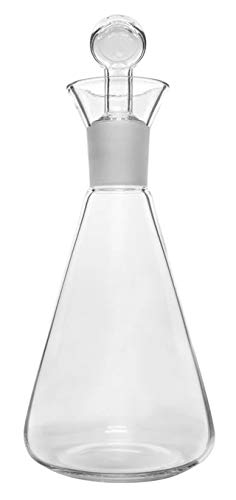
“250ml borosilicate socket conical flask with glass stopper, durable and precise for reliable lab use.”
Sale!

Borosilicate Conical Flask 250 ML With Socket And One Glass Stopper
Original price was: ₹899.00.₹339.00Current price is: ₹339.00.
Description
-
The Definitive Guide to the Socket Conical Flask: A Laboratory Essential
Introduction to the Socket Conical Flask
The Socket Conical Flask is a fundamental piece of apparatus in scientific laboratories worldwide. This specialized flask is an evolution of the standard Erlenmeyer flask, distinguished by its integrated ground glass socket. This socket conical flask design is engineered for secure, leak-proof connections in complex glassware assemblies. It is a cornerstone of modern experimental chemistry.
The primary function of a conical flask is to facilitate reactions and processes that require a sealed environment. The presence of the ground glass socket allows for the direct attachment of other components. This eliminates the need for makeshift connections. The conical flask with socket is designed for both versatility and reliability in demanding laboratory conditions.
You will find the conical flask in research labs, pharmaceutical development, and educational institutions. Its application ranges from simple mixing to sophisticated reflux and distillation setups. The conical flask is more than a container; it is a critical node in a system of chemical manipulation. Understanding its features is key to effective laboratory work.
This guide provides an in-depth exploration of the conical flask. We will examine its design, uses, and the advantages it offers over plain-neck flasks. The conical flask represents a significant advancement in laboratory glassware functionality. Its integrated connection system makes it an indispensable tool for professional scientists.
Anatomy of a Socket Conical Flask: Deconstructing the Design
The Socket Conical Flask shares the classic Erlenmeyer shape. This consists of a flat bottom, a conical body, and a cylindrical neck. The defining feature, however, is the ground glass socket fused to the top of the neck. This socket is a precision-ground, frosted glass joint that is slightly flared.
The ground glass socket on a socket conical flask is designed to accept a corresponding ground glass cone. This creates the famous ground glass joint. This joint is standardized, often following ISO or other international norms. The most common size for a socket conical flask is the NS 29/32 joint. This ensures interoperability.
The conical body of the socket conical flask is not just for aesthetics. It allows for efficient mixing and swirling of contents without significant risk of spillage. The wide base provides excellent stability on a lab bench or hot plate. The narrow neck of the socket conical flask helps to support the added weight of attached condensers.
The entire socket conical flask is typically manufactured from borosilicate glass. This material is chosen for its low thermal expansion coefficient and high chemical resistance. A borosilicate glass socket conical flask can withstand rapid temperature changes and corrosive substances. This makes it suitable for a vast range of chemical procedures.
The Critical Role of the Ground Glass Socket
The ground glass socket is the heart of this apparatus. It transforms a simple flask into a modular component. The purpose of the socket is to provide a perfect, standardized connection point. This connection is both airtight and secure. It can withstand moderate vacuum and pressure when properly greased.
The precision of the ground glass socket is what allows for a perfect seal. The frosted glass surfaces of the socket and cone, when lightly coated with grease, create a virtually impermeable barrier. This prevents the escape of vapors or the ingress of air. The seal in a socket conical flask is essential for reactions sensitive to moisture or oxygen.
Furthermore, the ground glass socket provides mechanical stability. When a condenser or other apparatus is inserted into the socket, it is held firmly in place. This prevents the assembly from wobbling or becoming misaligned. The rigidity offered by the socket conical flask connection is crucial for safe laboratory practice.
The socket also allows for easy assembly and disassembly of glassware setups. Unlike fixed or welded glass, a socket conical flask can be quickly connected and disconnected. This modularity is a key advantage. It enables a single socket conical flask to be used in multiple different configurations and experiments.
Socket Conical Flask vs. Plain Neck Conical Flask: A Comparative Analysis
The most direct comparison is between the Socket Conical Flask and the plain neck Erlenmeyer flask. The standard flask has a simple, smooth rim. It is suitable for basic tasks like mixing, heating, and storing solutions. However, it lacks the integrated connection system of the socket conical flask.
To connect a plain neck flask to other glassware, one must use a rubber stopper with holes. Glass tubes must then be inserted through these holes. This setup is less secure than a ground glass joint. It is more prone to leaks and is not suitable for vacuum applications. The socket conical flask offers a superior connection method.
The socket conical flask is inherently more versatile for advanced setups. It is the clear choice for reflux, distillation, and Schlenk line techniques. The plain neck flask cannot perform these functions without cumbersome and unreliable adaptations. The socket conical flask is designed for integrated system work.
In terms of cleaning, the ground glass socket requires attention. Glass grease and residues can be trapped in the frosted surface. A plain neck flask is simpler to clean. However, the functional benefits of the socket conical flask far outweigh this minor maintenance consideration for most chemical applications.
Standard Sizes and Capacities of Socket Conical Flasks
Socket Conical Flasks are available in a wide range of sizes to suit different experimental scales. Common capacities include 50ml, 100ml, 250ml, 500ml, and 1000ml. The choice of size for your socket conical flask depends on the required reaction volume. It is important not to overfill a socket conical flask.
A general rule is to not fill a socket conical flask beyond half its capacity when used for boiling or reactions. This provides adequate headspace to prevent boil-overs. For a 250ml socket conical flask, a safe working volume might be 100-125ml. This is critical for safety and process efficiency.
The size of the ground glass socket is often correlated with the flask’s capacity. A 100ml socket conical flask will typically have a smaller joint, like NS 24/29. A 1000ml socket conical flask will likely have a larger joint, such as NS 29/32 or NS 45/40. This ensures the joint is proportionate to the flask’s size and strength.
Selecting the correct size of socket conical flask is a fundamental step in experimental planning. Using a flask that is too small risks overflow. A flask that is too large can lead to excessive evaporation and poor mixing. The right socket conical flask ensures optimal reaction conditions and safety.
Material Composition: Borosilicate Glass and Its Advantages
The vast majority of high-quality Socket Conical Flasks are made from borosilicate glass. This is a specialized glass composed mainly of silica and boron trioxide. The borosilicate glass socket conical flask is the industry standard for professional laboratories. Its properties are essential for reliable performance.
The most important property is its low coefficient of thermal expansion. A borosilicate glass socket conical flask can withstand rapid and extreme temperature changes without cracking. This is known as thermal shock resistance. You can safely heat a borosilicate glass socket conical flask on a hot plate or with a Bunsen burner.
Chemical resistance is another critical advantage. A borosilicate glass socket conical flask is highly inert. It resists attack by most acids, halogens, and organic solvents. This ensures that the flask does not contaminate the reaction mixture. The purity of your reaction in a socket conical flask is maintained.
The clarity and transparency of borosilicate glass are also beneficial. It allows for clear visual observation of the reaction contents. You can monitor color changes, precipitate formation, and boiling behavior inside the socket conical flask. This transparency is a key diagnostic tool for the chemist.
Primary Applications and Uses in the Laboratory
The Socket Conical Flask is incredibly versatile. Its primary application is in assembly-based chemical procedures. One of the most common uses is as a reaction vessel for heating under reflux. In this setup, the socket conical flask holds the reaction mixture. A condenser is attached vertically to its socket.
This reflux setup with socket conical flask allows for prolonged heating of a solution without loss of solvent. The vapors condense in the condenser and drip back into the socket conical flask. This is essential for many organic synthesis reactions that require extended heating at a constant temperature. The socket conical flask is ideal for this.
Another major application is in distillation setups. The socket conical flask can serve as the distillation pot. The flask’s socket connects directly to a distillation head or Claisen adapter. The secure seal of the socket conical flask is vital for efficient vapor transfer and product collection.
The socket conical flask is also used in vacuum filtration systems. It can be used as a receiving flask when connected to a Büchner funnel via a adapter. The robust construction of a socket conical flask allows it to withstand the external pressure of the atmosphere during vacuum operations. This makes the socket conical flask a multi-role player.
The Socket Conical Flask in Reflux Setups
The reflux setup is a cornerstone of organic chemistry. The Socket Conical Flask is perfectly designed to be the heart of this assembly. The process involves boiling a reaction mixture in the socket conical flask for an extended period. The goal is to maintain a constant reaction temperature.
A water-cooled condenser is attached vertically to the socket conical flask‘s socket. As the solvent boils, vapors travel up into the condenser. Here, they are cooled and revert to liquid form. This liquid then flows back down into the socket conical flask. This continuous cycle prevents solvent loss.
The ground glass joint on the socket conical flask is critical here. It provides an airtight seal that contains the solvent vapors. A loose connection would lead to evaporation and potential release of hazardous vapors. The reliability of the socket conical flask joint ensures a safe and effective reflux process.
Heating is typically provided by a heating mantle or a hot plate. The flat bottom of the socket conical flask ensures good contact with the heat source. The conical shape promotes efficient mixing of the returning condensate with the boiling solution. This makes the socket conical flask the optimal vessel for reflux.
Utilization in Distillation Apparatus
Distillation is a purification technique for separating liquid mixtures. The Socket Conical Flask frequently serves as the distillation pot or boiling flask. The mixture to be distilled is placed inside the socket conical flask. It is then heated to selectively vaporize the more volatile components.
The ground glass socket of the flask connects directly to the distillation head. This creates a seamless pathway for the vapor to travel from the socket conical flask to the condenser. The secure connection prevents vapor from escaping at this critical junction. The integrity of the socket conical flask joint is paramount.
The flat bottom of the socket conical flask provides stability during heating. The conical shape helps to minimize “bumping” – the violent, sudden boiling that can occur. Some chemists even add boiling chips directly to the socket conical flask to further promote even boiling. This ensures a steady stream of vapor.
For fractional distillation, a fractionating column is often attached to the socket conical flask. The socket makes this connection simple and secure. The modular nature of the socket conical flask allows for the construction of complex distillation trains for separating compounds with close boiling points.
Role in Vacuum Filtration and Schlenk Line Techniques
In vacuum filtration, the Conical Flask acts as a robust receiver flask. A Büchner funnel is seated on top of the flask using a neoprene adapter or a specialized ground glass joint. The vacuum source is connected to the side arm of the flask. This setup is used for rapid solid-liquid separation.
The conical flask must withstand the full force of atmospheric pressure when under vacuum. The strong, thick-walled construction of a borosilicate glass conical flask is designed for this purpose. It will not implode under normal vacuum filtration conditions. This makes the conical flask a safe choice.
In air-sensitive chemistry, Schlenk lines are used. A conical flask is an excellent vessel for these techniques. The flask can be connected to the Schlenk line via a hose adapter. The system allows for the flask to be evacuated and refilled with an inert gas like nitrogen or argon.
This ability to create an inert atmosphere inside the conical flask is crucial for handling pyrophoric or oxygen-sensitive compounds. The secure seal of the ground glass joint maintains this atmosphere throughout the reaction. The conical flask is therefore a key tool in advanced inorganic and organometallic synthesis.
Proper Assembly and Sealing of Ground Glass Joints
Correct assembly of a ground glass joint is essential for safety and performance. The first step is to ensure both the joint and the cone are clean and dry. Any old grease or residue must be thoroughly removed with an appropriate solvent. This ensures a perfect mating of the surfaces.
A thin, even layer of high-vacuum grease is then applied to the male cone. The grease should be applied only to the top two-thirds of the joint. Avoid getting grease on the very top, as it can contaminate the reaction inside the conical flask. The goal is a continuous, transparent film.
The male cone is then gently inserted into the joint of the conical flask and twisted with light pressure. This spreads the grease into a continuous, airtight seal. A proper seal will show no gaps or air bubbles in the grease layer. The joint should feel firm but not seized.
For securing the connection, especially under vacuum, plastic joint clips are used. These clips hook onto the ears of the conical flask and the attached component. They prevent the joint from popping open under pressure differentials. Always use these clips when working with a conical flask under vacuum.
Cleaning and Maintenance Best Practices
Proper cleaning extends the life of your Socket Conical Flask. Immediately after use, rinse the flask with a suitable solvent to remove the bulk of the reaction mixture. This is especially important for the ground glass socket, where residues can harden and cause joints to freeze.
For general cleaning, a laboratory detergent and warm water are often sufficient. Use a brush designed for glassware to scrub the interior of the socket conical flask. Pay special attention to the socket; a pipe cleaner can be useful for cleaning the frosted glass surface without scratching it.
Stubborn residues may require a soaking step. A base bath or an acid bath can be used, but always check the compatibility with borosilicate glass. After cleaning, rinse the socket conical flask thoroughly with tap water followed by deionized or distilled water. This prevents spotting.
Drying is the final step. Allow the socket conical flask to air dry upside down on a clean rack. For faster drying, an oven can be used at a moderate temperature. Never assemble a wet ground glass joint; the water can hydraulically lock the joint, making it extremely difficult to disassemble.
Common Issues and Troubleshooting with Socket Flasks
A common problem with Socket Conical Flasks is a “frozen” or “seized” joint. This occurs when the ground glass joint becomes stuck, often due to improper greasing or contamination. Do not force it. Apply gentle heat with a hot air gun around the socket of the socket conical flask.
Tapping the joint gently with a wooden or plastic mallet can also help to break the seal. There are also commercial joint-release solvents available. Prevention is the best cure: always use grease and avoid over-tightening the joint on your socket conical flask.
Another issue is cracking, particularly around the socket area. This is often caused by mechanical stress. Ensure that supporting clamps are placed correctly, not on the socket itself but on the neck of the socket conical flask. Avoid subjecting the flask to sharp impacts.
Cloudiness or etching of the glass interior can occur after prolonged exposure to strong bases. While this may not immediately compromise the structural integrity of the socket conical flask, it can make cleaning more difficult and harbor contaminants. For critical work, a heavily etched flask should be replaced.
Safety Protocols and Handling Procedures
Safety is paramount when using a Socket Conical Flask. Always inspect the flask before use. Look for any chips, cracks, or stars, especially around the socket and the rim. A damaged socket conical flask is under stress and can fail catastrophically during heating or vacuum applications.
When heating a socket conical flask, always do so gradually. Use a heating mantle or a hot plate with a ceramic surface. Avoid direct flame from a Bunsen burner if possible, as this can create localized hot spots. The flat bottom of the socket conical flask is designed for even heating from an electric source.
When assembling apparatus, always support the entire setup with clamps and stands. Clamp the neck of the socket conical flask, not the body or the socket. This provides secure support for the attached components. An unsecured socket conical flask assembly is a tipping hazard.
Be aware of pressure buildup. Never seal a socket conical flask completely without a pressure-equalizing system. If heating a closed system, ensure there is a path for excess pressure to escape safely. The socket conical flask is not designed to hold significant internal pressure.
Comparing with Other Glassware: Flasks with Cones and Alternatives
The Conical Flask has a counterpart: the Conical Flask with Cone. This flask has an integrated ground glass cone instead of a socket. The choice between a cone and other designs is often a matter of system configuration and personal preference. Both create an identical ground glass joint.
A three-neck flask is a related piece of glassware. It features a central neck and two side necks, each with a cone. This offers greater versatility for complex setups involving multiple inlets. However, a standard conical flask is simpler and more cost-effective for single-neck applications.
Round-bottom flasks are another alternative. They are superior for even heating in a heating mantle. However, they are less stable on a flat surface. The conical flask offers a better combination of stability and mixing efficiency. The flat bottom of the conical flask is a significant practical advantage.
For non-heating applications, a plastic Erlenmeyer flask might be used. But it lacks the thermal and chemical resistance of a borosilicate glass conical flask. For any procedure involving heat, chemicals, or vacuum, the conical flask remains the superior and safest choice.
The Future of the Conical Flask in Modern Labs
The Conical Flask is a timeless design. Its fundamental form and function are unlikely to change dramatically. However, manufacturing techniques continue to improve. This leads to even higher precision in the ground glass joints and better consistency in wall thickness.
We may see an increased use of specialized coatings on conical flasks. For example, non-stick coatings could make cleaning easier and reduce analyte adsorption. These advancements would build upon the proven utility of the standard conical flask.
Automation and robotics in laboratories may lead to designs with even more standardized dimensions. This would ensure that every conical flask interfaces perfectly with automated sampling and handling systems. The core concept of the conical flask will adapt to the high-throughput lab.
Despite these potential innovations, the essential role of the conical flask is secure. Its perfect blend of simple design and sophisticated functionality is unmatched. The conical flask will continue to be a fundamental and indispensable tool for chemists and researchers for generations to come.
Conclusion: The Indispensable Nature of the Conical Flask
The Conical Flask is a masterpiece of laboratory design. It elegantly combines the utility of a classic Erlenmeyer flask with the advanced functionality of an integrated ground glass joint. This simple addition transforms it from a basic container into a modular system component.
Its applications are vast and critical. From reflux and distillation to vacuum filtration and air-sensitive chemistry, the conical flask proves its worth. The reliability of the seal provided by its joint is the foundation of countless successful experiments. It is a tool built for performance and safety.
The use of durable, inert borosilicate glass ensures that the conical flask can handle the rigors of the laboratory environment. Its thermal and chemical resistance makes it a trusted vessel for a wide spectrum of scientific disciplines. The conical flask is a universal symbol of practical chemistry.
In conclusion, the Conical Flask is far more than just a piece of glassware. It is an enabling technology for chemical synthesis and analysis. Its design is a testament to the ingenuity of laboratory instrument makers. For any scientist working at the bench, the conical flask is not just useful; it is absolutely indispensable.


Reviews
There are no reviews yet.