

This 250ml reflux flask laboratory with 24/40 center and side joints is made from durable borosilicate glass, offering excellent heat resistance,
“KAUSHIK INDIA 5ML 30Pcs Borosilicate Glass AMBER Colour Vial With Screw Cap, Leak Proof For Essential Oil,Perfume,Meds,Reagent,Anointing Oil Bottle And Lab Use Anti UV Rays Culture Tube” has been added to your cart. View cart
2 Neck Round 250 ML Bottom Boiling Flask with 24/40 Center & Side Joints Angled Receiving Reflux Flask Multi Neck Apparatus Organic Chemistry Lab Glassware
₹499.00 – ₹999.00Price range: ₹499.00 through ₹999.00
SKU: N/A
Categories: 2 Neck Round bottom, laboratary glassware, Scientific Instruments
Description
The Complete Guide to the Reflux Flask Laboratory: Mastering Controlled Chemical Reactions
Introduction to the Reflux Flask Laboratory
A Reflux Flask Laboratory setup is a fundamental technique in chemistry. It is designed to heat a reaction mixture for an extended period without losing solvent. The core of this apparatus is the reflux flask. This laboratory flask is specifically chosen for its ability to withstand prolonged heating.
The term Reflux Flask Laboratory refers to both the equipment and the technique. The reflux flask is typically a round bottom flask made from borosilicate glass. This material is essential for its thermal shock resistance. The reflux flask laboratory setup is a cornerstone of organic synthesis.
It allows reactions to be carried out at the solvent’s boiling point. This increases the reaction rate significantly. The reflux condenser attached to the flask prevents vapor loss. This makes the reflux flask laboratory system closed and efficient.
Understanding the reflux flask laboratory is crucial for many chemical procedures. It is used in research, pharmaceutical development, and educational labs. The reflux flask is a simple yet powerful tool for chemists.
What is a Reflux Flask Laboratory? A Detailed Definition
A Reflux Flask Laboratory setup is a standard piece of chemical apparatus. It consists of a reflux flask connected to a reflux condenser. The flask contains the reaction mixture and solvent. The condenser cools the vapors, returning them to the flask.
The reflux flask itself is usually a borosilicate glass round bottom flask. Its spherical shape is ideal for even heat distribution. The reflux flask laboratory apparatus may include additional components. These can include a drying tube or a gas inlet.
The purpose of the reflux flask laboratory is to maintain a constant reaction volume. It enables heating at high temperatures for hours or even days. This is vital for many slow chemical reactions. The reflux flask is the heart of this system.
This setup is also known as a reflux apparatus or reflux system. The reflux flask laboratory is a symbol of controlled chemical experimentation. It is a required technique in any synthetic chemist’s skill set.
The Anatomy of a Reflux Flask Laboratory Setup
The Reflux Flask: The Reaction Vessel
The reflux flask is the primary container in the reflux flask laboratory. It is typically a round bottom flask made of borosilicate glass. The round bottom design is crucial for use with heating mantles. This ensures uniform heating of the reaction mixture.
The reflux flask features a ground glass joint at its neck. This allows for a secure connection to the reflux condenser. The capacity of the reflux flask varies depending on the reaction scale. Common sizes for the reflux flask laboratory are 100ml to 1000ml.
The borosilicate glass construction provides chemical resistance. This ensures the reflux flask does not contaminate the reaction. The heat resistant properties are vital for safe operation. The reflux flask must withstand prolonged thermal stress.
The Reflux Condenser: The Cooling Component
The reflux condenser is the second critical part of the reflux flask laboratory. It is attached vertically to the reflux flask. The condenser has an outer jacket through which coolant flows. This coolant is typically cold water.
As vapors from the reflux flask rise into the condenser, they cool and liquefy. The liquid then drips back down into the reflux flask. This continuous cycle is the essence of refluxing. The reflux condenser prevents the loss of valuable solvent.
Several types of condensers are used in reflux flask laboratory setups. The Liebig condenser is common for its simplicity. The Graham condenser offers higher efficiency. The choice of reflux condenser impacts the efficiency of the reflux flask laboratory.
The Heat Source: Maintaining Temperature
A heating mantle is the preferred heat source for a reflux flask laboratory. It is designed to cradle the spherical reflux flask. This provides even and controlled heating. The heat resistant nature of the borosilicate glass flask is perfectly matched to a mantle.
Other heat sources can include oil baths or sand baths. These also provide uniform heating for the reflux flask. Direct flame heating is not recommended for a reflux flask laboratory. It can create hot spots and thermal stress on the glass reflux flask.
Supporting Equipment: Stands, Clamps, and Joints
A reflux flask laboratory setup requires stable support. A heavy-duty ring stand and a bosshead clamp are essential. The clamp should securely hold the reflux flask by its neck. The entire reflux apparatus must be stable to prevent accidents.
Ground glass joints are used to connect the reflux flask to the condenser. These joints provide an airtight seal. Keck clips or similar fasteners secure these connections. This ensures the reflux flask laboratory system remains intact during operation.
The Science Behind Reflux Flask Laboratory Technique
The Principle of Equilibrium
The reflux flask laboratory technique operates on a simple principle. It establishes a dynamic equilibrium between evaporation and condensation. Heat applied to the reflux flask causes the solvent to boil. Vapors travel up into the reflux condenser.
Cooling in the condenser causes the vapors to condense. The liquid flows back into the reflux flask. This cycle continues for the duration of the reaction. The reflux flask laboratory maintains a constant boiling temperature.
Advantages of Refluxing Over Simple Heating
Simple heating of an open container leads to solvent evaporation. This changes the concentration of reactants and can stop the reaction. The reflux flask laboratory setup eliminates this problem. It allows for prolonged heating at a constant temperature.
This is essential for reactions with slow kinetics. The reflux flask enables these reactions to proceed to completion. It also prevents the release of potentially hazardous solvent vapors into the lab. The reflux flask laboratory is a safer and more efficient method.
Temperature Control and Reaction Kinetics
Increasing temperature typically increases reaction rates. The reflux flask laboratory allows a reaction to be heated at its maximum safe temperature. This is often the boiling point of the solvent used. This can significantly reduce reaction time.
The reflux flask provides precise temperature control. The reaction mixture cannot exceed the solvent’s boiling point. This prevents decomposition of heat-sensitive products. The reflux flask laboratory offers both speed and control.
Types of Reflux Flasks and Condensers
Round Bottom Reflux Flasks
The round bottom reflux flask is the most common type. Its spherical shape is ideal for even heat distribution from a mantle. Borosilicate glass is the standard material for this reflux flask. It provides the necessary thermal shock resistance.
Flat Bottom Reflux Flasks
Flat bottom flasks can sometimes be used for reflux flask laboratory setups. They are less common because they are not ideal for heating mantles. However, they can stand on their own, which is a minor advantage. The round bottom reflux flask is generally superior for refluxing.
Liebig Condensers
The Liebig condenser is a straight tube within a water jacket. It is simple and effective for many reflux flask laboratory applications. It is best used with solvents that have low boiling points. Its efficiency is adequate for many standard reflux procedures.
Graham Condensers
The Graham condenser (or coil condenser) has a coiled inner tube. This provides a larger surface area for cooling. It is more efficient than the Liebig design. The Graham condenser is excellent for refluxing high-boiling-point solvents.
Allihn Condensers
The Allihn condenser features a series of bulbs on the inner tube. These bulbs increase the surface area for condensation. It is a very efficient design for reflux flask laboratory work. It is a popular choice for general-purpose refluxing.
Key Specifications for a Reflux Flask Laboratory
Flask Capacity and Volume
Choosing the correct size reflux flask is critical. The reflux flask should be large enough to hold the reaction mixture safely. A good rule is to fill the flask to no more than half its capacity. This prevents boiling over and ensures efficient reflux.
Common reflux flask sizes are 250ml, 500ml, and 1000ml. The size of the reflux flask must match the scale of the reaction. The reflux flask laboratory setup must be appropriately scaled.
Glass Quality and Thermal Properties
The reflux flask must be made from high-quality borosilicate glass. This ensures excellent thermal shock resistance. The glass should be free of imperfections like bubbles or streaks. The heat resistant property is non-negotiable for a reflux flask.
The thickness of the glass should be uniform. This promotes even heating and prevents thermal stress cracking. A high-quality reflux flask is an investment in safety and reliability.
Joint Size and Compatibility
The ground glass joints on the reflux flask and condenser must match. Standard sizes are 14/20, 19/22, and 24/40. Compatibility is essential for a secure, leak-proof seal. The joints must be in good condition without chips or cracks.
Condenser Efficiency and Coolant Flow
The efficiency of the reflux condenser is vital. It must be able to handle the volume of vapor produced. The coolant flow rate should be sufficient to ensure complete condensation. The reflux flask laboratory setup is only as good as its weakest component.
Primary Applications of the Reflux Flask Laboratory
Organic Synthesis Reactions
The reflux flask laboratory is essential for organic synthesis. Reactions like esterifications, hydrolyses, and Grignard reactions often require reflux. The reflux flask allows these reactions to proceed at elevated temperatures. This is crucial for achieving practical reaction rates.
Solvent Extraction Processes
The reflux flask laboratory is used for continuous solvent extraction. This is particularly useful for extracting natural products from plant materials. The reflux flask setup allows for efficient extraction over long periods. This maximizes the yield of the desired compounds.
Digestion and Dissolution
In analytical chemistry, the reflux flask laboratory is used for sample digestion. This involves breaking down complex samples with acids or other reagents. The reflux flask setup prevents the loss of volatile analytes during digestion. It is a key technique in sample preparation.
Teaching and Educational Labs
The reflux flask laboratory is a standard setup in university teaching labs. It teaches students the important principle of controlled heating. Learning to assemble and use a reflux apparatus is a fundamental skill for chemistry students. The reflux flask is often their first complex glassware setup.
Step-by-Step Guide to Assembling a Reflux Flask Laboratory Setup
Step 1: Clamping the Reflux Flask
Begin by securing a reflux flask to a ring stand. Use a bosshead clamp around the neck of the flask. Ensure the clamp is tight but not overly so, as it could crack the glass. The reflux flask should be held securely above the lab bench.
Step 2: Adding Reactants and Solvent
Carefully add the reactants and solvent to the reflux flask. Remember the half-capacity rule to prevent boiling over. If using solid reactants, they can be added through a powder funnel. The reflux flask is now ready for the next components.
Step 3: Attaching the Reflux Condenser
Attach the reflux condenser to the reflux flask. Connect the ground glass joints securely. Use a Keck clip to fasten the connection. This ensures the reflux condenser will not become detached during heating.
Step 4: Connecting Coolant Hoses
Connect the coolant hoses to the reflux condenser. The inlet hose should be at the bottom port. The outlet hose should be at the top port. This counter-current flow ensures efficient cooling. Place the outlet hose into a sink or drain.
Step 5: Applying Heat and Starting Coolant
Place the heating mantle under the reflux flask. Turn on the coolant water flow first. Then, begin applying heat gradually to the reflux flask. Soon, vapor will rise and condense in the reflux condenser, dripping back into the flask.
Safety Protocols for Reflux Flask Laboratory Work
Personal Protective Equipment (PPE)
Always wear appropriate PPE when working with a reflux flask laboratory. This includes safety goggles, a lab coat, and heat-resistant gloves. The reflux flask becomes very hot during operation. PPE is the first line of defense against accidents.
Ventilation and Fume Control
Although the reflux flask laboratory is a closed system, leaks can occur. Always work in a well-ventilated area or a fume hood. This is especially important when using volatile or toxic solvents. The fume hood provides an additional layer of safety.
Preventing Boil-Over and Bumping
To prevent bumping and boil-overs, add boiling chips to the reflux flask. These provide nucleation sites for gentle boiling. Never heat a reflux flask that is more than half full. Magnetic stirring can also help to promote even boiling.
Coolant Hose Security
Ensure the coolant hoses are securely attached to the reflux condenser. A disconnected hose can lead to flooding and a loss of cooling. Check the water pressure to ensure a steady, but not excessive, flow. Proper coolant flow is essential for the reflux flask laboratory to function safely.
Troubleshooting Common Reflux Flask Laboratory Issues
Problem: Solvent Loss and Poor Condensation
If solvent is being lost, the reflux condenser may be inefficient. Check that the coolant water is flowing correctly and is cold enough. For high-boiling solvents, a more efficient condenser like a Graham model may be needed. Ensure the reflux flask laboratory joints are tightly sealed.
Problem: Bumping and Violent Boiling
Bumping is caused by superheating. Add fresh boiling chips to the reflux flask. Alternatively, use a magnetic stir bar to agitate the mixture. This promotes the formation of small bubbles instead of large, violent ones.
Problem: Joints Sticking or Leaking
Ground glass joints can sometimes fuse together. Use a thin layer of high-vacuum grease to prevent this. If a joint is leaking, check for cracks or chips. Ensure the Keck clip is properly positioned. A secure seal is vital for the reflux flask laboratory.
Advanced Reflux Flask Laboratory Techniques
Atmosphere Control with Drying Tubes
For reactions sensitive to moisture, a drying tube can be added. This is attached to the top of the reflux condenser. The tube is filled with a desiccant like calcium chloride. This allows the reflux flask laboratory to maintain an anhydrous atmosphere.
Addition Funnels for Reagent Introduction
A reflux flask laboratory setup can be significantly enhanced by incorporating an addition funnel, especially when working with multi-neck flasks. The addition funnel is typically fitted into a second neck of the reflux apparatus, providing a secure and controlled pathway for introducing reagents into the reaction mixture.
This modification is particularly important in synthetic organic chemistry, where reactions often require gradual or portion-wise addition of chemicals. Directly pouring reagents into a hot refluxing solution can be hazardous, leading to splashing, violent boiling, or loss of material. By contrast, the addition funnel allows scientists to introduce reactants slowly and safely, minimizing thermal shock and ensuring smooth mixing.
The controlled delivery also supports precise stoichiometric control, ensuring reagents are added at the correct rate to optimize yield and prevent unwanted side reactions. Many funnels are equipped with a stopcock mechanism, usually made of glass or Teflon, allowing fine adjustment of flow.
In advanced laboratory setups, addition funnels may also be paired with pressure-equalizing tubes, enabling continuous reagent introduction without interrupting the reflux process. This is crucial for long-duration experiments and sensitive reactions where constant conditions must be maintained.
By integrating an addition funnel, the reflux flask transforms into a more versatile and efficient apparatus, making it indispensable for complex syntheses, multi-step reactions, and high-precision laboratory work.
Conclusion: The Indispensable Role of the Reflux Flask Laboratory
The Reflux Flask Laboratory is a quintessential technique in chemistry. The reflux flask, typically made from borosilicate glass, is the core of this system. Its heat resistant and chemical resistant properties make it ideal for prolonged heating.
This setup enables controlled, efficient, and safe chemical reactions. It is a fundamental tool in synthesis, analysis, and education. Mastering the reflux flask laboratory is a rite of passage for every chemist.
The simple principle of boiling and condensing is powerfully applied. It demonstrates elegant solutions to practical problems in chemistry. The reflux flask laboratory will continue to be a vital technique for the foreseeable future. It is a perfect example of how classic laboratory methods remain relevant in modern science.
Additional information
| Size | 500ml, 1000ml |
|---|---|
| Neck Joint | 2 Neck, 3 Neck |
Be the first to review “2 Neck Round 250 ML Bottom Boiling Flask with 24/40 Center & Side Joints Angled Receiving Reflux Flask Multi Neck Apparatus Organic Chemistry Lab Glassware” Cancel reply
Related products
-
Sale!

KAUSHIK INDIA BOROSILICATE GLASS Iodine Determination Flask 250ML WITH GLASS STOPPER
₹499.00Original price was: ₹499.00.₹249.00Current price is: ₹249.00. -
Sale!
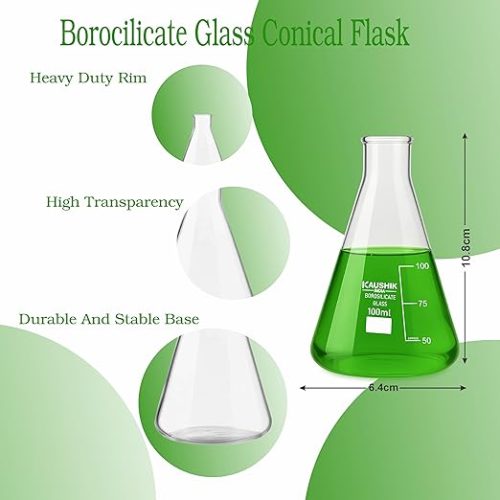
KAUSHIK INDIA Borosilicate Glass 3.3 Measuring Conical Flask 100ml For Lab Laboratory, School, College And Professional use
₹399.00Original price was: ₹399.00.₹169.00Current price is: ₹169.00. -
Sale!

Borosilicate Glass Round Bottom Boiling Flask with Inter Changeable Joint. 50 ML Capacity. Distillation Flask
₹299.00Original price was: ₹299.00.₹199.00Current price is: ₹199.00.
Reviews
There are no reviews yet.