
“1000ml borosilicate conical flask with PTFE screw cap, leak-proof and durable for accurate laboratory use.”
“Round Bottom Flask 2000 ML With joint b-24” has been added to your cart. View cart
Sale!

Laboratory Erlenmeyer Flask, 1000ml – Borosilicate Glass – With PTFE Screw Cap – Conical Shape – White Graduations
₹1,100.00 Original price was: ₹1,100.00.₹670.00Current price is: ₹670.00.
Categories: Conical flask, laboratary glassware, Scientific Instruments
Description
The Ultimate Guide to the PTFE Screw Cap: Sealing Integrity and Chemical Inertness
Introduction to the PTFE Screw Cap
The PTFE Screw Cap is a critical component in modern laboratory and industrial packaging. It is a closure mechanism designed for superior performance in demanding environments. The PTFE Screw Cap combines the mechanical convenience of a threaded screw cap with the exceptional properties of Polytetrafluoroethylene. This combination is powerful.
The primary function of any PTFE Screw Cap is to create a secure, leak-proof seal. It protects the contents of a container from the environment. It also prevents the contents from escaping. The PTFE screw cap is engineered for applications where chemical resistance and purity are non-negotiable.
You will find the PTFE Screw Cap on reagent bottles, sample vials, and process containers. Its use is mandatory in industries like pharmaceuticals, semiconductors, and analytical chemistry. The PTFE cap is more than just a lid; it is a guardian of product integrity. This guide explores its features, benefits, and applications in detail.
Understanding the PTFE Screw Cap is essential for selecting the right closure for sensitive materials. Its unique properties make it the gold standard for sealing. From research labs to high-volume production, the PTFE Screw Cap delivers reliable performance.
What is PTFE? The Miracle Polymer
PTFE stands for Polytetrafluoroethylene. It is a high-performance fluoropolymer. PTFE is renowned for its remarkable chemical inertness. It is virtually unaffected by most industrial chemicals and solvents. This makes a PTFE Screw Cap ideal for aggressive substances.
The PTFE polymer has one of the lowest coefficients of friction of any solid. This property gives PTFE its famous non-stick characteristic. A PTFE lined screw cap will not bind or fuse to glass threads. This ensures easy opening and closing, even after prolonged use.
PTFE also possesses an extremely high melting point. It remains stable across a very wide temperature range. A PTFE Screw Cap can typically withstand temperatures from -200°C to +260°C. This thermal stability is crucial for autoclaving and high-temperature storage.
The non-stick, non-reactive nature of PTFE also means it is very easy to clean. Contaminants do not adhere strongly to a PTFE Screw Cap. This supports decontamination and reuse protocols. The material properties of PTFE are the foundation of the cap’s performance.
Anatomy of a PTFE Screw Cap
A standard PTFE Screw Cap consists of two main parts. The first is the outer shell. This is typically made from a rigid polymer like polypropylene. The polypropylene screw cap shell provides the structural strength and the threads. It is the mechanical backbone of the assembly.
The second part is the PTFE liner. This is a disc or molded insert made of pure PTFE. The PTFE liner is what contacts the container’s finish. It creates the actual seal. The combination of a strong shell and an inert liner defines the PTFE Screw Cap.
Some designs are all-PTFE, including the threads. An all-PTFE screw cap is used for the most extreme chemical resistance. It is common in semiconductor and high-purity applications. The all-PTFE cap is more brittle but offers maximum protection.
The PTFE faced screw cap is another variant. Here, a layer of PTFE is laminated to a more compliant backing material. This PTFE faced cap can conform better to slight imperfections on the container’s sealing surface. It provides an excellent gas-tight seal.
The Critical Role of the PTFE Liner
The PTFE liner is the heart of the PTFE Screw Cap. This component is responsible for creating the seal. The PTFE liner must be compliant enough to form a tight barrier. It must also be robust enough to resist creep under compression.
A high-quality PTFE liner will have a smooth, uniform surface. This ensures maximum contact with the glass or plastic rim of the container. The PTFE liner creates a seal that is both liquid-tight and vapor-tight. This is essential for preventing evaporation or moisture ingress.
The chemical inertness of the PTFE liner means it will not react with the container’s contents. It will not leach plasticizers or other contaminants. This preserves the purity of sensitive chemicals, standards, and pharmaceutical products. The PTFE liner is a purity barrier.
Over time, a PTFE liner can experience cold flow or compression set. High-quality PTFE Screw Caps use specially formulated PTFE to minimize this. This ensures the PTFE liner maintains its sealing force for the lifespan of the cap.
Key Advantages of Using PTFE Screw Caps
The primary advantage of a PTFE Screw Cap is its unparalleled chemical resistance. A PTFE screw cap can seal containers holding strong acids, bases, and aggressive organic solvents. This includes hydrochloric acid, sulfuric acid, and methylene chloride. No other common liner material offers this level of protection.
The non-stick properties of PTFE provide a significant operational benefit. A PTFE Screw Cap will not weld itself to the container threads. This eliminates the frustrating and dangerous problem of stuck caps. A PTFE cap ensures easy opening, even after long-term storage.
PTFE Screw Caps offer excellent thermal stability. They can be autoclaved repeatedly for sterilization. They remain functional in deep-freeze and high-temperature oven applications. This thermal resilience makes the PTFE screw cap suitable for a vast range of storage conditions.
The purity of PTFE is another major advantage. It has extremely low levels of extractable metals and ions. This is critical for trace analysis, semiconductor processing, and pharmaceutical formulation. A PTFE Screw Cap will not contaminate high-purity products.
Chemical Resistance: The Defining Feature
The chemical resistance of the PTFE Screw Cap is its most celebrated feature. The carbon-fluorine bonds in the PTFE polymer are extremely strong and stable. This molecular structure makes PTFE inert to almost all chemicals. It is the most chemically resistant polymer available.
A PTFE Screw Cap is resistant to virtually all acids. This includes oxidizing acids like nitric acid and aqua regia. It is also completely resistant to all alkalis, no matter how concentrated. This broad-spectrum resistance is why PTFE caps are used for chemical reagent bottles.
Organic solvents cannot dissolve or swell a PTFE Screw Cap. Aromatic hydrocarbons, chlorinated solvents, and ketones have no effect. This makes the PTFE screw cap the only choice for many organic chemistry laboratories. It guarantees the integrity of the solvent.
This comprehensive chemical resistance ensures the long-term stability of container contents. It also ensures the PTFE Screw Cap itself will not degrade, crack, or become brittle. The PTFE cap maintains its sealing performance throughout its service life.
Applications in HPLC and Analytical Chemistry
In High-Performance Liquid Chromatography (HPLC), the purity of the mobile phase is paramount. PTFE Screw Caps are used to seal solvent bottles. They prevent the absorption of atmospheric carbon dioxide and water vapor. This preserves the precise composition of the HPLC solvents.
HPLC vial caps often feature a PTFE silicone septum. However, the screw caps for larger solvent reservoirs are frequently pure PTFE lined. The PTFE Screw Cap ensures no leachables contaminate the sensitive HPLC system. This prevents ghost peaks and baseline drift.
In sample storage for trace metal analysis, PTFE Screw Caps are essential. They prevent contamination from the closure itself. A PTFE cap will not leach metals that could interfere with ICP-MS or AA spectroscopy. This guarantees the accuracy of the analytical results.
For storing volatile organic standards, a PTFE Screw Cap provides a perfect seal. It prevents the loss of volatile components through the closure. This maintains the concentration and integrity of the standard over time. The PTFE screw cap is a key tool for quality control.
Use with Volatile and Sensitive Solvents
Volatile solvents like acetone, hexane, and dichloromethane present a sealing challenge. Their low viscosity and high vapor pressure allow them to escape through minute gaps. A PTFE Screw Cap creates a seal that is impermeable to these vapors. This prevents evaporation loss and maintains solvent purity.
Many solvents are also aggressive towards other plastics. They can cause swelling, cracking, or extraction of additives. A PTFE Screw Cap is completely immune to these effects. It remains dimensionally stable and inert when in contact with the most challenging solvents.
For air- and moisture-sensitive chemicals, the seal is even more critical. A PTFE Screw Cap can be used in conjunction with septa to create an airtight seal. The PTFE surface will not react with the sensitive compound. This is vital for organometallic chemistry and pyrophoric substances.
The PTFE Screw Cap is the universal solution for solvent storage. It provides peace of mind that the contents will remain unchanged. This reduces waste, cost, and safety hazards associated with solvent evaporation.
PTFE Caps for Reagent Bottles and Standards
Reagent bottles used in laboratories almost universally feature PTFE Screw Caps. Chemicals like concentrated acids and bases require this level of protection. The PTFE cap prevents corrosion of the cap itself. It also prevents contamination of the high-purity reagent.
Certified reference standards have a defined concentration. Any interaction with the closure can alter this value. PTFE Screw Caps are the industry standard for sealing these valuable materials. They ensure the standard remains valid throughout its shelf life.
The transparency of the PTFE liner is also a benefit for reagent bottles. It allows the user to see the condition of the sealing surface. A PTFE Screw Cap often has a bright white appearance. This signals its high-performance nature to the user.
For compliance with pharmacopeias like USP and EP, PTFE Screw Caps are often specified. They meet the stringent requirements for container closure systems. This is essential for manufacturing pharmaceuticals and active ingredients.
Thread Compatibility and Sizes
PTFE Screw Caps are manufactured to fit standard container finishes. The most common thread type for laboratory bottles is the GL (Glass Lock) thread. A GL 45 PTFE screw cap is designed for a container with a 45mm finish. This is a standard size for 1L and 2L reagent bottles.
Other common sizes include GL 38, GL 32, and GL 28. The number refers to the outer diameter of the container’s thread. It is crucial to match the PTFE Screw Cap size to the container precisely. An incorrect size will not form a proper seal.
For laboratory vials, smaller threads are used. These include 20-410, 24-410, and 28-400 finishes. PTFE Screw Caps are available for these vial sizes as well. A vial PTFE cap is essential for storing sensitive analytical samples.
The thread design on a PTFE Screw Cap is engineered for smooth engagement. It should screw on with consistent resistance. The threads should not cross-thread or bind. A well-designed PTFE cap provides a reliable and repeatable seal.
Autoclavability and Temperature Resistance
The PTFE Screw Cap is fully autoclavable. Autoclaving involves steam sterilization at 121°C or higher under pressure. The PTFE polymer is completely unaffected by these conditions. This allows for the sterilization of sealed containers.
The temperature resistance of PTFE is exceptional. A PTFE Screw Cap will not melt or deform at high temperatures. It can be used in ovens at temperatures up to 260°C. This is useful for drying containers or for high-temperature storage.
At the other extreme, PTFE remains flexible and functional at cryogenic temperatures. A PTFE Screw Cap can be used on containers stored in liquid nitrogen vapor freezers. It will not become brittle and crack at -80°C or even lower.
This broad temperature resistance makes the PTFE Screw Cap incredibly versatile. A single type of closure can be used across the entire temperature range of the laboratory. This simplifies procurement and inventory management.
Comparing PTFE to Other Liner Materials
It is useful to compare the PTFE Screw Cap to caps with other liner materials. A polyethylene liner is common for food and general use. However, it has poor chemical resistance to many organic solvents. It is not suitable for laboratory chemicals.
A silicone liner is flexible and provides a good seal. But silicone is permeable to many gases and vapors. It is also susceptible to swelling by certain solvents. A PTFE liner is superior for preventing evaporation and solvent attack.
Phenolic liners are hard and provide a good moisture barrier. However, they can dust and may contain impurities. They are not chemically inert like a PTFE liner. They are also not suitable for use with strong acids and bases.
The PTFE faced cap offers a good compromise. It uses a thin layer of PTFE bonded to a foam backing. This provides the chemical resistance of PTFE with the conformability of foam. For a perfect seal on glass, the PTFE faced screw cap is an excellent choice.
PTFE/Silicone Septa Combination Caps
For vials that require repeated access, a combination cap is used. The PTFE silicone septa is a common solution. This consists of a PTFE faced septum with a silicone backing. The PTFE faces the sample for chemical inertness.
The silicone layer provides the resealing properties. It allows an autosampler needle to pierce the septum multiple times. The PTFE silicone septa is held in place by a PTFE Screw Cap or an aluminum crimp cap.
The PTFE silicone septum is the standard for HPLC and GC autosampler vials. It provides the necessary chemical resistance and resealing capability. The silicone PTFE septum is a critical component in automated analysis.
These septa are available in various thicknesses and diameters. They are designed to fit specific vial caps. The PTFE silicone septa ensures sample integrity from preparation until injection.
Proper Sealing and Torque Guidelines
Achieving a proper seal with a PTFE Screw Cap requires correct torque. Under-tightening may result in a leak. Over-tightening can damage the threads or deform the PTFE liner. This can also lead to seal failure.
Manufacturers provide recommended torque specifications for their PTFE Screw Caps. This is usually measured in inch-pounds or Newton-centimeters. For a GL 45 PTFE screw cap, the torque might be 15-20 in-lbs. Hand-tightening is usually sufficient, but a torque wrench can be used for consistency.
The seal is created by compressing the PTFE liner against the container’s finish. The PTFE deforms slightly to fill any microscopic imperfections. This creates a continuous barrier. The goal is to achieve this compression without applying excessive force.
A good practice is to screw the PTFE Screw Cap down until firm resistance is felt. Then, apply a slight additional turn. This is typically enough to create a secure seal without over-torquing. The PTFE cap should be snug, not forced.
Cleaning and Maintenance for Longevity
PTFE Screw Caps are durable and can often be reused. Proper cleaning is essential to maintain performance. Rinse the PTFE cap with a compatible solvent or detergent solution. Ultrasonic cleaning is very effective for removing stubborn residues.
Inspect the PTFE liner before reuse. Look for any signs of permanent deformation, cuts, or embedded particles. A damaged PTFE liner will not form a reliable seal. The PTFE Screw Cap should be replaced if the liner is compromised.
The polypropylene shell of the PTFE Screw Cap can be cleaned with most common lab detergents. Avoid abrasive cleaners that could scratch the plastic. Scratches can harbor contaminants and make decontamination difficult.
Ensure the threads of the PTFE cap and the container are clean. Dirt or dried residue on the threads can prevent proper seating. This can lead to a leaky seal. Keeping threads clean ensures smooth operation and a consistent seal.
Regulatory Compliance and USP Standards
In the pharmaceutical industry, container closures are regulated. Screw Caps are often compliant with United States Pharmacopeia (USP) guidelines. USP <661> describes the requirements for containers and closures.
A Screw Cap used for pharmaceutical products must have low extractables. It must pass biological reactivity tests as per USP <87> or <88>. High-quality PTFE caps are manufactured to meet these stringent standards.
For compendial products, the closure system must not interact with the drug product. The inertness of the Screw Cap makes it an ideal choice. It helps to ensure the stability, strength, and purity of the drug throughout its shelf life.
Manufacturers of PTFE Screw Caps often provide Certificates of Analysis (CoA). These documents certify the material composition and compliance with relevant standards. This is essential documentation for regulated industries.
The Future of PTFE Screw Cap Technology
The future of Screw Cap technology is focused on enhanced performance. This includes developing PTFE blends with even lower levels of extractables. This is driven by the increasing sensitivity of analytical instruments.
Another area of innovation is in cap design. New thread profiles can provide a more consistent sealing force. They can also make capping and decapping easier for automated systems. The Screw Cap will continue to evolve for automation.
Sustainability is also a consideration. While itself is not biodegradable, efforts are being made to make the polypropylene shell from recycled content. The long lifespan and reusability of a Screw Cap already contribute to waste reduction.
The core technology of the Screw Cap is well-established. However, incremental improvements in manufacturing and material science will continue. This will further enhance its reliability and range of applications.
Conclusion: The Indispensable PTFE Screw Cap
The Screw Cap is a masterpiece of material science and engineering. It solves the critical problem of sealing aggressive and sensitive chemicals. Its unique combination of chemical inertness, thermal stability, and non-stick properties is unmatched.
From securing a bottle of concentrated acid to sealing an HPLC solvent, the Screw Cap is the trusted choice. It ensures the purity, potency, and safety of valuable contents. It is a small component that plays a massive role in product integrity.
The reliability of the Screw Cap makes it an indispensable tool. It is found in virtually every chemistry laboratory and many industrial settings. Its performance and versatility have made it a standard for decades.
In conclusion, the Screw Cap is far more than a simple lid. It is a high-performance sealing solution. It protects products, enables precise science, and ensures safety. The Screw Cap is a fundamental and essential component of the modern laboratory.
Be the first to review “Laboratory Erlenmeyer Flask, 1000ml – Borosilicate Glass – With PTFE Screw Cap – Conical Shape – White Graduations” Cancel reply
Related products
-
Sale!
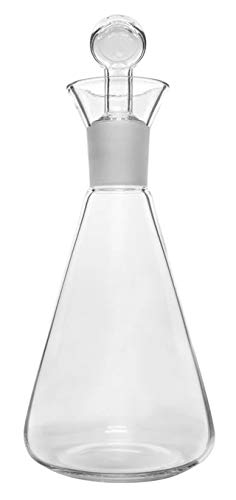
Iodine Flask With Glass Stopper 500ml. Iodine Flask for Lab
₹899.00Original price was: ₹899.00.₹499.00Current price is: ₹499.00. -
Sale!

KAUSHIK INDIA 20ML 50Pcs Borosilicate Glass Vial With Screw Cap, Leak Proof Liquid Storage Vial For Essential Oil,Perfume,Meds,Reagent,Anointing Oil Bottle And Lab Use Culture Tube
₹960.00Original price was: ₹960.00.₹759.00Current price is: ₹759.00. -
Sale!
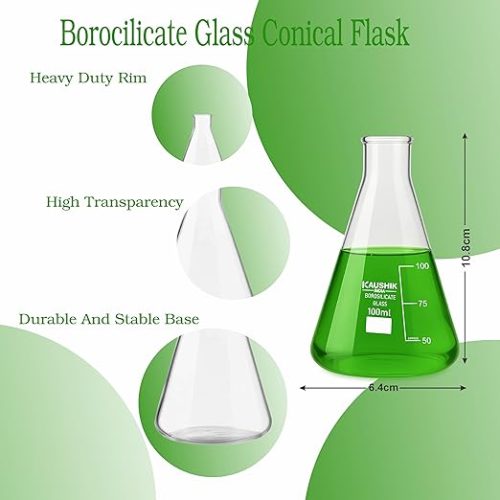
KAUSHIK INDIA Borosilicate Glass 3.3 Measuring Conical Flask 100ml For Lab Laboratory, School, College And Professional use
₹399.00Original price was: ₹399.00.₹169.00Current price is: ₹169.00.
Reviews
There are no reviews yet.