
These 12 Pcs 250ml Laboratory Reagent Containers are made from durable polypropylene, designed for safe storage and handling of samples
“KAUSHIK INDIA BOROSILICATE GLASS Iodine Determination Flask 250ML WITH GLASS STOPPER” has been added to your cart. View cart
Sale!

KAUSHIK INDIA Polypropylene 12 Pcs 8oz Plastic Sample Bottles 250ml Wide Mouth Reagent Bottle Water Sample Container Lab educations Container Translucent Tool for Laboratories home kitchen
₹899.00 Original price was: ₹899.00.₹599.00Current price is: ₹599.00.
Categories: Regeant Bottle Polypropylene, Scientific Instruments
Description
The Laboratory Reagent Container: A Cornerstone of Scientific Integrity
In the meticulously controlled world of scientific research, the laboratory reagent container is far more than a simple vessel. It is a fundamental component of experimental integrity, data accuracy, and researcher safety. These specialized containers are designed to store, protect, and preserve the purity of sensitive substances known as reagents. The choice of an appropriate reagent container is a critical decision that can directly impact the outcome of analytical chemistry, molecular biology, pharmaceutical development, and diagnostic testing.
The term reagent encompasses a vast array of chemicals, from common acids and solvents to delicate enzymes and molecular probes. Each has unique requirements for storage. A laboratory reagent container must therefore be engineered to address specific challenges like chemical compatibility, light sensitivity, gas permeability, and temperature stability. The humble bottle or vial on a lab bench is, in reality, a product of advanced material science and precision manufacturing.
This guide provides an exhaustive exploration of laboratory reagent containers. We will examine the diverse materials used in their construction, the various types and forms available, and the critical selection criteria for different applications. Furthermore, we will discuss best practices for handling, labeling, and ensuring the longevity of both the container and its valuable contents. Understanding the nuances of these essential tools is paramount for any professional working within a laboratory environment.
The consequences of an improper container selection can be severe. It can lead to reagent degradation, contamination, evaporation, or even dangerous chemical reactions. Therefore, this resource aims to empower scientists, lab managers, and procurement specialists with the knowledge to select the perfect reagent container for every need, ensuring that the integrity of the science is never compromised by its packaging.
Chapter 1: The Critical Role of the Reagent Container in the Laboratory
The primary function of a laboratory reagent container is containment, but its role extends far beyond this basic task. It is the first line of defense in a chain of custody that ensures a reagent performs as expected from the moment it is manufactured until its final use in an experiment.
Preserving Reagent Purity and Stability
Reagents are often highly sensitive to their environment. A high-quality reagent container acts as a barrier against external contaminants. These contaminants can include moisture from the air, atmospheric gases like oxygen and carbon dioxide, microbial life such as bacteria and fungi, and particulate matter like dust.
The container must be inert. This means the material of the container itself should not leach any chemicals into the reagent. Even trace amounts of leachates can interfere with sensitive reactions, leading to inaccurate results in procedures like HPLC, GC-MS, or PCR. The internal surface of a reagent bottle must be ultra-clean and non-reactive.
Furthermore, many reagents are sensitive to light. Photodegradation can render a reagent useless. An amber or opaque laboratory reagent container is essential for protecting light-sensitive substances from ultraviolet and visible light wavelengths. The container is thus a stable, controlled microenvironment.
Ensuring Researcher and Environmental Safety
Many reagents are hazardous. They may be corrosive, flammable, toxic, or reactive. A robust chemical storage container is designed to safely contain these hazards. Features like leak-proof caps, reinforced walls, and chemical-resistant materials prevent spills and exposure that could harm personnel or damage equipment.
In the event of a drop or impact, a safety coated bottle,
often encased in a shatter-resistant plastic polymer, can prevent a dangerous spill of broken glass and hazardous liquid. For volatile compounds, a container with a vented cap or a secure seal is necessary to control pressure buildup while preventing the escape of harmful vapors.
Proper laboratory containers are therefore integral to complying with workplace safety regulations such as OSHA standards. They are a key element in responsible chemical management within any modern laboratory.
Facilitating Organization and Workflow Efficiency
A well-organized lab is an efficient lab. Standardized reagent containers allow for clear labeling and easy identification. The use of uniform bottles and vials streamlines storage on shelves and in refrigerators or freezers. This saves time and reduces the risk of using the wrong reagent.
The physical design of the container also impacts workflow. Ergonomic shapes that are easy to grip, pour from, or pipette from enhance precision and reduce repetitive strain. A reagent bottle with a well-designed neck and opening can make dispensing a precise volume much simpler and more accurate.
From a procurement perspective, standardizing on specific types of laboratory plasticware or glassware can simplify ordering and inventory management. The reagent container is, in this sense, a unit of organization that brings order to the complex ecosystem of the laboratory.
Chapter 2: Materials of Construction: Selecting the Right Substrate
The material of a laboratory reagent container is its most defining characteristic. The choice between glass and plastic, and the specific type of polymer, is determined almost entirely by the chemical compatibility and storage requirements of the reagent.
Borosilicate Glass: The Gold Standard for Purity and Inertness
Borosilicate glass is the premier material for many laboratory reagent containers. Renowned for its exceptional chemical resistance and thermal stability, it is the material of choice for storing strong acids, alkalis, and organic solvents. A glass reagent bottle made from borosilicate glass will not react with or contaminate its contents.
The low thermal expansion coefficient of borosilicate glass allows it to withstand significant temperature shifts without cracking. This is crucial for containers that are autoclaved for sterilization or moved from a freezer to a warm water bath. The ability to repeatedly sterilize a glass container makes it ideal for reusable applications.
Borosilicate glass is available in clear form for general use or in amber to protect light-sensitive reagents. The main disadvantages of glass containers are their weight and fragility. However, for maximum purity and resistance to a wide range of chemicals, a borosilicate glass bottle is often the only acceptable option.
Polyethylene (PE): The Flexible Workhorse
Polyethylene is a common plastic used for laboratory bottles and carboys. It is categorized into two main types: Low-Density Polyethylene (LDPE) and High-Density Polyethylene (HDPE). LDPE containers are flexible, translucent, and excellent for storing aqueous solutions and mild acids and alkalis. Their flexibility makes them ideal for squeeze bottles used for dispensing solvents like ethanol or acetone.
HDPE containers are more rigid, opaque, and offer greater chemical resistance than LDPE. An HDPE bottle is suitable for a broader range of chemicals and provides a better barrier against moisture vapor transmission. HDPE plasticware is commonly used for long-term storage of many standard laboratory reagents.
While polyethylene is resistant to many chemicals, it is not suitable for storing strong oxidizing agents, hydrocarbons, or certain organic solvents, which can cause the plastic to swell or degrade. Always consult a chemical compatibility chart before using a PE container.
Polypropylene (PP): The Autoclavable All-Rounder
Polypropylene is one of the most versatile plastics for laboratory use. It is rigid, has a high melting point, and is highly resistant to a wide range of acids, alkalis, and solvents. A key advantage of PP containers is their autoclavability. Polypropylene bottles and vials can withstand repeated steam sterilization at 121°C without deforming.
This makes polypropylene ideal for storing cell culture media, buffers, and other solutions that require aseptic conditions. PP plasticware is also often translucent, allowing for visual inspection of contents, though it is not as crystal clear as glass or other clear plastics. It is a staple material for centrifuge tubes and specimen containers.
Polymethylpentene (PMP): For High-Clarity Applications
Polymethylpentene is a specialized plastic that offers glass-like clarity and high thermal resistance. A PMP container is transparent, allowing for easy content identification, and can withstand autoclaving. It is more chemically resistant than polyethylene but may not be suitable for all aggressive solvents.
PMP bottles are often used when visual clarity is important alongside the practical benefits of plastic, such as shatter-resistance and light weight. They are a premium option for specific applications where the transparency of a reagent container is a critical factor.
Fluoropolymer Resins (e.g., FEP, PFA): For Aggressive Chemicals
For the most aggressive and high-purity applications, fluoropolymer containers are the ultimate solution. Materials like Perfluoroalkoxy Alkane (PFA) and Fluorinated Ethylene Propylene (FEP) are virtually inert. They can handle strong acids, bases, and solvents at elevated temperatures without leaching or degradation.
A PFA bottle is used in trace metal analysis and semiconductor manufacturing where even minute contamination from the container would be catastrophic. These containers are also highly transparent and flexible. Their main drawback is cost, but for ultra-high-purity requirements, they are indispensable.
Specialty Coatings and Treatments
To enhance the safety of glass containers, many are available with safety coatings. This is a plastic polymer layer applied to the exterior of the glass bottle. If dropped, the coating holds the glass shards together, preventing a dangerous spill and making cleanup safer.
Another treatment involves surface modification to reduce binding. Silanized containers, for example, have a silicone-based coating on the interior that prevents proteins and other biomolecules from adhering to the walls of the vial or tube. This is critical for maximizing recovery in molecular biology applications.
Chapter 3: A Typology of Forms: Types of Laboratory Reagent Containers laboratory reagent container
The shape and design of a reagent container are tailored to its specific function, volume, and dispensing method. The following are the most common types found in a laboratory.
Reagent Bottles: The Standard-Bearers
The reagent bottle is the most recognizable form of laboratory reagent container. They come in various sizes, from 30 mL to 20 liters or more. Standard reagent bottles often have a narrow neck and are sealed with a screw cap or a glass stopper. The narrow neck helps control pouring and reduces evaporation and contamination.
A Boston round bottle is a classic design with a cylindrical body and a rounded shoulder. It is a versatile container for a wide range of liquid reagents. Wide-mouth bottles are also common, facilitating easier cleaning and the addition of solid reagents or scoops.
These bottles can be made from glass or plastic and are available in clear, amber, or opaque forms. The reagent bottle is the workhorse for bulk chemical storage on lab benches and in storage cabinets.
Dropper Bottles and Dispensing Vials laboratory reagent container
For reagents that need to be added drop-by-drop, a dropper bottle is essential. This type of container integrates a glass or plastic pipette into the cap assembly. Squeezing the bulb allows for precise dispensing of small volumes. Dropper bottles are ideal for stains, indicators, and certain solvents.
Similarly, dispensing vials may come with a flip-top cap or a spout designed for controlled pouring. These containers prioritize user convenience and accuracy in daily bench work. They are a subtype of reagent container designed for active use rather than long-term storage.
Ampoules and Sealed Vials laboratory reagent container
For reagents of the highest purity or those that are extremely sensitive to air and moisture, ampoules are used. An ampoule is a small, sealed glass vessel. The neck is scored and must be snapped off to access the contents. This hermetic seal ensures the reagent has not been exposed to the atmosphere since manufacture.
Sealed vials with crimp tops or screw caps serve a similar purpose for larger volumes or less sensitive materials. These vials are essential for storing standards for analytical instruments, volatile samples, and hygroscopic materials. The integrity of the seal is paramount for these specialized reagent containers.
Carboy and Jerrican: Bulk Liquid Storage laboratory reagent container
For very large volumes of solvents, acids, or purified water, a carboy or jerrican is used. A carboy is typically a large, rigid container, often made of HDPE or glass, with a capacity of 10 to 20 liters. It usually has a handle for carrying and a spigot for dispensing.
A jerrican is a more heavy-duty, rectangular container, often made of HDPE, designed for safe transport and storage of large quantities of chemicals. Both carboys and jerricans are crucial for central chemical storage areas and for supplying high-usage solvents to the lab.
Microcentrifuge Tubes and Cryogenic Vials laboratory reagent container
In molecular biology and biochemistry, small-volume containers are paramount. The microcentrifuge tube, typically holding 0.5 mL to 2.0 mL, is a conical tube made of polypropylene. It is designed to withstand high centrifugal forces and is used for a multitude of tasks from sample preparation to PCR.
Cryogenic vials are designed for storage in liquid nitrogen (-196°C) or ultra-low freezers (-80°C). They feature a special screw cap with an O-ring to ensure an airtight seal, preventing liquid nitrogen from entering the tube and causing it to explode upon warming. These vials are essential for preserving cell lines, bacteria, and tissues.
Chapter 4: The Science of Selection: Choosing the Right Container laboratory reagent container
Selecting the correct laboratory reagent container is a systematic process. It requires a careful assessment of the reagent’s properties, the storage conditions, and the intended use.
Chemical Compatibility: The Non-Negotiable First Step laboratory reagent container
The single most important factor is chemical compatibility. Placing a reagent in an incompatible container can lead to leaching, degradation, or catastrophic failure. Always consult a chemical compatibility chart provided by the container manufacturer. These charts detail how a specific plastic or glass resists hundreds of chemicals.
For example, polypropylene may be excellent for acids but unsuitable for certain chlorinated solvents. Glass is resistant to almost everything except hydrofluoric acid and strong alkalis at high temperatures. A fluoropolymer container is the safest bet for the most aggressive chemicals. Never assume compatibility; always verify.
Volume and Concentration Considerations
The required volume dictates the size of the container. It is best practice to select a container that is only slightly larger than the volume of the reagent. A large headspace filled with air can lead to oxidation or moisture absorption for sensitive reagents. For concentrates that will be diluted, a small, full vial is better than a half-empty bottle.
The concentration of the reagent also matters. A concentrated acid may require a more robust container than its diluted counterpart. The potential hazard is greater, and the chemical reactivity is often higher at elevated concentrations.
Environmental Factors: Light, Temperature, and Atmosphere laboratory reagent container
Light Sensitivity: If a reagent is light-sensitive, an amber glass bottle or an opaque plastic container is mandatory. Clear containers should only be used for reagents that are not affected by light.
Temperature: Will the container be stored at room temperature, in a refrigerator (4°C), a freezer (-20°C or -80°C), or in liquid nitrogen? Polypropylene is excellent for freezing, while glass can crack if a liquid-filled bottle is frozen without sufficient headspace. Cryogenic vials are specifically engineered for ultra-low temperatures.
Atmosphere: For reagents that oxidize easily, inert gas purging may be necessary. Some containers are designed with ports for introducing an inert gas like argon or nitrogen to displace oxygen before sealing.
Closure and Sealing Mechanisms laboratory reagent container
The cap is as important as the container itself. It must provide a secure seal to prevent evaporation and contamination. Options include:
-
Screw Caps: Common and reliable, often with a liner (e.g., PTFE) to enhance the seal.
-
Crimp Caps: Used with vials and provide a hermetic seal, essential for HPLC samples.
-
Snap Caps: Convenient for tubes that are frequently opened and closed.
-
Dropper Assemblies: For drop-wise dispensing.
-
Vented Caps: Allow for pressure equalization while keeping contaminants out.
The closure material must also be chemically compatible with the reagent, especially if vapors will contact it.
Chapter 5: Best Practices for Handling and Management laboratory reagent container
Proper use and management of laboratory reagent containers are essential for maintaining a safe, efficient, and compliant laboratory.
Labeling and Documentation laboratory reagent container
Every reagent container must be clearly and permanently labeled. Critical information includes:
-
Reagent Name and Chemical Formula
-
Concentration
-
Date of Preparation/Receipt
-
Initials of the Preparer
-
Hazard Warnings (e.g., Corrosive, Flammable)
-
Expiration Date
This practice is a core requirement of Good Laboratory Practice (GLP) and is vital for preventing errors.
Storage and Organization laboratory reagent container
Reagent containers should be stored according to their hazard class. Flammables must be in a flammable storage cabinet. Acids should be stored in a dedicated acid cabinet, often with secondary containment. Solids should be stored separately from liquids.
Shelving should be sturdy and lipped to prevent bottles from falling. Heavier containers, like carboys, should be stored on lower shelves. An organized storage system, often using plasticware of uniform size, improves safety and efficiency.
Cleaning, Decontamination, and Disposal laboratory reagent container
Reusable glassware and plasticware must be thoroughly cleaned and sometimes sterilized. The cleaning protocol must be rigorous to prevent cross-contamination. Autoclaving is the standard method for sterilization.
Before disposal, reagent containers must be properly decontaminated. Empty bottles that held hazardous chemicals cannot be simply thrown in the trash. They must be rinsed (if safe to do so) or treated as hazardous waste themselves, following the lab’s chemical waste disposal procedures.
Conclusion: The Indispensable Guardian of Scientific Quality laboratory reagent container
The laboratory reagent container is an unsung hero of the scientific world. It is a sophisticated product of engineering designed to fulfill a simple yet vital mission: to preserve the quality and safety of the reagents that drive discovery and innovation. From the standard reagent bottle to the specialized cryogenic vial, each container is a tailored solution to a specific scientific challenge.
By understanding the materials, types, and selection criteria detailed in this guide, laboratory professionals can make informed decisions that protect their investments in reagents, ensure the validity of their data, and safeguard their well-being. The meticulous attention paid to selecting and using the correct laboratory reagent container is a hallmark of a professional, high-quality research environment.
This description provides a detailed, keyword-rich overview of laboratory reagent containers, meeting the specified requirements for structure, paragraph length, and thematic depth.
Be the first to review “KAUSHIK INDIA Polypropylene 12 Pcs 8oz Plastic Sample Bottles 250ml Wide Mouth Reagent Bottle Water Sample Container Lab educations Container Translucent Tool for Laboratories home kitchen” Cancel reply
Related products
-
Sale!

Borosilicate Glass Narrow Mouth Reagent Bottle with Screw Cap 1000ml- Durable, thermal shock resistant, and leak-proof. Ideal for secure storage laboratory chemicals
₹199.00 – ₹499.00Price range: ₹199.00 through ₹499.00Select options This product has multiple variants. The options may be chosen on the product page Details -
Sale!
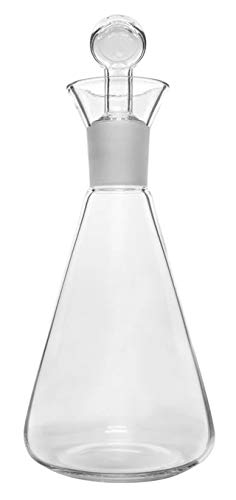
Iodine Flask With Glass Stopper 500ml. Iodine Flask for Lab
₹899.00Original price was: ₹899.00.₹499.00Current price is: ₹499.00. -
Sale!

Borosilicate Glass Bend Connector Tube Vacuum Distillation Take Off Adapter Borosilicate Glass Laboratory Chemical Equipment (B-24, Standard)
₹1,999.00Original price was: ₹1,999.00.₹617.00Current price is: ₹617.00.
Reviews
There are no reviews yet.