
Set of 20 borosilicate heat resistant tubes (18mm × 150mm, 25ml) with rim. Durable, chemical-proof, and ideal for school labs, college experiments.
“Round Bottom Flask 2000 ML With joint b-24” has been added to your cart. View cart
Sale!

KAUSHIK INDIA Borosilicate Glass Test Tube With Rim 18mmX150mm(25ml) Capacity- Pack of 20pcs|Heat & Chemical Durability|Perfect For Any School,Colledge Labs Experiment & For Sample collection
₹450.00 Original price was: ₹450.00.₹249.00Current price is: ₹249.00.
Categories: laboratary glassware, Scientific Instruments, Test Tube
Description
-
The Ultimate Guide to Heat Resistant Tube: Mastering High-Temperature Applications
Introduction to Heat Resistant Tube
The heat resistant tube is a critical engineering component.
It is designed to perform reliably in extreme thermal environments.
Standard tubing materials fail under intense heat.
They may melt, degrade, become brittle, or lose pressure integrity.
A heat resistant tube is engineered to prevent these failures.
It maintains its structural and functional properties at high temperatures.
This tubing is a product of advanced material science.
It is indispensable across a vast spectrum of industries.
From aerospace engineering to industrial manufacturing, its role is vital.
Selecting the correct high temperature tubing is a fundamental engineering decision.
It ensures system safety, efficiency, and longevity.
Understanding its properties is essential for engineers and technicians.What is a Heat Resistant Tube?
A heat resistant tube is a cylindrical conduit.
It is specifically manufactured to withstand prolonged heat exposure.
This tubing can carry fluids, gases, or provide insulation in hot conditions.
The definition of “heat resistant” is relative to the application.
It could mean resisting 150°C in an engine bay or 1700°C in a furnace.
The key is that the tube does not degrade under its rated temperature.
It avoids melting, cracking, embrittlement, or excessive softening.
A high temperature tube often also possesses other resistant properties.
These include thermal stability and low thermal conductivity.
Its construction protects systems from heat-related damage.Key Features and Specifications of Heat Resistant Tubing
The performance of a heat resistant tube is defined by its specs.
These parameters must be carefully matched to the application.Maximum Continuous Service Temperature
This is the most critical specification.
The maximum temperature rating indicates the upper limit for safe use.
Operating beyond this limit risks rapid degradation and failure.
This rating is determined by the material’s composition.
A silicone tube may be rated for 200°C.
A fiberglass sleeving might handle 500°C.
An ceramic tube can exceed 1400°C.
The heat resistance is directly tied to this number.Material of Construction: The Foundation of Performance
The material defines the capabilities of the heat resistant tube.
Different substances offer unique high temperature performance.
Silicone rubber tubing offers excellent flexibility and good heat resistance.
PTFE (Teflon) tubing is known for its wide temperature range and chemical inertness.
Fiberglass tubing provides rigid insulation and very high thermal stability.
Metallic tubes like stainless steel offer strength and extreme heat tolerance.
The material choice is a balance between temperature, flexibility, and cost.Thermal Stability and Low Thermal Conductivity
Thermal stability is the material’s ability to resist chemical change at high heat.
A stable heat resistant tube will not break down or off-gas.
This is crucial for applications requiring purity, like food processing.
Low thermal conductivity is another key feature.
This means the tube does not readily transfer heat.
It acts as an insulator, protecting surrounding components.
This is vital for wiring sleeves and protective conduits.Pressure Rating and Mechanical Strength
A heat resistant tube must often handle internal pressure.
The pressure rating specifies the maximum safe internal pressure.
This rating typically decreases as the temperature increases.
The tube must retain mechanical strength while hot.
It must resist cracking, tearing, or bursting under pressure.
Wall thickness and material strength dictate this property.Flexibility and Durability
Flexibility is a key operational feature at temperature.
A flexible high temperature hose can simplify system routing.
It can absorb vibration and movement in hot environments.
Durability refers to resistance to abrasion, fatigue, and environmental factors.
A durable heat resistant tube will have a long service life.
This is true even in punishing conditions.The Critical Importance of Heat Resistance
Why is heat resistance so profoundly important?
The consequences of tubing failure are severe.Preventing Catastrophic System Failure
A failed tube in a high-temperature system can be disastrous.
It can cause leaks, spills, and immediate shutdowns.
In manufacturing, this downtime is incredibly costly.
In aerospace or automotive contexts, it can be dangerous.
Using a properly rated heat resistant tube ensures operational continuity.
It is a key component for system reliability.Ensuring Personnel and Environmental Safety
This is the most critical reason for using high temperature tubing.
A breach can release hot, often hazardous, fluids or gases.
This poses severe burn risks to personnel.
It can also cause fires or damage sensitive equipment.
A heat resistant tube acts as a primary safety barrier.
It contains high-energy materials within a safe pathway.Maintaining Fluid and Gas Integrity
In many systems, the carried medium must not be contaminated.
An incompatible tube can degrade and leach materials into the stream.
This is unacceptable in food, pharmaceutical, or semiconductor production.
A truly heat resistant and inert tube like PTFE prevents this.
It ensures the purity of the product from start to finish.Protecting Sensitive Components
Often, the tube’s role is to protect other parts from heat.
Heat resistant sleeving shields wires, cables, and hoses.
It prevents heat damage from external sources like engines or exhausts.
This protection extends the life of valuable components.
It is a simple, cost-effective solution for thermal management.Common Materials for Heat Resistant Tubing
Each material offers a unique profile of heat resistance and physical properties.
Silicone Rubber Tubing
Silicone tubing is a highly flexible and popular option.
It typically offers a continuous service temperature from -60°C to 200°C.
Some specialized grades can withstand even higher temperatures.
It is known for its excellent ozone and UV resistance.
Silicone rubber tube is also very clean and often used in food and medical applications.
Its flexibility makes it easy to install and route.PTFE (Polytetrafluoroethylene) Tubing
PTFE tubing is the gold standard for many demanding applications.
It has an exceptional temperature range, from -200°C to +260°C.
It is almost completely chemically inert.
PTFE tube has a very low coefficient of friction.
This makes it ideal for applications involving sliding parts or sticky materials.
It is also highly dielectric and flame resistant.Fiberglass and Silica Fabric Sleeving
For extreme temperatures, fiberglass sleeving is a common choice.
It can provide continuous protection up to 500°C or higher.
It is typically used as a protective sleeve over wires or other hoses.
Silica cloth offers even better heat resistance, exceeding 1000°C.
These materials are rigid and used primarily for insulation and protection.
They are not typically used for fluid transfer.Stainless Steel Tubing
Metallic tubing, especially stainless steel, offers immense strength.
It can withstand very high temperatures and pressures.
Stainless steel tube is used in exhaust systems, hydraulic lines, and instrumentation.
It is rigid and requires bending tools for installation.
Its heat resistance is coupled with excellent durability.Ceramic and Composite Tubes
For the most extreme applications, ceramic tubes are used.
They can operate in temperatures exceeding 1400°C.
They are used in furnaces, kilns, and aerospace applications.
These tubes are very rigid and brittle.
They are specialists for the most punishing thermal environments.Applications and Uses of Heat Resistant Tubing
The use of heat resistant tubing is critical in many fields.
Automotive and Aerospace Industries
This is a primary domain for high temperature hose products.
It is used in engine bays for coolant and oil lines.
It protects wiring looms from exhaust manifold heat.
Heat resistant tube is used in turbocharger systems and brake lines.
In aerospace, it is found in engine compartments and environmental control systems.Industrial Manufacturing and Processing
Heat resistant tubing is ubiquitous in factories.
It is used to transfer hot fluids, oils, and solvents.
It serves as insulation for hydraulic lines running near hot machinery.
In food processing, silicone tubing transfers hot ingredients.
In plastics manufacturing, it handles hot liquid polymers.Laboratory and Scientific Equipment
Labs use high temperature tubing in many instruments.
It is used in autoclaves and sterilizers.
It carries heated gases in chromatography systems.
PTFE tubing is common in heated sample transfer lines.
The need for cleanliness and thermal stability is paramount.Electrical and Electronics Applications
Heat resistant sleeving is essential here.
It protects wires and cables in high-temperature environments.
This includes inside appliances, industrial control panels, and power generation.
It prevents short circuits and insulates against heat.Food and Beverage Production
Heat resistant tube is used to transfer hot liquids like oils and syrups.
It is used in pasteurization and cooking processes.
Silicone and PTFE are common choices due to their cleanliness.
They must withstand cleaning-in-place (CIP) with hot fluids.Selection Guide: Choosing the Right Heat Resistant Tube
Selecting the right tube involves a careful process.
Step 1: Identify the Temperature Range
Determine the minimum and maximum temperatures the tube will face.
Include both continuous and peak exposure temperatures.
This is the most critical step.Step 2: Determine the Application Function
Is the tube transferring a fluid or gas?
Is it providing insulation or physical protection?
What are the pressure requirements?
Answering these defines the tube’s primary job.Step 3: Consider the Operating Environment
Will the tube be exposed to chemicals, oils, or weather?
Is flexibility or rigidity required?
What are the connectivity requirements?
These factors narrow the material choices.Step 4: Consult Material Specifications
Cross-reference your temperature and application needs with material properties.
Select a material with a temperature rating that exceeds your maximum.
Ensure it is compatible with any environmental factors.Step 5: Verify Physical Specifications
Select the correct inner diameter for flow requirements.
Choose the appropriate wall thickness for pressure needs.
Confirm the length and any required fittings.Installation, Maintenance, and Safety Practices
Proper handling ensures the heat resistant tube performs as expected.
Proper Installation Techniques
Avoid sharp bends that exceed the tube’s minimum bend radius heat resistant tube
Use appropriate high-temperature clamps and fittings.
Ensure the tube is not stretched or twisted during installation.
Keep it clear of sharp edges or abrasive surfaces heat resistant tubeRoutine Inspection and Maintenance
Establish a regular inspection schedule.
Look for signs of cracking, hardening, discoloration, or blistering heat resistant tube
These are indicators of thermal degradation.
Check for abrasion or damage to the outer surface heat resistant tube
Replace tubing at the first sign of damage or as part of preventive maintenance.Safe Handling Practices
Always allow the system to cool before servicing tubing heat resistant tube
Wear appropriate PPE, including heat-resistant gloves.
Be aware that some materials, like fiberglass, can cause irritation heat resistant tube
Handle all tubing as if it contains hot or hazardous material.Troubleshooting Common Issues
Even the best tubing can experience problems.
Problem: Tubing Becoming Brittle and Cracking
Likely Cause: Thermal aging or exposure to temperatures beyond its rating.
Solution: Verify the operating temperature. Select a material with a higher temperature rating.Problem: Tubing Softening and Deforming
Problem: Exceeding the Glass Transition Temperature
Likely Cause – The tubing material has surpassed its glass transition temperature (Tg), the critical point at which a polymer changes from a rigid, glass-like state to a softer, rubbery one. When this temperature is exceeded, the tubing may lose mechanical strength, become deformed, or even collapse under pressure. In addition, chemical resistance and dimensional stability are often compromised once the polymer transitions out of its stable state.
Impact –
-
Loss of tubing rigidity and shape, leading to kinking or sagging.
-
Reduced pressure tolerance, increasing the likelihood of leaks or bursts.
-
Potential contamination of fluids due to polymer softening or breakdown.
-
Shortened tubing lifespan, requiring more frequent replacements.
Solution –
-
Use Heat-Resistant Materials – Select tubing designed for higher operating temperatures. Options include PTFE, PFA, FEP, silicone, or borosilicate glass, all of which maintain integrity far beyond standard plastics.
-
Verify Temperature Ratings – Always check the manufacturer’s specifications for maximum service temperature and ensure a safety margin above your actual operating conditions.
-
Material Selection by Application –
-
For laboratory chemicals → PTFE or glass tubing offers excellent thermal and chemical stability.
-
For food and medical use → Silicone tubing provides flexibility with good heat tolerance.
-
For industrial high-heat fluids → Stainless steel or reinforced composites may be more appropriate.
-
-
Prevent Overheating – Monitor system temperatures and insulate or cool tubing where possible to avoid exceeding its rated Tg.
By understanding the glass transition temperature limits of different polymers and choosing materials suited to your application, you can prevent premature failures, maintain system reliability, and ensure safe operation.
Problem: Leaking at Fittings
Likely Cause – At elevated temperatures, materials expand and contract during heating and cooling cycles. This thermal cycling can gradually loosen connections, compromise seals, and cause leaks around fittings.
Impact – Leaks can result in fluid loss, pressure instability, contamination of samples, and even safety hazards if hazardous or volatile liquids are involved. Over time, repeated loosening may also damage threads or fitting surfaces.
Solutions –
Solutions for Leaking at Fittings
High-Temperature Fittings – Standard fittings may soften, warp, or lose integrity when exposed to continuous high heat. To prevent this, select fittings specifically engineered for high-temperature environments, such as stainless steel, brass, or specialized high-performance polymers (e.g., PEEK). These materials retain strength, resist deformation, and maintain reliable seals even under thermal stress, making them suitable for both laboratory and industrial systems.
Re-Torque Connections – Heating and cooling cycles cause tubing and fittings to expand and contract. Over time, this movement gradually loosens threaded or compression connections, leading to leaks. After several thermal cycles, it is important to re-torque (re-tighten) the fittings to restore proper sealing pressure. Doing so prevents gradual wear, extends service life, and helps maintain system integrity.
Thermal Compatibility – Not all tubing and fittings expand at the same rate when exposed to heat. If materials have different coefficients of thermal expansion, gaps or stress points may form at the joint, eventually leading to leaks or cracks. To reduce this risk, always match tubing and fitting materials so that they expand and contract together more uniformly under temperature changes.
Thread Sealants – In applications where threads alone cannot guarantee a tight seal, high-temperature-rated sealants, gaskets, or O-rings may be used to reinforce connections. Sealants help fill microscopic gaps, preventing leaks even under pressure. However, it is essential to select a sealant that is chemically compatible with the fluid being transported and that can withstand the operating temperature without degrading.
Problem: Internal Contamination
Likely Cause – At high heat, certain tubing materials can degrade, leach chemicals, or release particulates into the fluid stream. This breakdown compromises both the fluid’s purity and the tube’s structural integrity.
Impact – Contamination not only skews experimental or industrial results but may also damage downstream equipment, affect chemical reactions, or pose health and safety risks.
Solutions –
-
Switch to Thermally Stable Materials – Replace the tubing with materials known for superior thermal and chemical stability, such as PTFE (Polytetrafluoroethylene), PFA, or glass tubing.
-
Use Inert Materials – For highly sensitive applications (analytical labs, food-grade, pharmaceutical, or semiconductor use), opt for inert materials that resist breakdown under extreme heat.
-
Regular Inspection – Monitor tubing for signs of heat resistant tube discoloration, brittleness, or residue buildup, which indicate early material failure.
-
Material Selection – Match the tubing material to the operating temperature range and chemical compatibility of the fluid being transferred.
-
Switch to Thermally Stable Materials – Replace the tubing with materials known for superior thermal and chemical stability, such as PTFE (Polytetrafluoroethylene), PFA, or glass tubing.
-
Use Inert Materials – For highly sensitive applications (analytical labs, food-grade, pharmaceutical, or semiconductor use), opt for inert materials that resist breakdown under extreme heat.
-
Regular Inspection – Monitor tubing for signs of heat resistant tube discoloration, brittleness, or residue buildup, which indicate early material failure.
-
Material Selection – Match the tubing material heat resistant tube to the operating temperature range and chemical compatibility of the fluid being transferred.
Conclusion: The Vital Role of Heat Resistant Tubing
The heat resistant tube is a masterpiece of functional design.
It is an unsung hero in systems operating under thermal extremes.
Its role extends far beyond being a simple pipe.
It is a critical safety component, a reliability enhancer, and an enabler of technology.
The science behind these tubes, from flexible silicone to rigid ceramic, is profound.Selecting the correct high temperature tubing is a disciplined process.
It requires a meticulous evaluation of temperature, function, and environment.heat resistant tube
This diligence pays dividends in unparalleled system integrity and safety.
From the engine room to the clean room, its importance cannot be overstated.The heat resistant tube is a testament to engineering innovation.
It is an indispensable tool for mastering high-temperature applications.
It is the resilient conduit that allows progress in the most demanding environments. -
Be the first to review “KAUSHIK INDIA Borosilicate Glass Test Tube With Rim 18mmX150mm(25ml) Capacity- Pack of 20pcs|Heat & Chemical Durability|Perfect For Any School,Colledge Labs Experiment & For Sample collection” Cancel reply
Related products
-
Sale!
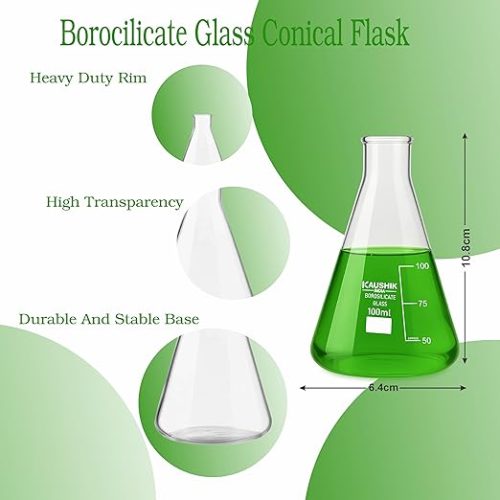
KAUSHIK INDIA Borosilicate Glass 3.3 Measuring Conical Flask 100ml For Lab Laboratory, School, College And Professional use
₹399.00Original price was: ₹399.00.₹169.00Current price is: ₹169.00. -
Sale!

KAUSHIK INDIA 30ML 50Pcs Borosilicate Glass Vial With Screw Cap, Leak Proof Liquid Storage Vial For Essential Oil,Perfume,Meds,Reagent,Anointing Oil Bottle And Lab Use Culture Tube
₹999.00Original price was: ₹999.00.₹789.00Current price is: ₹789.00. -
Sale!

KAUSHIK INDIA BOROSILICATE GLASS Iodine Determination Flask 250ML WITH GLASS STOPPER
₹499.00Original price was: ₹499.00.₹249.00Current price is: ₹249.00.
Reviews
There are no reviews yet.