
250ml borosilicate Erlenmeyer flask with PTFE screw cap, conical shape, and clear white graduations for accurate lab measurements.
“Borosilicate 3.3 Glass Measuring Cylinder with Graduation Marks for Measuring of Liquids 2000 ML” has been added to your cart. View cart
Sale!

Laboratory Erlenmeyer Flask, 250ml – Borosilicate Glass – With PTFE Screw Cap – Conical Shape – White Graduations
₹799.00 Original price was: ₹799.00.₹390.00Current price is: ₹390.00.
Description
The Definitive Guide to the Erlenmeyer Lab Flask: A Cornerstone of Modern Laboratory Science
The Erlenmeyer Lab Flask is an iconic and indispensable piece of laboratory glassware. Recognizable by its conical body, flat bottom, and cylindrical neck, this flask is a ubiquitous sight in laboratories worldwide. Its brilliant design, attributed to the German chemist Emil Erlenmeyer in the 1860s, provides a perfect synergy of function, safety, and versatility. The Erlenmeyer flask is a fundamental tool for tasks ranging from simple mixing to complex microbial culturing. This vessel is more than just a container; it is an active participant in the scientific process.
The primary advantage of the Erlenmeyer flask design lies in its shape. The wide base facilitates efficient mixing and swirling of contents without significant risk of spillage. The narrow neck allows for secure sealing with a stopper or cotton plug and supports various lab accessories Erlenmeyer Lab Flask like filter funnels. This classic flask design minimizes solvent evaporation and provides a stable Erlenmeyer Lab Flask, self-supporting base. When Erlenmeyer Lab Flask manufactured from high-quality borosilicate glass, the Erlenmeyer Lab Flask becomes exceptionally durable and resistant to thermal shock.
This comprehensive guide will explore every facet of the Erlenmeyer Lab Flask. We will delve into its historical origins and the material science behind borosilicate glass. We will examine the various flask types and sizes available. You will gain a deep understanding of its myriad applications in chemistry, biology, and industrial settings Erlenmeyer Lab Flask. Furthermore, we will cover essential safety protocols, proper cleaning methods, and best practices for maintenance. Mastering the use of this fundamental lab flask is a rite of passage for every scientist Erlenmeyer Lab Flask
Chapter 1: The Anatomy and Design of an Erlenmeyer Flask
1.1 Deconstructing the Iconic Shape
The Erlenmeyer flask design is a masterpiece Erlenmeyer Lab Flask of functional form. Each aspect of its geometry serves a specific purpose in the laboratory environment. The conical body is the most defining feature. This shape is ideal for mixing solutions by a simple swirling motion. The swirling action creates a vortex, ensuring thorough and homogeneous blending of chemical solutions without the need for a stir bar. This is a key advantage over beakers.
The flat bottom of the Erlenmeyer Lab Flask provides excellent stability. It can stand securely on a lab bench, hot plate, or shelf without rolling. This stability is a critical safety feature, preventing accidental tip-overs that could lead to chemical spills or broken glass. The cylindrical neck is narrower than the body. This design minimizes evaporation when heating and provides a convenient port for adding other lab equipment. The neck also reinforces the entire structure, adding to the durability of the laboratory flask.
Many Erlenmeyer flasks also feature graduation marks. These are etched or printed lines on the side of the flask that provide approximate volume measurements. While not as precise as a volumetric flask, these graduation marks are extremely useful for preparing non-standard solutions and for general estimation during an experiment. The entire flask design is optimized for utility, making the Erlenmeyer flask a versatile workhorse.
1.2 Standard Sizes and Capacity Ranges
Erlenmeyer Lab Flasks are manufactured in a wide range of standard sizes to accommodate various laboratory needs. Common capacities include 50 mL, 125 mL, 250 mL, 500 mL, 1000 mL (1 Liter), and 2000 mL (2 Liter). Smaller flasks, such as 25 mL or 50 mL, are ideal for small-scale reactions or when working with expensive reagents. The 250 mL and 500 mL Erlenmeyer flasks are perhaps the most common sizes found in general chemistry lab and biology lab settings.
Larger Erlenmeyer flasks, such as the 5 Liter or even 10 Liter models, are used for large-scale preparations, industrial fermentation processes, or as secondary containers. Selecting the correct flask size is important for both efficiency and safety. A good rule of thumb is to fill a flask no more than half its total capacity when heating or mixing vigorously. This safety precaution prevents boiling over and spillage. The standardized flask sizes ensure compatibility with other lab equipment like clamps and heated stirrers.
Chapter 2: The Critical Role of Borosilicate Glass
2.1 Why Borosilicate Glass is the Standard
The vast majority of high-quality Erlenmeyer Lab Flasks are manufactured from borosilicate glass. This specialized glass material is the industry standard for high-performance laboratory glassware. Its chemical composition is distinct from common soda-lime glass. Borosilicate glass incorporates boron trioxide, which creates a strong, cross-linked molecular structure. This structure is the source of its remarkable thermal properties.
The primary advantage of borosilicate glass is its extremely low coefficient of thermal expansion. This means it expands and contracts very little when heated or cooled. An Erlenmeyer flask made from this material can be taken directly from a hot plate and placed on a cold lab bench without shattering. This thermal shock resistance is absolutely essential for many laboratory procedures involving heating, cooling, and autoclaving. It is a fundamental safety feature.
Furthermore, borosilicate glass offers excellent chemical durability. It is highly resistant to water, most acids, halogens, and organic solvents. This chemical resistance ensures that the Erlenmeyer Lab Flask will not contaminate its contents or be degraded by them. The inertness of the glass material guarantees the purity and integrity of chemical solutions and culture media. The optical clarity of borosilicate glass also allows for clear visual observation of the flask’s contents.
2.2 Material Properties and Performance
The material properties of borosilicate glass directly translate to the performance of the Erlenmeyer Lab Flask. Its mechanical strength is superior to that of standard glass, providing resistance to everyday impacts and scratches in a busy lab environment. While not unbreakable, this durability ensures a long service life for the laboratory flask when handled with care. The smooth surface of the glass is non-porous, which prevents the adhesion of residues and makes cleaning much easier.
The thermal stability of the glass material allows the Erlenmeyer flask to be used in a wide temperature range. It can withstand the intense, dry heat of an autoclave (typically 121°C at high pressure) and the direct contact of a hot plate. This makes it perfectly suited for sterilization processes in a biology lab. The combination of thermal shock resistance, chemical resistance, and mechanical durability makes the borosilicate glass Erlenmeyer flask an incredibly reliable piece of lab equipment.
Chapter 3: Types and Variations of the Erlenmeyer Flask
While the classic design is universal, several specialized Erlenmeyer flask types have been developed to meet specific laboratory needs.
3.1 Standard vs. Narrow Mouth Designs
The most common Erlenmeyer flask has a standard neck width. This design offers a good balance between easy access for pouring and adding solids, and reduced evaporation. The narrow mouth Erlenmeyer flask features a significantly thinner neck. This design is superior for tasks where minimizing evaporation is critical, such as long-term storage or when working with volatile solvents. The narrow opening also provides better support for a stopper.
However, the narrow mouth design can make it more difficult to clean and to add larger solid components. The choice between standard and narrow mouth often comes down to the specific application. For general mixing and heating, the standard design is typically preferred. For fermentation or storage, the narrow mouth variant might be the better choice. Both flask types are essential in a well-equipped laboratory.
3.2 Baffled Erlenmeyer Flasks for Enhanced Mixing
In cell culture and fermentation applications, efficient gas transfer is crucial. The baffled Erlenmeyer flask is a specialized variant designed to address this need. It features indentations or “baffles” on the inside wall of the conical body. These baffles disrupt the liquid flow during shaking or stirring, preventing the formation of a stable vortex. This creates greater turbulence and a larger surface area for oxygen transfer.
The use of a baffled Erlenmeyer flask in a shaker incubator significantly improves the aeration of the culture media. This leads to higher cell densities and more productive fermentation processes. These flasks are a staple in biotechnology and pharmaceutical research. They are a perfect example of how the basic Erlenmeyer flask design has been optimized for advanced scientific applications.
3.3 Heavy-Wall and Filter Flasks
Some applications demand extra strength. The heavy-wall Erlenmeyer flask is constructed with thicker glass to withstand external pressure. This makes it suitable for use as a filter flask in vacuum filtration setups. The sidearm Erlenmeyer flask is a specific type designed for this purpose. It features a hose barb on the neck for connecting to a vacuum source.
When used with a Büchner funnel, the sidearm Erlenmeyer flask becomes a powerful tool for rapid filtration and separation. The thick walls prevent the flask from imploding under the vacuum pressure. Using a standard Erlenmeyer flask for vacuum filtration is extremely dangerous and a serious safety hazard. The filter flask is a critical piece of safety equipment for these procedures.
Chapter 4: Core Applications and Uses in the Laboratory
The Erlenmeyer Lab Flask is a versatile tool whose applications span nearly every scientific discipline.
4.1 Mixing and Solution Preparation
This is one of the most fundamental uses of the Erlenmeyer flask. Its conical shape is perfectly suited for mixing chemical solutions by hand-swirling. This is far more efficient than mixing in a beaker. The Erlenmeyer flask is the preferred vessel for preparing non-standard solutions and for making dilution series. The graduation marks provide a convenient, though approximate, guide for volume measurement.
For more vigorous or automated mixing, a magnetic stir bar can be easily added to the Erlenmeyer flask. The flat bottom ensures stable contact with a magnetic stir plate. The wide base allows for efficient fluid dynamics, ensuring the entire solution is mixed homogeneously. This makes the Erlenmeyer flask ideal for titration procedures and for dissolving solids into solvents.
4.2 Heating and Boiling of Liquids
The thermal shock resistance of the borosilicate glass Erlenmeyer flask makes it safe for direct heating. It can be placed directly on a hot plate or heated over a Bunsen burner (with a wire gauze for even heat distribution). This is commonly done to accelerate dissolution, to evaporate solvents, or to heat reaction mixtures. The narrow neck reduces heat loss and minimizes solvent evaporation compared to an open beaker.
It is a critical safety precaution to never heat a sealed Erlenmeyer flask. Pressure can build up rapidly, leading to an explosion. Similarly, one should always point the mouth of the flask away from themselves and others while heating. The ability to safely heat the Erlenmeyer flask directly is a key feature that enhances its utility in the chemistry lab.
4.3 Titration and Analytical Procedures
The Erlenmeyer flask is the standard vessel for many titration techniques. Its conical shape is ideal for swirling the analyte solution without splashing as the titrant is added from a burette. The narrow neck helps to contain any slight effervescence that might occur during the reaction. The optical clarity of the glass allows for easy observation of color changes at the endpoint.
For this application, the Erlenmeyer flask is superior to a beaker. The swirling action in a beaker is more likely to cause spills, and the open top leads to greater evaporation. The stability of the Erlenmeyer flask on the lab bench is also an advantage during the precise, drop-by-drop addition of titrant. It is an essential lab equipment item for quantitative chemical analysis.
4.4 Microbial and Cell Culture (Biotechnology)
In the biology lab, the Erlenmeyer flask is the primary vessel for growing microorganisms and cell cultures. Narrow mouth flasks are often used to minimize contamination. The flask is typically filled with a sterile culture media and inoculated with the desired organism. The flask is then sealed with a foam plug, cotton plug, or a breathable seal. These seals allow for gas exchange (oxygen in, carbon dioxide out) while preventing airborne contaminants from entering.
These culture flasks are then placed in a shaker incubator. The shaking motion keeps the cells suspended and well-oxygenated, promoting rapid growth. The use of baffled Erlenmeyer flasks further enhances this aeration. The ability of the Erlenmeyer flask to be sterilized in an autoclave makes it indispensable for aseptic technique. This application is critical in biotechnology, pharmaceutical production, and basic biological research.
4.5 Fermentation Processes
Fermentation is a specific type of microbial culture used to produce beverages, biofuels, and pharmaceuticals. The Erlenmeyer flask is a classic vessel for small-scale fermentation development. Its design allows for the anaerobic or aerobic conditions required by different microorganisms. An airlock can be fitted to the neck of the flask to allow carbon dioxide to escape while preventing oxygen from entering during anaerobic fermentation.
The Erlenmeyer flask allows researchers to easily monitor the progress of the fermentation, such as by observing gas production or changes in color. Its scalability makes it perfect for optimizing fermentation parameters before moving to larger bioreactors. The durability of the borosilicate glass ensures it can withstand the sometimes aggressive biochemical environment of a fermentation broth.
Chapter 5: Safety, Handling, and Best Practices
Working safely with an Erlenmeyer Lab Flask is paramount to preventing accidents and ensuring accurate results.
5.1 General Handling and Inspection
Always handle an Erlenmeyer Lab Flask with care. Before each use, conduct a thorough visual inspection. Check the entire surface, especially the rim and base, for any chips, cracks, or star fractures. These defects create stress points that can cause the flask to fail, particularly when heated. A damaged laboratory flask should be taken out of service and disposed of properly according to safety protocols.
When carrying a flask, support its body with one hand and use the other to steady it, especially if it contains liquid. Never carry a flask solely by its neck. Always use appropriate Personal Protective Equipment (PPE), including a lab coat, safety goggles, and gloves, when working with chemicals in an Erlenmeyer flask. These are fundamental safety precautions in any lab environment.
5.2 Heating and Thermal Safety
When heating an Erlenmeyer flask, always ensure it is made of borosilicate glass. Never heat a flask that is cracked or chipped. Use a hot plate or a Bunsen burner with a wire gauze to distribute heat evenly. Avoid direct contact between a cold flask and a hot surface, and vice-versa, to minimize thermal stress, even with borosilicate glass.
Never heat a sealed Erlenmeyer flask. The pressure buildup will cause it to explode. Always point the open mouth away from people. Use tongs or heat-resistant gloves to handle hot flasks. Clearly label hot flasks with heat-resistant tape to alert others. Allow heated flasks to cool completely before handling or cleaning. These safety measures are non-negotiable.
5.3 Chemical Compatibility and Storage
While borosilicate glass has excellent chemical resistance, it is not universal. Erlenmeyer flasks should not be used with hydrofluoric acid (HF) or hot concentrated phosphoric acid, as these will severely etch the glass. Strong alkaline solutions can also attack the glass over time at high temperatures. For these chemicals, alternative materials like plastic or PTFE are required.
For storage, ensure the Erlenmeyer flask is properly labeled with the contents, concentration, date, and your name. If sealing with a stopper, ensure the stopper material is chemically compatible with the contents. Do not store highly volatile or pressure-generating materials in a sealed flask. Store flasks in a secure, upright position on a stable shelf.
Chapter 6: Cleaning, Maintenance, and Sterilization
Proper cleaning and maintenance are essential for the longevity and performance of an Erlenmeyer Lab Flask.
6.1 Routine Cleaning Protocols
Rinse the Erlenmeyer flask with an appropriate solvent or water immediately after use. This prevents residues from drying and hardening. For general cleaning, use a warm, mild detergent solution and a dedicated flask brush. Scrub the entire interior, paying special attention to the bottom and the neck. Rinse thoroughly with tap water followed by several rinses with deionized or distilled water.
Invert the clean Erlenmeyer flask on a pegged rack or a clean cloth to air-dry. Do not dry the interior with a cloth, as this can introduce lint and contaminants. For most general chemistry lab work, this level of cleaning is sufficient. Proper maintenance starts with consistent and thorough cleaning after every use.
6.2 Sterilization Techniques for Aseptic Work
In microbiology and cell culture, sterilization is mandatory. The most Erlenmeyer Lab Flask common method is autoclaving. An Erlenmeyer flask containing culture media or empty for later use can be sterilized in an autoclave, typically at 121°C and 15 psi for 15-20 minutes. The thermal shock resistance of borosilicate glass is essential Erlenmeyer Lab Flask for surviving this process repeatedly.
The flask must be loosely covered with aluminum foil or a specific cap during autoclaving to allow steam to penetrate but prevent contaminants from entering after cooling. For heat-sensitive solutions, chemical sterilants or filtration through a sterile membrane into a pre-sterilized Erlenmeyer flask may be used. Aseptic technique is critical throughout to maintain sterility.
6.3 Dealing with Stubborn Residues
For baked-on or polymerized residues, routine cleaning may not be enough. Soaking in a warm, strong detergent solution can help. For organic residues, a soaking solution of sodium hydroxide in ethanol can be effective. For extremely stubborn stains, an oxidizing acid bath may be used. EXTREME CAUTION is required with these Erlenmeyer Lab Flask strong chemicals. They must be used in a fume hood with full PPE Erlenmeyer Lab Flask.
A common powerful oxidizing cleaner Erlenmeyer Lab Flask is a “piranha solution,” a mixture of concentrated sulfuric acid and hydrogen peroxide. This solution is highly corrosive, reactive, and must be made and used with extreme care. It is typically a last resort for cleaning laboratory glassware. Always consult your institution’s safety protocols before using such hazardous cleaning agents.
Chapter 7: Accessories and Complementary Lab Equipment
The Erlenmeyer Lab Flask is rarely used in isolation. It functions as part of a system with various lab accessories and other lab equipment Erlenmeyer Lab Flask
7.1 Closures and Sealing Methods
The method used to seal an Erlenmeyer flask depends entirely on the application. For simple storage or to prevent dust entry, a rubber stopper or glass stopper is sufficient. For chemical reactions that produce gas, a stopper with a hole for a glass tube Erlenmeyer Lab Flask or venting may be used. The chemical resistance of the stopper material must be considered.
In microbiology, non-absorbent cotton plugs or specialized foam plugs are used. These allow for gas exchange while filtering out airborne microbes. For fermentation, an airlock filled with water is often fitted to the flask neck. Screw-cap Erlenmeyer flasks with PTFE-lined septa are also available for creating a secure seal.
7.2 Use with Stirring and Heating Equipment
The Erlenmeyer flask is perfectly designed for use with a magnetic stir plate. A magnetic stir bar is placed in the flask, and the flask is placed on the stir plate. The rotating magnetic field of the plate causes the stir bar to spin, mixing the contents. The flat bottom of the Erlenmeyer flask ensures optimal contact and efficient stirring.
When heating is also required, a hot plate stirrer is used. This combination lab equipment allows Erlenmeyer Lab Flask for simultaneous heating and mixing of the contents of the Erlenmeyer flask. This is a common setup for chemical reactions, dissolving solids, and evaporating solvents. The thermal stability of the flask is crucial here.
7.3 Integration with Filtration and Vacuum Systems
As discussed, the sidearm Erlenmeyer flask is designed as a filter flask for vacuum filtration. In this setup, a Büchner funnel is seated on the neck of the flask with a neoprene adapter Erlenmeyer Lab Flask . The sidearm is connected via thick-walled vacuum tubing to a vacuum source. The applied Erlenmeyer Lab Flask vacuum pulls liquid through the filter paper in the funnel, dramatically speeding up the filtration process.
The Erlenmeyer flask serves as the collection vessel for the filtrate. Its stability Erlenmeyer Lab Flask is important to prevent the entire apparatus from tipping over. This setup is a classic example of how the Erlenmeyer flask integrates with other lab equipment to perform a complex separation task efficiently.
Conclusion: The Enduring Legacy of the Erlenmeyer Lab Flask
The Erlenmeyer Lab Flask is a testament to the power of good design. For over 150 years, its form has remained largely unchanged because it is already perfectly suited to its function. It is a simple, elegant, and incredibly effective piece of laboratory glassware. From the educational classroom lab to cutting-edge biotech research, the Erlenmeyer flask is a constant and reliable presence.
Its versatility in mixing, heating, titration, and culturing is unmatched. Its safety and durability, when made from borosilicate glass, make it a trusted partner in scientific discovery Erlenmeyer Lab Flask. By understanding its applications, adhering to safety protocols, and practicing proper maintenance, any scientist can fully leverage the capabilities of this iconic tool. The Erlenmeyer Lab Flask is, and will remain, a fundamental pillar of the laboratory environment.
Be the first to review “Laboratory Erlenmeyer Flask, 250ml – Borosilicate Glass – With PTFE Screw Cap – Conical Shape – White Graduations” Cancel reply
Related products
-
Sale!

Borosilicate 3.3 Glass Measuring Cylinder with Graduation Marks for Measuring of Liquids 100 ML
₹99.00 – ₹1,499.00Price range: ₹99.00 through ₹1,499.00Select options This product has multiple variants. The options may be chosen on the product page Details -
Sale!
Borosilicate Glass Distillation Apparatus or Distillation assembly unit (3000ML)
₹8,000.00Original price was: ₹8,000.00.₹3,000.00Current price is: ₹3,000.00. -
Sale!
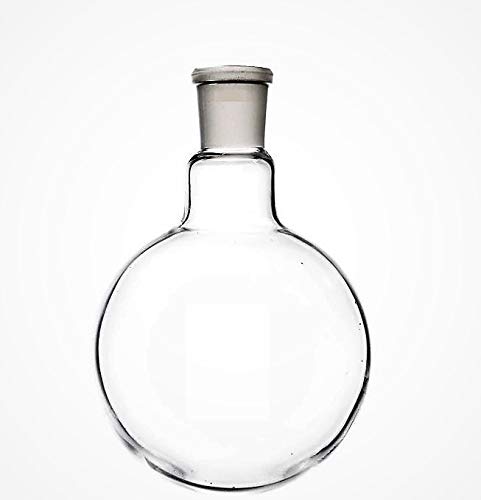
Round Bottom Flask 2000 ML With joint b-24
₹1,159.00Original price was: ₹1,159.00.₹659.00Current price is: ₹659.00.
Reviews
There are no reviews yet.