
Made from high-quality borosilicate glass funnel, this 125ml separating funnel with Teflon stopcock ensures durability, chemical resistance.
“KAUSHIK INDIA 20ML 50Pcs Borosilicate Glass Vial With Screw Cap, Leak Proof Liquid Storage Vial For Essential Oil,Perfume,Meds,Reagent,Anointing Oil Bottle And Lab Use Culture Tube” has been added to your cart. View cart
Sale!

Borosilicate Glass Separating Funnel Pear Shape with Teflon Stopcock and Inter Changeable Stopper One Unit (125 ml)
₹999.00 Original price was: ₹999.00.₹449.00Current price is: ₹449.00.
Categories: laboratary glassware, Scientific Instruments, Separating funnel
Description
The Ultimate Guide to Borosilicate Glass Funnels: Unmatched Durability and Chemical Resistance for Precision Laboratory Work
Introduction to Borosilicate Glass Funnels
A Borosilicate Glass Funnel is a fundamental piece of laboratory equipment. It is designed for the safe and efficient transfer of liquids, powders, and granular materials. The unique properties of borosilicate glass make this type of laboratory funnel superior to alternatives. This guide explores every aspect of the Borosilicate Glass Funnel.
We will delve into its composition, benefits, and diverse applications. You will learn why it is the preferred choice in scientific, industrial, and even artistic settings. Understanding the specifications of a Borosilicate Glass Funnel ensures optimal performance and safety.
This chemical resistant funnel is indispensable for tasks requiring purity and precision. Its heat resistant nature allows for use in high-temperature processes. The durable glass funnel withstands thermal shock and mechanical stress. Every laboratory needs a reliable Borosilicate Glass Funnel.
From simple filtering to complex separations, this tool is versatile. The transparent glass funnel allows for visual monitoring of processes. This is crucial for accurate measurements and observations. Investing in a high-quality Borosilicate Glass Funnel is investing in accuracy.
What is Borosilicate Glass? The Science Behind the Material
Borosilicate glass is a specialized type of glass. Its primary components are silica and boron trioxide. The addition of boron is the key differentiator. This composition creates a low thermal expansion coefficient.
This means borosilicate glass expands very little when heated. It is this property that grants its remarkable heat resistant qualities. Ordinary soda-lime glass has a much higher expansion coefficient. This makes it susceptible to cracking under rapid temperature changes.
The chemical structure of borosilicate glass is highly stable. It is inherently chemical resistant. It can withstand exposure to a wide range of acids, solvents, and alkalis. This makes borosilicate glass ideal for aggressive chemical environments.
The clarity and transparency of borosilicate glass are also exceptional. It does not react with or contaminate substances. This ensures the purity of samples and solutions. A Borosilicate Glass Funnel leverages all these material advantages.
Key Advantages of Using a Borosilicate Glass Funnel
Superior Thermal Shock Resistance
The most significant advantage is thermal shock resistance. A Borosilicate Glass Funnel can endure extreme temperature shifts. You can pour boiling liquid into a cool funnel without risk of breakage. This heat resistant property is vital for many laboratory procedures.
Processes like hot filtration rely on this capability. It eliminates the need for pre-heating the laboratory funnel. This saves time and reduces procedural steps. The low thermal expansion ensures long-term durability.
Exceptional Chemical Inertness and Resistance
A Borosilicate Glass Funnel is highly chemical resistant. It is non-porous and will not absorb chemicals. This prevents cross-contamination between experiments. It is suitable for use with strong acids, bases, and organic solvents.
This chemical resistant funnel ensures the integrity of your work. It will not leach ions or impurities into sensitive solutions. This is critical in analytical chemistry and pharmaceutical applications. The inert laboratory funnel is a cornerstone of quality control.
High Mechanical Durability and Strength
While still glass, borosilicate glass is remarkably strong. It has greater mechanical durability than regular glass. A durable glass funnel is less likely to chip or crack from minor impacts. This translates to a longer lifespan and better value.
Proper handling will ensure years of reliable service. The robust construction withstands daily use in a busy lab. This durable glass funnel is a workhorse tool. Its strength contributes to its overall safety profile.
Optical Clarity for Precision Monitoring
The transparent glass funnel offers excellent visibility. You can observe the entire transfer process clearly. This allows for monitoring flow rates and identifying particulates. Visual confirmation is a key aspect of many protocols.
The clarity of the Borosilicate Glass Funnel aids in precision work. You can see if a filtration is complete or if a solution is clear. This transparent property is essential for quality assurance. It provides an unobstructed view of the contents.
Easy Cleaning and Autoclavability
A Borosilicate Glass Funnel is very easy to clean. Its smooth, non-reactive surface does not trap residues. It can be washed with aggressive cleaning agents without damage. This ensures strict hygiene standards are maintained.
Most importantly, it is fully autoclavable. You can sterilize the funnel using steam autoclaving at high temperatures. This is a prerequisite for microbiological and biomedical work. The heat resistant nature makes sterilization simple and effective.
Detailed Components and Anatomy of a Borosilicate Glass Funnel
The Cone or Bowl: The Primary Reception Area
The cone is the main body of the Borosilicate Glass Funnel. It is designed with a wide opening to easily receive liquids and solids. The angle of the cone is engineered for efficient flow. It minimizes spillage and splashing during transfers.
The interior surface is often polished to a smooth finish. This reduces friction and allows for complete drainage. The capacity of the cone varies depending on the funnel size. Choosing the right size is important for the task at hand.
The Stem or Tube: Directing the Flow
The stem is the narrow tube extending from the cone’s apex. It directs the material into the receiving vessel. The length and diameter of the stem are critical specifications. A long stem is useful for reaching deep into containers.
A stem with a standard taper ensures a secure fit. It can be placed easily into flasks, bottles, or other glassware. The Borosilicate Glass Funnel stem is perfectly aligned for controlled pouring.
The Rim: Reinforced for Strength
The rim of the Borosilicate Glass Funnel is often reinforced. This is the area most susceptible to chipping. A thickened or fire-polished rim adds significant strength. It enhances the overall durability of the laboratory funnel.
A robust rim also provides a comfortable grip. It makes the funnel easier to handle and manipulate. This attention to detail is a mark of quality manufacturing.
Various Types of Borosilicate Glass Funnels for Specific Applications
Standard Filter Funnels: For General Purpose Use
The standard Borosilicate Glass Funnel is the most common type. It features a simple, angled cone with a straight stem. It is used for basic pouring, filtering with paper, and guiding materials. This versatile laboratory funnel is a staple in every lab.
Its simplicity makes it adaptable to countless tasks. It is available in a wide range of sizes, from small to large. The standard funnel is the foundation for many experimental setups.
Büchner Funnels: For Vacuum Filtration
The Borosilicate Glass Büchner Funnel is a specialized design. It has a flat, perforated plate inside the cone. A filter paper is placed on this plate. It is used exclusively with a vacuum flask for rapid filtration.
The Büchner Funnel is essential for separating solids from liquids quickly. The chemical resistant and durable nature of borosilicate glass is crucial here. It withstands the pressure differential of vacuum filtration.
Powder Funnels: For Dry Solids and Granules
A powder funnel has a very wide and short stem. This design prevents clogging when transferring dry materials. Powders and granules can easily bridge in a standard stem. The powder funnel ensures a smooth, uninterrupted flow.
It is incredibly useful for filling jars or preparing solid reagents. The Borosilicate Glass Funnel version is easy to clean after use. It resists scratching from abrasive powders.
Separatory Funnels: For Liquid-Liquid Extraction
The Borosilicate Glass Separatory Funnel is a complex tool. It features a spherical or cylindrical body with a stopcock at the bottom. A stopper is present at the top opening. It is used to separate immiscible liquids of different densities.
Its chemical resistance is paramount, as it often holds aggressive solvents. The heat resistant property is also important for some extraction processes. The stopcock allows for precise control of the liquid flow.
Dropping Funnels: For Controlled Addition
A dropping funnel is similar to a separatory funnel but often has a pressure-equalizing sidearm. It is used to add reagents dropwise to a reaction mixture. This allows for controlled addition rates, which is critical in synthesis.
The Borosilicate Glass Funnel construction ensures it can handle reactive chemicals. The transparency allows the operator to monitor the reagent level. It is a key tool in organic chemistry labs.
Short Stem and Long Stem Funnels
Borosilicate Glass Funnels come with varying stem lengths. A short stem funnel is ideal for pouring into beakers or wide-mouth containers. A long stem funnel is necessary for reaching into narrow-neck flasks, like volumetric flasks.
The choice depends entirely on the receiving vessel. Having both types available provides flexibility for different laboratory tasks.
Critical Specifications to Consider When Selecting a Borosilicate Glass Funnel
Size and Capacity: Matching the Task
Borosilicate Glass Funnels are available in many sizes. Size is typically denoted by the diameter of the top rim. Common sizes range from 40mm to 200mm or more. Capacity refers to the volume the cone can hold.
Selecting the correct size is crucial for efficiency and safety. A small funnel is perfect for filling test tubes. A large funnel is needed for transferring bulk solvents. Always choose a size slightly larger than your measured volume.
Stem Length and Diameter: Ensuring Proper Fit
The stem specifications are equally important. The stem must fit securely into the receiving container. Standard taper joints (like 24/40) are common for a tight seal. A stem that is too wide will not fit.
A stem that is too narrow may not be stable. The length must be sufficient to direct liquid without splashing. Consider the containers you use most frequently when selecting a Borosilicate Glass Funnel.
Wall Thickness: Balancing Durability and Weight
The wall thickness of the funnel affects its durability. A thicker wall is more resistant to mechanical shock. However, it also makes the funnel heavier. A thinner wall is lighter but more fragile.
High-quality Borosilicate Glass Funnels have uniform wall thickness. This ensures consistent thermal shock resistance.- Avoid funnels with thin, uneven spots, as they are weak points.
Rim Type: Fire-Polished for Safety
A fire-polished rim is a sign of a well-made funnel. This process melts the glass edge, making it smooth and rounded. A fire-polished rim is safer to handle and less prone to chipping. It also strengthens the entire laboratory funnel structure.
Always check that the rim is smoothly finished. A rough, cut rim can be dangerous and indicates lower quality.
The Manufacturing Process of a High-Quality Borosilicate Glass Funnel
Raw Material Selection and Batching
The process begins with high-purity raw materials. Silica sand, boron oxide, and other oxides are carefully weighed. This mixture, or batch, is the foundation of the borosilicate glass. Purity is critical to achieving the desired properties.
Impurities can weaken the glass or affect its chemical resistance. Reputable manufacturers source materials from trusted suppliers. The batch composition is a closely guarded formula.
Melting in High-Temperature Furnaces
The batch is fed into a continuous-melting furnace. Temperatures exceed 1600°C, melting the mixture into a homogeneous liquid. The molten borosilicate glass is then conditioned to ensure uniformity. Bubbles and streaks must be eliminated.
The heat resistant quality of the final product is determined at this stage. Precise temperature control is essential throughout the melting process.
Forming and Shaping the Funnel
The molten glass is gathered by skilled glassblowers or automated machines. For a Borosilicate Glass Funnel, the glass is often blown or pressed into a mold. This creates the basic conical shape of the funnel.
The stem may be formed separately and attached (lapped on). This requires precision to ensure a perfect seal and alignment. Artisan skill is involved in creating a symmetrical, well-proportioned funnel.
Annealing: Relieving Internal Stresses
After forming, the glass must be annealed. The funnel is placed in a lehr, a special annealing oven. It is heated to a specific temperature and then cooled very slowly and controlled. This process relieves internal stresses created during forming.
Proper annealing is what gives the Borosilicate Glass Funnel its thermal shock resistance. Without it, the glass would be brittle and prone to shattering.
Inspection, Quality Control, and Packaging
Every Borosilicate Glass Funnel undergoes rigorous inspection. Technicians check for visual defects like bubbles, scratches, or asymmetries. Dimensions are verified against specifications. Stress patterns can be viewed using polarized light.
Only funnels that pass all quality checks are packaged for shipment. They are carefully wrapped to prevent damage during transit.
Primary Applications and Uses of Borosilicate Glass Funnels
In Chemical Laboratories: The Core Environment
The Borosilicate Glass Funnel is indispensable in chemistry labs. It is used for filtering precipitates, pouring reagents, and setting up reactions. Its chemical resistance makes it safe for use with acids and solvents. The heat resistant property is used in recrystallization and hot gravity filtration.
From teaching labs to advanced research, the funnel is a constant presence. It is a symbol of practical laboratory work. Its reliability supports accurate and reproducible scientific results.
In Pharmaceutical and Biotechnology Industries
In these regulated industries, purity is non-negotiable. The Borosilicate Glass Funnel is used in drug formulation, sample preparation, and sterile processes. Its inert nature ensures no interaction with active pharmaceutical ingredients (APIs).
The ability to be autoclavable is critical for maintaining sterility. It is used in filtration steps to ensure solutions are free of microbial contamination. The durable glass funnel withstands rigorous cleaning validation protocols.
In Food and Beverage Production
Borosilicate glass is safe for food contact. Borosilicate Glass Funnels are used in small-scale food production, brewing, and quality control labs. They are ideal for filtering oils, syrups, and wines. The transparent nature allows for visual inspection of clarity.
They are easy to clean and do not impart any taste or odor. This makes them perfect for artisanal food creators who demand quality.
In Educational Settings: Schools and Universities
Borosilicate Glass Funnels are essential for science education. They are used in student experiments to teach fundamental techniques like filtration. Their durability is important in a teaching environment where equipment is handled frequently.
The heat resistant property allows for safe demonstrations of chemical reactions. They are a key tool for inspiring the next generation of scientists.
In Artisanal and Hobbyist Contexts
Beyond the lab, Borosilicate Glass Funnels have found a home in various hobbies. They are used by perfumers to blend essential oils. Artists use them for pouring resins and pigments. Herbalists use them for preparing tinctures and extracts.
The same qualities that benefit scientists—chemical resistance, durability, and clarity—are valued by creatives. It is a versatile tool for any precision-pouring task.
Proper Usage and Handling Techniques for Borosilicate Glass Funnels
Safe Handling and Placement
Always handle the Borosilicate Glass Funnel with care. While durable, it can still break if mishandled. Hold it securely by the rim or the upper part of the cone. Ensure the receiving vessel is stable and on a level surface before use.
Gently place the stem into the neck of the container. Do not force it, as this can cause the glass to crack. A proper fit should be snug but not tight.
Pouring Liquids and Solids Correctly
When pouring liquids, do so slowly and steadily down the side of the cone. This minimizes turbulence and prevents splashing. For powders, use a powder funnel or pour carefully to avoid creating dust.
Do not overfill the funnel. Leave some space at the top to prevent overflow. This is especially important when filtering, as the filter paper can slow the flow rate.
Thermal Shock Prevention Best Practices
Although heat resistant, avoid extreme thermal shocks whenever possible. Do not place a cold Borosilicate Glass Funnel directly onto a hot surface. Similarly, do not place a hot funnel on a cold, wet surface.
When performing hot filtration, it is good practice to warm the funnel slightly. This can be done by rinsing it with warm water or placing it in a warm oven. This minimizes the temperature gradient and further protects the glass.
Essential Cleaning and Maintenance Procedures
Immediate Rinsing After Use
The best practice is to rinse the Borosilicate Glass Funnel immediately after use. This prevents residues from drying and hardening. A simple rinse with tap water, followed by distilled water, is often sufficient.
For aqueous solutions, this is usually all that is needed. Immediate cleaning makes the process much easier and maintains the funnel’s clarity.
Dealing with Stubborn Residues and Contaminants
For organic residues, use an appropriate solvent like acetone or ethanol. For inorganic deposits, a mild acid (like dilute HCl) or base (like dilute NaOH) can be used. Always wear appropriate personal protective equipment (PPE) when cleaning.
Soaking the funnel in a cleaning solution can help dissolve tough residues. Given its chemical resistance, the Borosilicate Glass Funnel can handle strong cleaning agents.
The Autoclaving Process for Sterilization
For sterile work, autoclaving is the preferred method. Place the funnel in an autoclave-safe bag or container. The standard autoclave cycle is 121°C at 15 psi for 15-20 minutes.
After the cycle, allow the autoclavable funnel to cool slowly inside the autoclave. Rapid cooling can still cause stress, even for borosilicate glass. Always check for any cracks or damage after sterilization.
Proper Storage to Prevent Damage
Store Borosilicate Glass Funnels in a dedicated cabinet or rack. They should be kept separate from other glassware to prevent knocking and chipping. Avoid stacking them inside each other, as this can cause them to jam and break when separated.
If storage in a drawer is necessary, use protective drawer liners. Proper storage extends the life of your laboratory funnels significantly.
A Comparative Analysis: Borosilicate Glass Funnel vs. Other Materials
Borosilicate Glass vs. Plastic (PP, PTFE) Funnels
Plastic Funnels (Polypropylene, PTFE) are lightweight and shatterproof. However, they lack the thermal shock resistance of borosilicate glass. They cannot be used with high-temperature liquids or in ovens. Their chemical resistance profile is also more limited than glass.
PTFE is very chemical resistant but opaque and more expensive. A Borosilicate Glass Funnel offers a superior balance of clarity, heat resistance, and broad chemical resistance. Glass is also more rigid, which is advantageous for precise positioning.
Borosilicate Glass vs. Soda-Lime Glass Funnels
Soda-lime glass is the material used for everyday glassware like windows and bottles. It is much less expensive than borosilicate glass. However, it has poor thermal shock resistance and is more susceptible to chemical attack.
A soda-lime glass funnel can crack easily from temperature changes. It is not suitable for serious laboratory work. The Borosilicate Glass Funnel is the professional choice for reliability and safety.
Borosilicate Glass vs. Stainless Steel Funnels
Stainless steel funnels are extremely durable and heat resistant. Their main drawback is a lack of chemical resistance to strong acids and halides. They are also opaque, so you cannot see what is happening inside.
For applications involving corrosive chemicals, the Borosilicate Glass Funnel is clearly superior. Its transparency provides a critical advantage for monitoring processes.
Troubleshooting Common Issues with Borosilicate Glass Funnels
Problem: Slow Filtration or Pouring
This is a common issue. The cause is often a clogged filter paper or a stem that is too narrow for the material. For viscous liquids, use a funnel with a wider stem. For powders, always use a powder funnel.
Check that the filter paper is the correct grade and is properly seated. Ensure the receiving vessel is vented to allow air to escape, which can slow the flow.
Problem: Funnel Does Not Fit Container
This occurs if the stem is the wrong size for the container neck. Use a long stem funnel for narrow necks and a short stem funnel for wide mouths. Adapters are available to connect different standard taper sizes.
Never force a funnel into a container, as this can crack both pieces of glassware.
Problem: Glass Becoming Cloudy or Etched
Cloudiness or etching is a sign of chemical attack. While highly chemical resistant, prolonged exposure to strong alkalis (like hot concentrated NaOH) can slowly etch borosilicate glass. This can weaken the structure over time.
If cloudiness appears, the funnel may be compromised for precision work. It is best to retire it from critical applications and use it for non-critical tasks.
The Future of Borosilicate Glass Funnels: Innovations and Trends
Advanced Coatings for Enhanced Performance
Research is ongoing into applying thin, durable coatings to glass. A hydrophobic coating could make Borosilicate Glass Funnels even easier to clean. An anti-static coating could prevent powder adhesion. These innovations would add functionality without compromising the core properties.
Ergonomic Designs for Improved Safety
Future designs may focus even more on ergonomics. Textured grips or new shapes could make funnels easier and safer to handle, especially with wet or gloved hands. Safety is always a primary driver of innovation in laboratory equipment.
Automation and Integration
In high-throughput industrial and pharmaceutical settings, automation is key. We may see Borosilicate Glass Funnels designed for robotic arms and automated filling systems. This would integrate the timeless benefits of glass with modern manufacturing technology.
Conclusion: The Indispensable Role of the Borosilicate Glass Funnel
The Borosilicate Glass Funnel is a masterpiece of functional design. It leverages the unique properties of borosilicate glass to create a tool that is both simple and profoundly capable. Its thermal shock resistance, chemical inertness, and mechanical durability make it unparalleled in the laboratory.
From basic educational experiments to cutting-edge pharmaceutical research, the Borosilicate Glass Funnel plays a vital role. Its transparency allows for oversight and precision, while its robustness ensures safety and longevity.
Choosing a high-quality Borosilicate Glass Funnel is an investment in accuracy, efficiency, and safety. It is a testament to the enduring value of well-made scientific glassware. By understanding its features, applications, and proper care, you can maximize the utility and lifespan of this essential laboratory instrument. The Borosilicate Glass Funnel remains, and will continue to be, a cornerstone of scientific progress.
Be the first to review “Borosilicate Glass Separating Funnel Pear Shape with Teflon Stopcock and Inter Changeable Stopper One Unit (125 ml)” Cancel reply
Related products
-
Sale!
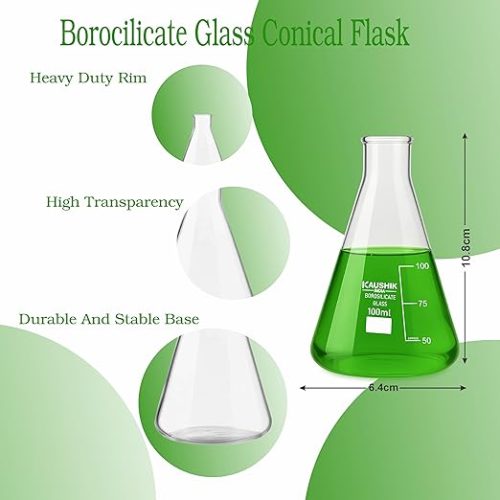
KAUSHIK INDIA Borosilicate Glass 3.3 Measuring Conical Flask 100ml For Lab Laboratory, School, College And Professional use
₹399.00Original price was: ₹399.00.₹169.00Current price is: ₹169.00. -
Sale!

KAUSHIK INDIA Borosilicate Glass Test Tube With Rim 15mmX125mm(13ml) Capacity- Pack of 8pcs|Heat & Chemical Durability|Perfect For Any School,Colledge Labs Experiment & For Sample collection
₹399.00Original price was: ₹399.00.₹199.00Current price is: ₹199.00. -
Sale!

BOROSILICATE GLASS SEPARATING FUNNEL PEAR SHAPE WITH TEFLON STOPCOCK. ONE UNIT. 500ML
₹1,599.00Original price was: ₹1,599.00.₹749.00Current price is: ₹749.00.
Reviews
There are no reviews yet.