
Durable 75mm glass funnel designed for safe and precise transfer of liquids, chemicals, or hot oils
“Borosilicate Glass Distillation Apparatus or Distillation assembly unit (3000ML)” has been added to your cart. View cart
Sale!

Borosilicate Glass Funnel 3 inches 75mm for Laboratory Use Borosilicate Glassware for Bottle Hot Oil or Liquid Chemicals Solutions Suitable for lab, food, and DIY projects
₹169.00 – ₹499.00Price range: ₹169.00 through ₹499.00
SKU: N/A
Categories: Glass Funnel, laboratary glassware, Scientific Instruments
Description
The Definitive Guide to the 75mm Glass Funnel: Precision Filtration and Transfer in the Laboratory
Introduction to the 75mm Glass Funnel
The 75mm glass funnel is a fundamental tool in laboratory workflows.
It is a classic piece of laboratory glassware designed for a simple, vital purpose: to guide the transfer of materials.
This specific size, 75mm, refers to the diameter of the funnel’s top opening.
This measurement makes it a versatile, mid-sized tool.
It is larger than a small powder funnel but smaller than large-batch funnels.
The 75mm glass funnel is an icon of efficiency and practicality.
It prevents spills, saves valuable materials, and ensures clean transfers.
From chemistry labs to photography darkrooms, its utility is vast.
Its transparent nature allows for visual monitoring of the transfer process.
The 75mm glass funnel is a perfect blend of simple design and critical function.
It is an indispensable tool for any well-equipped bench.
What is a 75mm Glass Funnel?
A 75mm glass funnel is a conically shaped tool.
It is crafted entirely from borosilicate glass.
The “75mm” specifies the exact inside diameter of its top rim.
This is the opening where solids or liquids are poured in.
The funnel slopes down to a narrow stem, or tube, at the bottom.
This stem directs the material into a specific, often small, opening.
The entire piece is made from a single piece of heat resistant glass.
This ensures there are no seams or weak points.
The design is optimized for a wide range of laboratory tasks.
It is a tool of both preparation and purification.
Key Features and Specifications of a 75mm Glass Funnel
The performance of a 75mm glass funnel is defined by its specific features.
Each aspect of its design serves a precise purpose.
The 75mm Diameter Opening
The 75mm top diameter is the funnel’s most defining feature.
This size represents a ideal balance for many tasks.
It is large enough to accept pours from beakers and flasks easily.
It significantly reduces the risk of spillage during transfer.
Yet, it is not so large that it becomes cumbersome on a cluttered bench.
The 75mm size is perfectly suited for use with standard filter paper.
This makes it the go-to choice for many filtration procedures.
Material and Construction: Borosilicate Glass
The material choice is paramount for performance.
A 75mm glass funnel is made from borosilicate glass 3.3.
This is not ordinary window glass.
Borosilicate glass is a specialty glass with unique properties.
It has an extremely low coefficient of thermal expansion.
This gives it exceptional thermal shock resistance.
It can withstand rapid temperature changes without cracking.
This is crucial for hot filtrations or washing with solvents.
Borosilicate glass is also highly chemically resistant.
It is inert to almost all acids, bases, and organic solvents.
This ensures it will not react with or contaminate your samples.
Stem Length and Design
The stem is the outlet of the 75mm glass funnel.
Its length and diameter are carefully designed.
A standard stem is long enough to reach deep into receiving flasks.
This prevents splashing and controls the flow of liquid.
The stem is typically ground to a smooth, precise end.
Some 75mm glass funnel models may have a short stem.
This is useful for more controlled, slower pouring.
The stem’s design is crucial for preventing airlock during filtration.
Angle of the Cone
The conical section of the funnel has a specific angle.
This angle is designed for optimal flow and support.
It provides a perfect, stable platform for filter paper.
The angle ensures liquids flow smoothly down to the stem.
It minimizes dead volume where liquid could be trapped.
This efficient design ensures maximum recovery of your sample.
Pouring Lip and Stability
Many 75mm glass funnel designs feature a beaded pouring lip.
This slight outward roll on the rim adds strength.
It also makes the funnel safer and easier to handle.
The funnel is designed to be stable when placed in a flask neck.
It can also rest securely on a filter funnel support or ring stand.
This hands-free operation is essential for complex tasks.
The Critical Advantages of a Glass Funnel
Choosing a 75mm glass funnel offers several key benefits over other materials.
These advantages make it the preferred choice for scientists.
Superior Chemical Resistance
This is the most significant advantage.
A 75mm glass funnel made from borosilicate glass is virtually inert.
It can handle concentrated acids, strong bases, and aggressive solvents.
A plastic funnel could melt, warp, or leach chemicals into your sample.
The chemical resistance of glass ensures sample purity and integrity.
Excellent Thermal Shock Resistance
Borosilicate glass can handle extreme temperature changes.
You can perform a hot filtration directly through the funnel.
You can also rinse it with ice-cold solvents immediately after.
This thermal shock resistance is impossible with plastic.
It enables a wider range of experimental techniques.
Transparency for Visual Monitoring
The complete transparency of a 75mm glass funnel is a major benefit.
You can visually monitor the entire transfer or filtration process.
You can see if a filtration is proceeding slowly or if a precipitate is washing down.
This allows for real-time adjustments to your technique.
You can also easily identify residues or cleaning needs.
Rigidity and Stability
A 75mm glass funnel is rigid and maintains its shape.
It will not flex or bend under the weight of liquids or filter paper.
This provides a stable platform for precise work.
It can reliably hold a Buchner funnel for vacuum filtration.
Its rigidity ensures consistent performance.
Ease of Cleaning and Reusability
Glass is non-porous and has a very smooth surface.
Residues do not adhere to it easily.
A 75mm glass funnel is very easy to clean thoroughly.
It can be rinsed with strong cleaning solutions and scrubbed.
This allows for endless reuse, making it a sustainable choice.
Primary Applications and Uses of a 75mm Glass Funnel
The 75mm glass funnel is incredibly versatile.
Its uses span countless laboratory procedures and disciplines.
Gravity Filtration Procedures
This is the most classic use for a 75mm glass funnel.
It is used for separating a solid from a liquid.
A piece of filter paper is folded and placed into the cone.
The paper is moistened to seal it against the glass.
The mixture is then poured into the funnel.
The liquid (filtrate) passes through the paper and stem.
The solid (residue) is retained on the filter paper.
The 75mm size is ideal for this, accommodating common paper sizes.
Guiding Transfers and Decanting
The 75mm glass funnel is essential for spill-free pouring.
It is used to transfer liquids from a large container to a small-necked flask.
This is crucial when working with volatile or expensive chemicals.
It is used to decant a liquid away from a settled solid.
The funnel ensures every last drop goes into the intended vessel.
This prevents waste and maintains a clean workspace.
Hot Filtration Techniques
Due to its thermal shock resistance, it excels at hot filtration.
A solution is filtered while hot to prevent crystals from forming.
The 75mm glass funnel can be heated in an oven beforehand.
It can handle the temperature difference without cracking.
This technique is common in recrystallization procedures.
Support for Buchner Funnels
In vacuum filtration, a Buchner funnel is often used.
A 75mm glass funnel can act as an adapter.
The stem of the Buchner funnel is placed into the top of the glass funnel.
The glass funnel’s stem is then placed into the vacuum flask.
This provides a secure connection for the filtration setup.
Adding Solids to Reaction Vessels
A 75mm glass funnel is perfect for adding dry solids to flasks.
It prevents powders from dusting the neck of the flask or missing entirely.
This is much more controlled than pouring directly from a bottle.
It is essential for maintaining accurate measurements.
Proper Usage and Technique
Using a 75mm glass funnel correctly ensures optimal results and safety.
Selecting the Correct Filter Paper
For filtration, choose the right grade and size of filter paper.
The paper should fit snugly against the walls of the funnel.
A 75mm glass funnel typically uses a corresponding paper size.
The paper should be folded properly (fluted or simple fold) for the task.
Wetting the Filter Paper
Always moisten the filter paper with a solvent before adding the slurry.
This helps seal the paper to the glass and prevents bypass.
It also ensures a smooth start to the filtration process.
Pouring Technique
Pour liquids down a glass stirring rod positioned against the funnel’s rim.
This guides the liquid and prevents splashing and erosion of the filter bed.
For solids, pour slowly and tap the funnel gently to encourage flow.
Stability and Support
Always ensure the funnel is securely placed in the neck of a flask.
Alternatively, use a funnel support on a ring stand.
This provides hands-free operation and prevents accidents.
Cleaning and Maintenance of Your 75mm Glass Funnel
Proper cleaning and maintenance not only extend the life of your 75mm glass funnel but also ensure accuracy, prevent cross-contamination, and maintain laboratory safety. By following systematic care practices, you preserve both the performance and integrity of your glassware.
1. Immediate Rinsing – The First Line of Defense
-
Rinse Immediately After Use: As soon as the funnel has been used, rinse it with a solvent compatible with the chemical or solution it contained. This prevents residues from drying and adhering strongly to the glass.
-
Neutralizing Hazardous Residues: If acids or bases were used, neutralize them before disposal and rinsing. This protects both the user and the glass.
-
Preventing Permanent Stains: Early rinsing also helps avoid chemical etching or discoloration, which can occur if corrosive substances remain on the funnel for extended periods.
2. Deep Cleaning Methods – For Stubborn Contaminants
-
Detergent and Brush: For everyday cleaning, a laboratory-grade detergent combined with a soft-bristled or test tube brush is effective. A test tube brush often fits perfectly into the funnel stem.
-
Organic Residues: For greasy or organic contaminants, use a base bath (e.g., potassium hydroxide in isopropanol) or a carefully prepared chromic acid bath (with appropriate safety precautions).
-
Specialized Solvents: Solvents like ethanol, acetone, or hexane may be used to remove specific residues that are not water-soluble.
-
Final Rinse: Always follow cleaning with a thorough rinse—first with tap water to remove detergents, then with distilled or deionized water to eliminate any ionic impurities.
3. Safe Drying Practices – Protecting Glass Integrity
-
Air Drying: Place the funnel inverted on a clean rack or pegboard to allow it to drip-dry naturally.
-
Avoid Cloths and Wipes: Using cloths, tissues, or paper towels can leave behind lint or fibers, and in some cases, may scratch the glass.
-
Accelerated Drying: If a faster method is required, dry in a hot-air oven at low temperatures (below the strain point of borosilicate glass) to avoid stress fractures.
4. Proper Storage – Extending Lifespan
-
Dedicated Storage: Keep the 75mm glass funnel in a clean, dry cupboard or designated laboratory storage area.
-
Preventing Damage: Do not stack heavy objects on or near the funnel, as pressure can cause chips, cracks, or breakage.
-
Segregation of Use: Assign funnels to specific uses (e.g., organic solvents, strong acids, food-related work) and clearly label them. This avoids cross-contamination and ensures consistent results.
-
Protective Containers: For mobile labs or classrooms, store funnels in cushioned boxes or foam holders to minimize the risk of breakage during transport.
5. Long-Term Care and Best Practices
-
Regular Inspection: Frequently check for cracks, chips, or scratches. Even minor defects can compromise the funnel’s strength and pose a risk during use.
-
Avoid Thermal Shock: Never transfer the funnel directly from a hot cleaning bath to cold water (or vice versa). Gradual temperature changes preserve structural integrity.
-
Chemical Awareness: Be aware of chemicals that can attack glass (e.g., hydrofluoric acid). For such cases, use alternative materials instead of glass funnels.
-
Routine Documentation: In professional labs, record cleaning and maintenance procedures as part of a quality control system to ensure consistency and reliability.
Troubleshooting Common Funnel Problems
Even a simple tool like a funnel can present challenges during laboratory or practical use. Understanding these common issues and applying the right solutions ensures smooth operation, accurate results, and reduced frustration.
Problem: Slow Filtration
-
Likely Cause: The filter paper may have too fine a pore size, restricting liquid flow. Over time, the paper can also become clogged with solids or fine particles.
-
Solution: Switch to a coarser grade filter paper to allow faster flow while maintaining adequate separation. For stubborn clogging, use a fluted filter paper, which increases surface area and creates better air channels for liquid passage.
Problem: Airlock (Liquid Stops Flowing)
-
Likely Cause: A vacuum or suction effect forms when the funnel stem fits too tightly into the receiving flask, preventing liquid from escaping.
-
Solution: Gently tilt or lift the funnel slightly from the neck of the flask to break the seal and allow air to enter. Using funnels with ribbed stems or ensuring a small gap between funnel and flask also helps prevent recurring airlocks.
Problem: Solids Cracking the Filter Paper
-
Likely Cause: When the liquid level falls too low during filtration, the deposited solids can dry and crack the filter paper, breaking the filtration barrier.
-
Solution: Keep a small amount of supernatant liquid above the solid layer at all times. Only allow the funnel to run completely dry at the final stage of filtration. This reduces stress on the filter paper and prevents cracking.
Problem: Precipitate Creeping Under the Filter Paper
-
Likely Cause: If the filter paper is not seated snugly against the funnel wall, fine particles can bypass the barrier and contaminate the filtrate.
-
Solution: Always pre-wet and press the filter paper against the funnel wall before use. This creates a tight seal, eliminating gaps where particles can slip through. For critical work, ensure the paper size matches the funnel diameter exactly.
Conclusion: The Indispensable Laboratory Workhorse
The 75mm glass funnel stands as a masterpiece of practical design, embodying the perfect balance between simplicity and functionality. Despite its straightforward form, it has remained a cornerstone of laboratory practice for generations, proving that the most effective tools often require no reinvention.
Its 75mm size makes it ideally suited for a wide variety of laboratory tasks, from small-scale liquid transfers to delicate separation procedures.
The use of borosilicate glass ensures superior chemical resistance, protecting the funnel from corrosive solutions, while its thermal stability allows it to handle both hot and cold liquids without compromise.
Unlike plastic alternatives, the transparency of borosilicate glass provides excellent visibility during use, ensuring accurate transfers and reducing the risk of spills or contamination.
Its rigidity and durability mean it retains its shape and performance over countless applications, while its smooth, non-porous surface makes cleaning and sterilization both quick and effective.
Beyond the technical advantages, the 75mm glass funnel plays a vital role in promoting accuracy, efficiency, and safety in laboratory work. By guiding precise transfers, preventing waste, and enabling controlled separations, it empowers researchers, educators, and professionals to focus on their results with confidence.
More than just a simple accessory, the 75mm glass funnel is a true laboratory workhorse—a symbol of careful, methodical, and reliable scientific practice. Its enduring presence on the bench underscores its indispensable value in both routine and advanced scientific work.
.
Additional information
| Size | 50mm, 65mm, 100mm, 125mm |
|---|---|
| Package | Pack of 2, Pack of 4, Pack of 5, Pack of 10 |
Be the first to review “Borosilicate Glass Funnel 3 inches 75mm for Laboratory Use Borosilicate Glassware for Bottle Hot Oil or Liquid Chemicals Solutions Suitable for lab, food, and DIY projects” Cancel reply
Related products
-
Sale!

Borosilicate Glass Round Bottom Boiling Flask with Inter Changeable Joint. 50 ML Capacity. Distillation Flask
₹299.00Original price was: ₹299.00.₹199.00Current price is: ₹199.00. -
Sale!
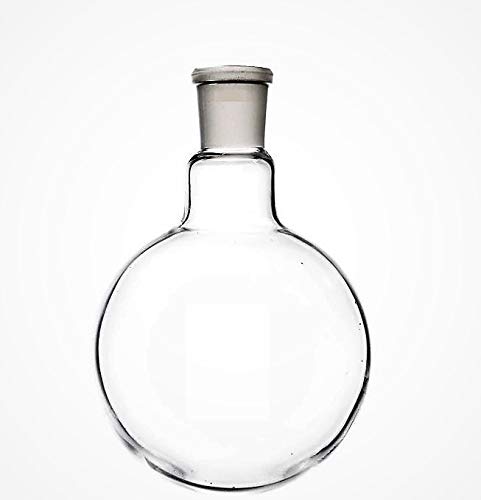
Round Bottom Flask 2000 ML With joint b-24
₹1,159.00Original price was: ₹1,159.00.₹659.00Current price is: ₹659.00. -
Sale!

2 Neck Round 250 ML Bottom Boiling Flask with 24/40 Center & Side Joints Angled Receiving Reflux Flask Multi Neck Apparatus Organic Chemistry Lab Glassware
₹499.00 – ₹999.00Price range: ₹499.00 through ₹999.00Select options This product has multiple variants. The options may be chosen on the product page Details
Reviews
There are no reviews yet.