

High-quality 100ml borosilicate glass measuring cylinder with clear graduation marks.
“Laboratory Glass Petri Dish, 90mm Diameter, Borosilicate Glass, Scientific Experiment Equipment” has been added to your cart. View cart
Borosilicate 3.3 Glass Measuring Cylinder with Graduation Marks for Measuring of Liquids 100 ML
₹99.00 – ₹1,499.00Price range: ₹99.00 through ₹1,499.00
SKU: N/A
Categories: laboratary glassware, Measuring Cylinder, Scientific Instruments
Description
The Ultimate Guide to the Scientific Glass Cylinder: Precision Measurement in Laboratory Science
Introduction to the Scientific Glass Cylinder
The scientific glass cylinder is an icon of laboratory measurement.
It is a fundamental tool found in virtually every lab worldwide.
This instrument is designed for one primary purpose: accurate liquid measurement.
Its elegant, simple design belies its critical importance.
The scientific glass cylinder is a symbol of empirical research.
It represents the pursuit of accuracy and repeatable results.
From high school chemistry classes to advanced research facilities, it is indispensable.
Understanding this tool is essential for any scientist or technician.
It is often one of the first pieces of laboratory glassware a student learns to use.
Mastering its use is a rite of passage in the scientific world.
The scientific glass cylinder is a cornerstone of quantitative analysis.
What is a Scientific Glass Cylinder?
A scientific glass cylinder is a tall, cylindrical piece of laboratory equipment.
It is specifically designed to measure the volume of a liquid.
It is distinct from a beaker or flask due to its greater height-to-diameter ratio.
This design enhances measurement accuracy.
The cylinder features a stable, flat, or hexagonal base.
This base prevents the instrument from tipping over easily.
A precise graduated scale is marked along its length.
This scale allows a user to determine the liquid’s volume accurately.
The top of the cylinder features a pouring spout.
This spout enables clean, drip-free transfer of the measured liquid.
It is a masterpiece of functional, precise design.
Key Features and Specifications
The performance of a scientific glass cylinder is defined by its features.
These specifications ensure it meets rigorous scientific standards.
Graduated Scale and Markings
The graduated scale is the heart of the instrument.
These markings are permanently fused onto the glass.
High-quality cylinders have clear, legible, and precise graduations.
Major marks typically indicate every 10% of the total capacity.
Minor marks allow for estimation to a finer degree.
A frosted background is often placed behind the scale.
This creates a high-contrast area for easier meniscus reading.
The numerals are bold and easy to read from a distance.
The permanence of these markings is crucial for long-term accuracy.
Material and Construction: Borosilicate Glass
The material choice is paramount.
Most scientific glass cylinders are made from borosilicate glass.
Borosilicate glass is a type of glass with boron trioxide.
This composition gives it a very low coefficient of thermal expansion.
This means it is highly resistant to thermal shock.
It can withstand rapid temperature changes without cracking.
Borosilicate glass is also chemically inert.
It resists attack from most acids, bases, and organic solvents.
This ensures the purity of the measured liquid is maintained.
It does not leach chemicals or contaminate samples.
Capacity and Size Variations
Scientific glass cylinders are available in a wide spectrum of sizes, making them versatile tools for laboratories, classrooms, and industrial settings. The chosen capacity directly affects measurement accuracy, ease of handling, and suitability for specific applications.
-
Range of Capacities
-
Standard sizes include 10 ml, 25 ml, 50 ml, 100 ml, 250 ml, 500 ml, 1000 ml, and 2000 ml.
-
Very small cylinders (≤ 10 ml) are used in analytical chemistry, where even tiny volumes must be measured precisely.
-
Larger cylinders (≥ 1000 ml) are designed for bulk liquid handling and are common in industrial and production environments.
-
-
Choosing the Right Capacity
-
A golden rule in measurement is to select a cylinder in which your intended volume falls within the upper half of the scale.
-
This reduces percentage error, as the relative impact of a small misreading becomes less significant with larger measured values.
-
Example: Measuring 80 ml in a 100 ml cylinder will be more accurate than measuring the same 80 ml in a 250 ml cylinder.
-
-
Indication of Capacity
-
The capacity marking is typically displayed prominently at the base or near the top of the cylinder for easy identification.
-
This ensures quick selection in busy laboratory settings where multiple sizes may be in use simultaneously.
-
-
Proportional Dimensions
-
As capacity increases, the height and diameter of the cylinder scale proportionally.
-
Larger cylinders are taller and wider, offering greater volume but requiring more careful handling due to increased weight when filled.
-
Smaller cylinders are compact and lightweight, making them easier to manipulate for quick, precise measurements.
-
-
Application Suitability
-
Small capacities (10–50 ml): Ideal for titrations, microscale experiments, and teaching demonstrations.
-
Medium capacities (100–500 ml): Most commonly used for routine lab work, solution preparation, and educational use.
-
Large capacities (1000–2000 ml): Suited for industrial applications, bulk mixing, and processes requiring higher liquid volumes.
-
Class A vs. Class B Accuracy
Not all scientific glass cylinders are created equal.
They are classified by their tolerance for error.
Class A volumetric glassware meets the highest accuracy standard.
It has the smallest possible margin of error.
A Class A scientific glass cylinder is used for analytical precision.
It is essential for tasks like preparing standard solutions.
Class B glassware has a larger, but still acceptable, tolerance.
It is used for general lab work, teaching, and qualitative tasks.
A Class B scientific glass cylinder is more common and economical.
Stability and Base Design
Stability is a critical safety and functional feature.
A scientific glass cylinder has a broad base.
This design lowers the center of gravity.
It prevents the tall, narrow cylinder from tipping over easily.
Many modern cylinders have a hexagonal base.
This design is even more stable than a round base.
It also prevents the cylinder from rolling on a slanted surface.
The Critical Importance of the Meniscus
Understanding the meniscus is key to accurate measurement.
The meniscus is the curved surface of a liquid in a container.
It is caused by surface tension and adhesion to the glass walls.
For most liquids, like water, the meniscus is concave.
This means it curves upward at the edges.
The correct volume is always read at the bottom of this curve.
Your eye must be exactly level with the bottom of the meniscus.
Looking from above or below will cause a parallax error.
This error is a major source of measurement inaccuracy.
The frosted stripe on the cylinder helps eliminate this error.
Types of Scientific Glass Cylinders
While the basic design is consistent, several types exist.
Each is optimized for slightly different applications.
Graduated Cylinders
This is the standard form of the scientific glass cylinder.
It is used for general-purpose liquid measurement.
It features a single graduated scale from bottom to top.
It is the most common type found in laboratories.
Mixing Cylinders
Some scientific glass cylinders are designed for mixing.
They have a special ground glass stopper.
This allows the user to seal the cylinder and invert it to mix solutions.
This is useful for creating dilutions directly within the cylinder.
Cylinders with Plastic Guards
Some larger scientific glass cylinders feature a plastic bumper.
This clear plastic ring surrounds the base and lower part of the cylinder.
It is designed to protect the glass from impact damage.
If the cylinder is knocked over, the plastic absorbs the shock.
This can prevent costly breakage and dangerous spills.
Applications and Uses in the Laboratory
The scientific glass cylinder is incredibly versatile.
Its uses span countless scientific disciplines and procedures.
Preparing Solutions and Dilutions
This is one of the most common applications.
A scientific glass cylinder is used to measure solvents.
It is used to achieve a specific final volume in a dilution.
Its accuracy is sufficient for many non-analytical preparations.
Quantitative Transfer
The scientific glass cylinder is perfect for pouring specific volumes.
A user can measure a precise amount of liquid.
They can then transfer it to another vessel via the pouring spout.
This is essential for reagent addition in experiments.
Educational Demonstrations
The scientific glass cylinder is a vital teaching tool.
It is used to demonstrate the concept of volume.
It teaches students how to read a graduated scale.
It instills the importance of accuracy and technique in science.
Rough Volume Measurements
Not every laboratory task requires the highest level of volumetric precision. In many cases, a graduated cylinder provides the ideal balance of speed, convenience, and reliability for everyday measurements.
-
Practical Accuracy
-
While not as exact as a volumetric flask, the cylinder offers sufficient precision for routine work such as preparing solutions, mixing reagents, or transferring liquids.
-
Its graduations allow for reasonable accuracy without excessive time spent, making it highly efficient in busy labs.
-
-
Better Than a Beaker
-
Compared to a beaker, which has only approximate volume indications, a graduated cylinder provides markedly improved accuracy.
-
This makes it the go-to tool for rough but dependable volume measurements where beaker readings would be too imprecise.
-
-
More Robust Than a Volumetric Flask
-
Volumetric flasks are highly precise but fragile and often slower to use.
-
Graduated cylinders, especially those made from borosilicate glass or durable plastics, are more resistant to impact and thermal stress, allowing for repeated daily use.
-
-
Key Middle Ground
-
By striking a balance between speed, precision, and durability, the graduated cylinder fills an essential role in the laboratory.
-
It is versatile enough to serve in both educational settings for student experiments and professional labs where frequent measurements are required.
-
Proper Usage and Technique
Correct technique is essential for obtaining accurate results.
1. Selection and Inspection
Before using a scientific glass cylinder, it is essential to choose the right piece of equipment and confirm that it is in good working condition. Careful selection and inspection help ensure both accuracy and safety in the laboratory.
-
Choose the Correct Capacity
-
Select a cylinder size that best matches the volume of liquid you intend to measure.
-
Using an oversized cylinder for small volumes reduces accuracy, while filling a small cylinder to the brim increases the risk of spills.
-
Common practice: choose a cylinder where your desired measurement falls within the mid-range graduations for best precision.
-
-
Ensure Cleanliness and Dryness
-
Always start with a cylinder that is thoroughly cleaned and dried.
-
Residues or droplets from previous experiments can skew measurements or contaminate solutions.
-
For critical work, rinse the cylinder with distilled or deionized water before use.
-
-
Inspect for Physical Damage
-
Check carefully for chips, cracks, or scratches, particularly around the rim and base.
-
Even minor damage can weaken the cylinder, making it unsafe under thermal or mechanical stress.
-
Damaged glassware should be removed from service immediately to prevent accidents.
-
-
Check Graduation Marks
-
Verify that the graduated scale is intact, clear, and legible.
-
Faded or incomplete graduations reduce accuracy and can lead to reading errors.
-
Cylinders with worn markings are best reserved for non-critical or rough measurements.
-
2. Placing on a Level Surface
Always place the cylinder on a stable, level surface.
A laboratory bench is ideal.
An unlevel surface will cause the liquid to be uneven.
This will make an accurate meniscus reading impossible.
3. Filling the Cylinder
Pour the liquid slowly into the cylinder.
Pour down the side to avoid splashing and bubble formation.
Fill to a point just below the desired graduation line.
Use a dropper for the final, precise adjustment.
4. Reading the Meniscus
This is the most critical step.
Position your eyes at the exact level of the meniscus’s bottom.
Use the frosted stripe as a guide to find the lowest point.
Read the value at the bottom of the curve.
Estimate the value between the smallest graduations.
5. Pouring and Cleaning
Pour the liquid out using the spout.
Pour slowly and steadily to control the flow.
Clean the cylinder immediately after use with an appropriate solvent.
Rinse thoroughly with distilled water and allow to air dry.
Calibration and Quality Assurance
Ensuring the accuracy and reliability of measurements is central to laboratory practice. Scientific glass cylinders play a key role in this process, and their calibration and quality assurance protocols guarantee that results are both consistent and trustworthy.
-
Factory Calibration
-
High-quality cylinders, especially those made of borosilicate 3.3 glass, are manufactured with precision graduations.
-
Class A glassware is the industry standard for accuracy and always comes with a certificate of compliance.
-
This certificate specifies the tolerance limits (e.g., ±0.5 ml for a 100 ml cylinder) and confirms adherence to recognized standards such as ISO, ASTM, or DIN.
-
-
Importance of Certificates
-
The calibration certificate ensures that the cylinder meets traceable international standards.
-
For regulated environments—such as pharmaceutical labs, food testing, and clinical research—this documentation is essential for audits and quality assurance.
-
-
Periodic Verification
-
Over time and with frequent use, wear on graduation marks, exposure to chemicals, or improper cleaning can affect accuracy.
-
Laboratories should perform regular calibration checks, especially for critical measurements.
-
A common method is gravimetric verification:
-
Fill the cylinder with distilled water to a marked volume.
-
Weigh the water on a precision balance.
-
At room temperature (20°C), 1 ml of water ≈ 1 g.
-
Any significant deviation indicates a need for recalibration or replacement.
-
-
-
Temperature Considerations
-
Glassware calibration is typically valid at 20°C, since liquid density changes with temperature.
-
For high-precision work, laboratories must control the ambient temperature or apply corrections to account for thermal expansion.
-
-
Routine Quality Assurance Practices
-
Always inspect cylinders before use for legible graduation marks.
-
Store and clean them properly to maintain accuracy and longevity.
-
Keep a log of calibration checks, especially in professional labs where traceability is mandatory.
-
-
Recalibration or Replacement
-
If a cylinder fails verification, it may be sent to a certified calibration service for adjustment, though this is rare and often costlier than replacement.
-
In high-stakes environments, using Class A certified cylinders ensures ongoing compliance and accuracy.
-
Safety Considerations
When working with laboratory glassware, safety must always come first. The scientific glass cylinder, though simple in design, presents specific handling concerns due to its shape, fragility, and use with potentially hazardous substances. Following safety guidelines ensures both accurate results and protection from accidents.
-
Mind Stability
-
Graduated cylinders are tall and narrow, which makes them prone to tipping.
-
Always place the cylinder on a flat, stable surface and away from the edge of benches.
-
For added stability, many cylinders come with a hexagonal or wide base—always make sure the base is intact.
-
-
Avoid Damaged Glassware
-
Chipped or cracked cylinders are dangerous even if the damage appears minor.
-
Microfractures can propagate under pressure, heat, or even during simple handling, causing sudden breakage.
-
Any damaged cylinder should be removed from service immediately and disposed of in accordance with laboratory glass disposal procedures.
-
-
Prevent Breakage and Injury
-
Handle the cylinder with two hands when full, especially in larger capacities (e.g., 1000 ml or 2000 ml).
-
Never subject glass cylinders to rapid temperature changes; even borosilicate glass can fail under thermal shock.
-
If breakage occurs, clean up with appropriate tools (brush, pan, and designated sharps container), never with bare hands.
-
-
Chemical Safety
-
Cylinders that have contained hazardous or toxic chemicals must be decontaminated before routine cleaning.
-
Use appropriate neutralizing agents, detergents, or solvents depending on the chemical involved.
-
Always wear gloves, goggles, and lab coats when handling or cleaning glassware exposed to hazardous substances.
-
-
Storage Practices
-
Store cylinders in an upright position on sturdy shelving or in designated glassware cabinets.
-
Avoid stacking or overcrowding storage areas, as contact with other equipment increases the risk of chips and cracks.
-
-
Training and Awareness
-
Ensure students and new laboratory personnel are trained in proper handling and cleaning of glassware.
-
Emphasize that safety is not only about personal protection but also about preserving the accuracy and longevity of scientific equipment.
-
Conclusion: An Indispensable Tool of Science
The scientific glass cylinder stands as one of the most enduring and essential pieces of laboratory equipment. Despite countless technological advancements, its simple yet highly effective design has remained largely scientific glass cylinder unchanged for more than a century—a testament to the enduring principle that form follows function.
-
A Bridge Between Learning and Discovery
-
From a student’s very first exposure to measurement in the classroom,scientific glass cylinder the graduated cylinder serves as a reliable teaching tool.
-
As learners progress to advanced studies and professional research, the same instrument continues to play a vital role in ensuring precision and confidence in results.
-
-
Timeless Design and Functionality
-
Its tall, narrow shape minimizes error while maximizing readability.
-
The addition of clear graduations allows scientists to achieve balance between accuracy and speed, whether in basic education, applied research, or industrial applications.
-
-
Unmatched Versatility
-
The cylinder is equally at home in a high school laboratory, a university research center, a pharmaceutical facility, or even in hobbyist and everyday tasks such as brewing, cooking, and gardening.
-
This adaptability across diverse fields reinforces its reputation as a universal measuring tool.
-
-
A Partner in Scientific Progress
-
Though new instruments with digital precision exist, the scientific glass cylinder remains indispensable for tasks where reliability, simplicity, and durability are required.
-
It is not just a tool but a symbol of science itself—accessible, trustworthy, and ever-relevant.
-
Additional information
| Size | 10ml, 25ml, 1000ml |
|---|---|
| Package | Pack of 1, Pack of 2 |
Be the first to review “Borosilicate 3.3 Glass Measuring Cylinder with Graduation Marks for Measuring of Liquids 100 ML” Cancel reply
Related products
-
Sale!

KAUSHIK INDIA BOROSILICATE GLASS Iodine Determination Flask 250ML WITH GLASS STOPPER
₹499.00Original price was: ₹499.00.₹249.00Current price is: ₹249.00. -
Sale!

Borosilicate Glass Narrow Mouth Reagent Bottle with Screw Cap 1000ml- Durable, thermal shock resistant, and leak-proof. Ideal for secure storage laboratory chemicals
₹199.00 – ₹499.00Price range: ₹199.00 through ₹499.00Select options This product has multiple variants. The options may be chosen on the product page Details -
Sale!
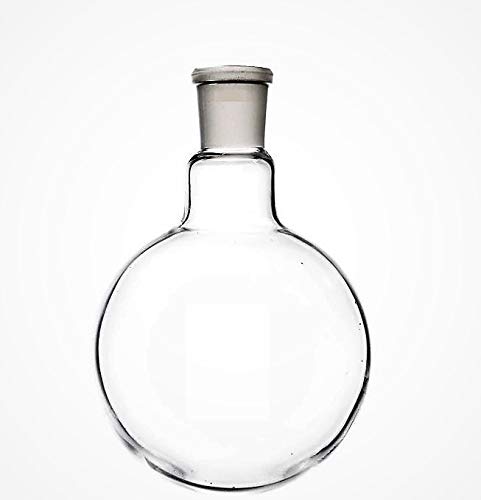
Round Bottom Flask 2000 ML With joint b-24
₹1,159.00Original price was: ₹1,159.00.₹659.00Current price is: ₹659.00.
Reviews
There are no reviews yet.