

“30ml borosilicate glass reagent sample vial with screw cap, leak-proof and durable for oils, perfumes, medicines, and lab use.”
KAUSHIK INDIA 30ML 50Pcs Borosilicate Glass Vial With Screw Cap, Leak Proof Liquid Storage Vial For Essential Oil,Perfume,Meds,Reagent,Anointing Oil Bottle And Lab Use Culture Tube
₹999.00 Original price was: ₹999.00.₹789.00Current price is: ₹789.00.
Categories: Culture Tube, laboratary glassware, Scientific Instruments
Description
The Essential Guide to the Reagent Sample Vial: Precision, Integrity, and Performance
Introduction to the Reagent Sample Vial
The reagent sample vial is a fundamental component in the modern laboratory. It is a small container designed for a critical purpose: to hold, protect, and preserve chemical and biological samples. The integrity of any analytical process begins with the quality of the reagent sample vial. These vials are ubiquitous in settings ranging from academic research to pharmaceutical quality control.
A reagent sample vial is more than just a simple bottle. It is an engineered system comprising the vial itself, a closure, and a septum. Each component must perform flawlessly to ensure analytical accuracy. The choice of an inappropriate reagent sample vial can lead to sample loss, contamination, or inaccurate results. The consequences can be significant.
These vials are used for storing liquid samples, solid samples, and even gaseous headspace. The design of a reagent sample vial is optimized for compatibility with automated samplers and various analytical instruments. The standard reagent vial has become a universal interface between the sample and the analyzer. Its role is both simple and profoundly important.
This guide provides an in-depth exploration of the reagent sample vial. We will examine its materials, design, types, and applications. Understanding the nuances of these vials is crucial for any scientist or technician. The humble reagent sample vial is the first and last line of defense for sample integrity.
The Critical Role of the Reagent Sample Vial in the Laboratory
The primary function of a reagent sample vial is containment. It safely holds a sample from preparation until analysis. But its role extends far beyond mere containment. A high-quality reagent sample vial must preserve the sample’s composition. It must prevent evaporation of volatile components.
It must also prevent the ingress of contaminants from the environment. Furthermore, the reagent sample vial must not itself introduce any contaminants into the sample. This is known as having low extractables. The material of the reagent vial must be inert towards the sample it contains. This chemical inertness is a non-negotiable property.
In automated laboratories, the reagent sample vial also plays a mechanical role. It must have consistent dimensions to fit securely in autosampler trays. Its shape must allow for reliable robotic handling. The bottom of the reagent sample vial must be clear and flat for precise level detection by automated systems.
The reagent sample vial is a key player in data integrity. A compromised vial can lead to false positives or negatives. It can cause carryover from one sample to the next. Selecting the right reagent sample vial is therefore a critical step in any Standard Operating Procedure (SOP). It is the foundation of reliable analytics.
Material Science: What Are Reagent Sample Vials Made From?
The choice of material for a reagent sample vial is paramount. The most common material is Type I borosilicate glass. This glass is renowned for its high chemical resistance and thermal stability. A borosilicate glass reagent vial can withstand aggressive solvents and high temperatures during sterilization.
Borosilicate glass is also transparent, allowing for visual inspection of the sample. It has very low levels of extractable metals. This makes a glass reagent sample vial ideal for trace analysis and critical applications. The clarity and inertness of glass make it the gold standard for a reagent sample vial.
For applications requiring even higher chemical resistance, amber-colored borosilicate glass is used. The amber reagent vial protects light-sensitive samples from UV and visible light. This prevents photodegradation of analytes. An amber glass reagent vial is essential for many pharmaceutical and environmental testing protocols.
Polypropylene is another common material for a plastic reagent sample vial. Polypropylene vials are shatterproof, making them safer for certain environments. They are also lighter and less expensive than glass. However, they may not be suitable for all solvents, as some can cause the plastic to swell or leach additives.
Anatomy of a Reagent Sample Vial: Deconstructing the Components
A standard reagent sample vial is a system of three integrated parts. The first part is the vial body. This is the main container that holds the sample. The reagent vial body has a specific height, diameter, and volume capacity. These dimensions are standardized for compatibility with laboratory equipment.
The most critical part of the vial body is the opening, or the finish. The finish is precisely manufactured to ensure a perfect seal with the closure. Common finishes include 8-425, 9-425, and 12-425. The number refers to the diameter in millimeters. A consistent reagent vial finish is vital for automation and sealing.
The second component is the closure, or cap. Reagent vial caps are typically made from aluminum or plastic. Aluminum caps provide a secure crimp seal. Plastic caps are often used for screw threads. The cap provides the mechanical force to hold the septum in place and create a seal on the reagent sample vial.
The third and most critical component is the septum. The reagent vial septum is a disposable barrier that seals the vial opening. It is typically made from a rubber polymer like PTFE/silicone or butyl rubber. The septum must be pierceable by a syringe or autosampler needle. It must then reseal to prevent leakage from the reagent sample vial.
A Guide to Common Reagent Sample Vial Closures and Seals
The closure system for a reagent sample vial is selected based on the application. The most secure closure is the crimp cap. An aluminum crimp cap is placed over the septum and the vial’s rim. A crimping tool is used to press the aluminum around the vial’s finish. This creates a tamper-evident, airtight seal on the reagent sample vial.
Crimp caps are ideal for volatile samples and for vials that will be agitated or stored for long periods. They are the standard for autosampler vials in gas chromatography. A properly applied crimp cap reagent vial ensures no sample loss. The seal on this type of reagent vial is highly reliable.
Screw caps are another popular option. A screw cap reagent vial uses a plastic cap with internal threads. The cap is twisted onto a threaded vial finish. These are convenient for vials that require frequent opening and closing. A screw thread reagent vial is common in HPLC applications and for sample storage.
Snap caps are a third type of closure. These are plastic caps that press-fit onto the vial finish. They are the least secure but are quick and easy to use. A snap cap reagent vial is suitable for non-volatile samples or for short-term storage. The seal on a snap cap reagent vial is not suitable for agitated samples.
Understanding Reagent Vial Septa: The Critical Barrier
The septum is the heart of the reagent sample vial sealing system. It is a thin disc that sits between the sample and the cap. When a cap is crimped or screwed on, it compresses the septum against the vial’s lip. This creates the primary seal for the reagent sample vial.
Septum material is chosen for chemical compatibility. A PTFE/silicone septum is the most common. It has a PTFE face facing the sample for maximum chemical resistance. The silicone layer provides the elasticity needed for resealing. This reagent vial septum is suitable for a wide range of solvents.
For highly aggressive solvents, a PTFE/butyl septum may be required. Butyl rubber has lower permeability to gases than silicone. This makes a butyl septum reagent vial ideal for headspace analysis. It prevents the loss of volatile compounds from the reagent sample vial.
A pre-slit septum is available for high-throughput laboratories. These septa have a pre-cut slit to reduce coring. Coring occurs when a needle pushes a small plug of septum material into the vial. Using a pre-slit septum reagent vial minimizes this risk and extends autosampler needle life.
Clear vs. Amber: Selecting the Right Reagent Vial for Light Sensitivity
The color of a reagent sample vial is a critical functional choice. Clear borosilicate glass reagent vials are the standard for most applications. They allow for easy visual inspection of the sample volume and clarity. A clear reagent vial is perfect for samples that are not sensitive to light.
However, many chemical compounds are photosensitive. Exposure to light can cause degradation or chemical reactions. For these samples, an amber reagent vial is mandatory. The amber color acts as a filter, blocking harmful UV and visible light wavelengths. An amber glass reagent vial protects the sample’s integrity.
The use of an amber reagent sample vial is common in pharmaceutical analysis. It is also standard for environmental testing of pesticides and herbicides. Many analytical methods explicitly require the use of an amber vial. When in doubt about a sample’s stability, default to an amber reagent vial.
For complete light protection, some applications may use vials wrapped in foil. However, an amber reagent sample vial provides a more convenient and reliable solution. It ensures protection throughout the sample’s lifecycle, from preparation to disposal.
Standard Sizes and Volumes of Reagent Sample Vials
Reagent sample vials come in a range of standard sizes to accommodate different sample volumes. The most common sizes are defined by their total volume capacity. Using the correct vial size is important for analytical accuracy, especially in autosamplers.
The 2ml reagent vial is arguably the most widely used size in chromatography. It is the standard for HPLC and GC autosamplers. A 2ml screw thread vial or 2ml crimp vial is ideal for sample volumes from a few microliters up to about 1.5 ml. This reagent sample vial size conserves precious sample and solvent.
The 1.5ml reagent vial is another popular size, often used as a HPLC vial. It is suitable for very small sample volumes. The 4ml reagent vial and 6ml reagent vial are used for larger volumes or for headspace analysis. A headspace vial often has a larger volume to provide an adequate vapor phase.
A 9mm reagent vial refers to the vial diameter, which is standard for many autosamplers. A 12mm reagent vial is a larger diameter vial used for specific applications or larger sample sizes. A 15ml reagent vial or 20ml reagent vial is used for sample preparation or storage, not typically for direct autosampling.
The Specialized World of Autosampler Vials
An autosampler vial is a type of reagent sample vial engineered for robotic handling. The term is often used interchangeably with HPLC vial or GC vial. The defining feature of an autosampler vial is its precise dimensional tolerance. The height, diameter, and concentricity must be tightly controlled.
An HPLC autosampler vial must fit perfectly into the autosampler tray. Its bottom must be flat and clear for sensors to accurately detect the liquid level. Any variation in an autosampler vial can cause misalignment. This can lead to a failed injection or damage to the autosampler needle.
GC vials have similar requirements. A headspace vial for GC is a specialized autosampler vial designed for volatile analysis. It must be able to withstand the pressure of the heated headspace. The seal on a headspace vial is critical to prevent pressure loss.
Certified autosampler vials are available for the most demanding applications. These reagent vials undergo additional quality control. They are guaranteed to be free of contaminants and to have exact dimensions. Using a certified vial reduces variability and the risk of failure in sensitive analyses.
Chromatography Applications: HPLC Vials and GC Vials
In High-Performance Liquid Chromatography (HPLC), the HPLC vial is a critical consumable. An HPLC autosampler vial holds the sample ready for injection into the chromatograph. The quality of the HPLC vial directly impacts the reliability of the results. A poor-quality HPLC vial can cause carryover or introduce impurities.
LC/MS vials are a subtype of HPLC vials used in liquid chromatography-mass spectrometry. This technique is extremely sensitive to contamination. Therefore, LC/MS certified vials are often used. These reagent vials are manufactured and packaged in cleanrooms to minimize background noise.
In Gas Chromatography (GC), the GC vial serves the same fundamental purpose. For analysis of volatiles, a headspace vial is used. This is a GC vial designed to be sealed and heated. The vapor phase (headspace) above the sample is then injected into the GC. The integrity of the headspace vial seal is paramount.
A GC MS vial is used for gas chromatography-mass spectrometry. Like LC/MS vials, they require high purity to prevent interference with the mass spectrometer’s detector. Using the correct reagent sample vial for each chromatographic technique is a foundational element of method validation.
Headspace Analysis and the Importance of the Headspace Vial
Headspace analysis is a specialized technique for analyzing volatile compounds. It requires a specific type of reagent sample vial known as a headspace vial. A headspace vial is designed to be a sealed, pressurized system. The sample is placed in the vial, which is then sealed with a special septum.
The headspace vial is heated in the autosampler. This causes the volatile compounds to partition into the gas phase above the liquid. The autosampler needle then pierces the septum of the headspace vial and withdraws a volume of this vapor for injection into the GC.
The headspace vial must have a consistent internal volume. This ensures reproducible results. The closure system for a headspace vial is critical. It must withstand internal pressure without leaking. A crimp top headspace vial with a PTFE/silicone septum is the standard.
Using a standard reagent sample vial for headspace analysis is not recommended. A dedicated headspace vial is engineered with thicker glass and a more robust sealing mechanism. This ensures safety and data integrity during the heating and pressurization process.
The Pursuit of Purity: Low-Bind and Deactivated Vials
For sensitive analyses, standard reagent sample vials may not be sufficient. Some analytes, particularly proteins and peptides, can adsorb to the surface of the vial. This leads to sample loss and inaccurate quantification. To prevent this, low bind vials were developed.
A low bind vial is a polypropylene vial or a glass reagent vial that has been specially treated. The interior surface is modified to be less reactive. This minimizes the adsorption of biomolecules. A low bind reagent vial is essential for bioanalysis, such as in PCR or protein assays.
In GC analysis, active sites on the glass can catalyze degradation or adsorb analytes. Deactivated vials are designed to prevent this. A deactivated vial has undergone a silanization process. This process covers the active silanol groups on the glass surface with an inert layer.
Using a deactivated reagent sample vial is crucial for analyzing polar compounds or at trace levels. It ensures that the sample remains stable from the moment it is placed in the reagent vial until it is injected. Both low bind and deactivated vials represent a higher tier of purity for critical applications.
Proper Cleaning and Storage Procedures for Reagent Vials
While many reagent sample vials are intended for single use, some are cleaned and reused. Proper cleaning is essential to prevent cross-contamination. The first step is to rinse the reagent vial thoroughly with a compatible solvent. This removes the bulk of the previous sample.
This is often followed by a series of rinses with different solvents. A final rinse with high-purity water or HPLC-grade solvent is standard. The cleaned reagent sample vial should then be dried in a clean, dust-free environment. An oven can be used to accelerate drying.
Storage of clean reagent vials is also important. They should be stored in a clean, sealed container to prevent dust accumulation. Caps and septa should be stored separately until needed. A disorganized storage system can negate the benefits of a thorough cleaning process.
For trace analysis, it is often safer to use new, certified clean reagent sample vials. The cost of a new vial is often negligible compared to the cost of a failed analysis or a contaminated sample. The decision to reuse a reagent vial should be based on the sensitivity of the application.
Troubleshooting Common Reagent Sample Vial Problems
Several common problems can occur with reagent sample vials. Septum coring is a frequent issue. This happens when the autosampler needle cuts a small piece of the septum, which falls into the vial. This can contaminate the sample and clog the needle. Using a pre-slit septum can minimize coring.
Sample evaporation is another problem. This occurs if the septum does not form a perfect seal. It can be caused by an incorrect cap, a damaged vial finish, or an overused septum. Always use a fresh septum and ensure the cap is properly applied to the reagent sample vial.
Carryover is the transfer of a small amount of one sample to the next. This can be caused by a contaminated autosampler needle. However, it can also be caused by adsorption onto the vial walls. Using a low bind reagent vial or a deactivated vial can help reduce this type of carryover.
Cracking or breaking of glass reagent vials can occur during crimping or handling. This is often due to using excessive force or a defect in the glass. Using a plastic reagent sample vial is a shatterproof alternative for non-critical applications where glass compatibility is not required.
Quality Control and Standards for Reagent Sample Vials
The manufacturing of reagent sample vials is subject to rigorous quality control. Reputable suppliers test their vials for dimensional accuracy. They also test for chemical resistance and the presence of extractables. A certified autosampler vial will come with a Certificate of Analysis (CoA).
International standards, such as those from ISO, provide guidelines for reagent vial production. These standards ensure consistency and reliability across different manufacturers. When a laboratory is audited, the quality of its consumables, including reagent sample vials, may be scrutinized.
Quality control in the lab also involves inspecting vials upon receipt. Vials should be checked for chips, cracks, or dust. Caps and septa should be inspected for deformities. Storing reagent vials in their original packaging until use helps maintain their cleanliness.
Using a consistent and qualified supplier for reagent sample vials is a best practice. Switching suppliers can introduce variability into analytical methods. A robust quality control system for consumables is a hallmark of a well-run laboratory.
The Future of the Reagent Sample Vial: Trends and Innovations
The future of the reagent sample vial is focused on sustainability and smart technology. The trend towards plastic reagent vials made from recycled materials is growing. However, the challenge is to maintain chemical purity. Biodegradable polymers for vials are also an area of research.
Another innovation is the pre-slit septum that can withstand hundreds of injections without coring. New polymer blends are being developed to extend septum life. This reduces waste and improves reliability in high-throughput laboratories.
“Smart vials” with embedded RFID chips are on the horizon. A reagent sample vial could contain a chip that stores sample information. This would streamline sample tracking and data management. It could also help prevent sample mix-ups.
The push for miniaturization continues. Smaller reagent sample vials that use nanoliter sample volumes are being developed for next-generation instruments. These vials will require even greater precision in manufacturing. The evolution of the reagent sample vial will continue to parallel the evolution of analytical science itself.
Conclusion: The Indispensable Role of the Reagent Sample Vial
The reagent sample vial is a masterpiece of minimalist design and critical function. It is a silent partner in every successful analysis. From the standard 2ml reagent vial to the specialized headspace vial, its role is universally important. The integrity of scientific data often rests upon the quality of this small container.
Choosing the correct reagent sample vial—whether glass or plastic, clear or amber, crimp or screw—is a fundamental scientific decision. It requires an understanding of chemistry, physics, and the analytical technique. The humble reagent vial deserves careful consideration.
As laboratory technology advances, the reagent sample vial will continue to adapt. It will become smarter, cleaner, and more sustainable. But its core purpose will remain unchanged: to protect the sample and ensure the truth of the data. The reagent sample vial is, and will remain, an indispensable tool in the pursuit of scientific knowledge.
Be the first to review “KAUSHIK INDIA 30ML 50Pcs Borosilicate Glass Vial With Screw Cap, Leak Proof Liquid Storage Vial For Essential Oil,Perfume,Meds,Reagent,Anointing Oil Bottle And Lab Use Culture Tube” Cancel reply
Related products
-
Sale!
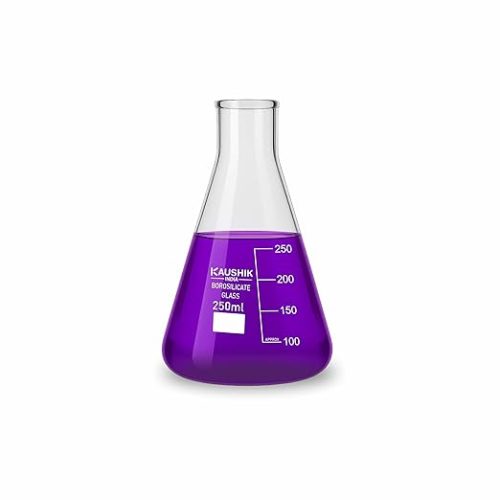
KAUSHIK INDIA Borosilicate Glass Conical Flask,250ml Capacity narrow mouth for storage liquid Chemical school, college, chemistry lab, Laboratories
₹199.00 – ₹569.00Price range: ₹199.00 through ₹569.00Select options This product has multiple variants. The options may be chosen on the product page Details -
Sale!

Borosilicate Glass Separating Funnel Pear Shape with Teflon Stopcock and Inter Changeable Stopper One Unit (125 ml)
₹999.00Original price was: ₹999.00.₹449.00Current price is: ₹449.00. -
Sale!
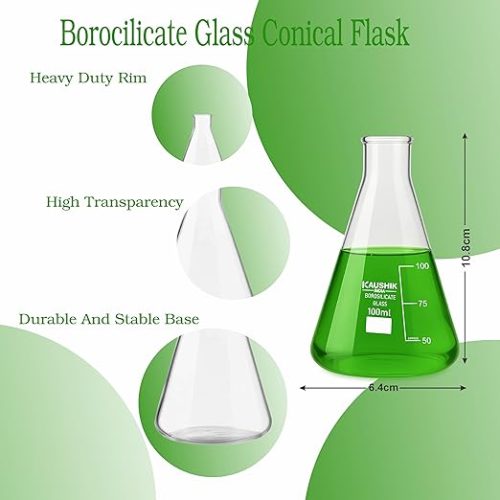
KAUSHIK INDIA Borosilicate Glass 3.3 Measuring Conical Flask 100ml For Lab Laboratory, School, College And Professional use
₹399.00Original price was: ₹399.00.₹169.00Current price is: ₹169.00.
Reviews
There are no reviews yet.