
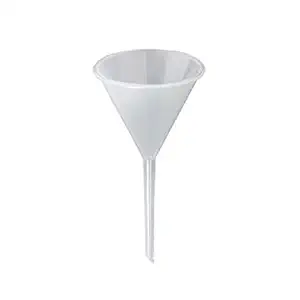
This 75mm plastic analytic funnel, made from durable polypropylene with a long stem, is lightweight, chemical-resistant.
Polypropylene made Plastic Analytic funnel long stem 75 mm
₹299.00 Original price was: ₹299.00.₹120.00Current price is: ₹120.00.
Categories: Plastic Funnel, Scientific Instruments
Description
The Complete Guide to the Plastic Analytic Funnel: Safety and Efficiency in Modern Laboratories
Introduction to the Plastic Analytic Funnel
A Plastic Analytic Funnel is an essential piece of laboratory equipment designed for analytical procedures. This specialized analytic funnel is manufactured from high-purity plastic polymers. It serves the critical function of transferring liquids and fine solids into containers with narrow openings. The Plastic Funnel is a cornerstone of safe and efficient laboratory workflow.
The primary advantage of this funnel is its material composition. Unlike traditional glass funnels, the Plastic Funnel is shatterproof and chemically resistant. This makes it ideal for use in busy analytical laboratories. The analytic funnel is designed to prevent contamination during sensitive procedures.
These funnels are used in various analytical applications. They are essential for HPLC sample preparation, filtration setups, and quality control testing. The Plastic Analytic Funnel offers excellent compatibility with a wide range of solvents. Its inert nature ensures sample integrity throughout the analytical process.
Understanding the proper use of a Plastic Analytic Funnel is crucial for laboratory technicians. It represents a modern approach to analytical chemistry. This funnel combines practical functionality with material science advancements. The Plastic Analytic Funnel is a vital tool in contemporary analytical methodologies.
What is a Plastic Analytic Funnel? A Detailed Definition
A Plastic Analytic Funnel is a laboratory funnel specifically designed for analytical applications. It is constructed from high-quality plastic materials that meet analytical purity standards. The analytic funnel features a precise design that ensures accurate and contamination-free liquid transfer.
This type of funnel is characterized by its chemical resistance and non-reactive properties. The Plastic Analytic Funnel does not leach contaminants into sensitive analytical samples. It maintains the chemical integrity of both aqueous and organic solutions. This makes it indispensable in analytical chemistry laboratories.
The Plastic Analytic Funnel typically features a smooth, seamless construction. This prevents particle entrapment and makes cleaning effortless. Many analytic funnel designs include a stepped stem for secure fitting into various container sizes. The funnel may also have volume graduations for approximate measurements.
Unlike general-purpose funnels, the Plastic Analytic Funnel meets stringent quality requirements. It is manufactured in controlled environments to ensure analytical purity. The Plastic Analytic Funnel is the preferred choice for applications where sample purity is paramount.
The Anatomy of a Plastic Analytic Funnel: Component Breakdown
The Cone: The Primary Collection Area
The cone is the main body of the Plastic Analytic Funnel. This section is designed with an optimal angle to facilitate smooth liquid flow. The analytic funnel cone typically features a wide opening for easy pouring. Its smooth surface prevents liquid adhesion and ensures complete drainage.
The interior of the cone is highly polished to prevent sample retention. This is crucial for quantitative analytical transfers. The Plastic Analytic Funnel cone may include volume graduations for approximate measurements. These markings aid in rough volume assessments during analytical preparations.
The cone’s design minimizes turbulence during liquid transfer. This prevents bubble formation and potential sample loss. The analytic funnel cone is engineered for maximum efficiency in analytical workflows. Its geometry ensures rapid and complete liquid passage to the stem.
The Stem: The Precision Transfer Channel
The stem is the narrow extension below the cone of the Plastic Analytic Funnel. This component directs liquid flow into the receiving vessel. The analytic funnel stem is designed with specific length and diameter specifications. These dimensions control flow rate and prevent splashing.
Many Plastic Analytic Funnel designs feature a stepped or tapered stem. This allows compatibility with different container openings. The stem tip is often precision-cut to ensure a clean, drip-free pour. This is essential for accurate analytical measurements.
The stem may include a locking mechanism or friction fit design. This secures the analytic funnel in place during transfers. The stem construction ensures laminar flow for controlled liquid delivery. This precision is vital for reproducible analytical results.
The Rim: Reinforced for Stability
The rim of the Plastic Analytic Funnel is reinforced for durability and stability. This component provides a comfortable grip during handling. The analytic funnel rim is typically thickened to prevent deformation. This maintains the funnel’s structural integrity during repeated use.
The rim design allows the Plastic Analytic Funnel to rest securely on various containers. Some models feature a flattened rim section for improved stability. The reinforced rim withstands the mechanical stress of daily analytical use. This ensures long-term reliability in the laboratory.
Material Composition: The Foundation of Performance
The material composition defines the Plastic Analytic Funnel performance characteristics. Common materials include polypropylene (PP), polymethylpentene (PMP), and Teflon (PTFE). Each polymer offers specific advantages for analytical applications. The material selection depends on the intended chemical exposure.
Polypropylene analytic funnel products offer excellent chemical resistance to acids and bases. Polymethylpentene funnels provide superior clarity for visual monitoring. Teflon Plastic Analytic Funnel options deliver maximum chemical inertness. The material choice directly impacts the funnel’s analytical compatibility.
The Critical Role of Material: Why Plastic is Preferred for Analytics
Chemical Inertness and Purity
The Plastic Analytic Funnel offers exceptional chemical inertness. High-quality polymers do not react with analytical reagents or samples. This prevents contamination that could compromise analytical results. The analytic funnel maintains sample integrity throughout the transfer process.
This inertness is crucial for trace analysis and sensitive detection methods. The Plastic Analytic Funnel does not introduce metallic ions or silica particles. This makes it superior to glass for many analytical applications. The purity of plastic ensures uncontaminated analytical measurements.
Shatterproof Safety Characteristics
The shatterproof nature of the Plastic Analytic Funnel enhances laboratory safety. It cannot break into sharp fragments like glass funnels. This is particularly important when handling hazardous or expensive samples. The analytic funnel provides a safe alternative for routine analytical procedures.
This safety feature reduces the risk of injury and sample loss. The Plastic Analytic Funnel can withstand accidental drops and impacts. This durability makes it ideal for high-throughput analytical laboratories. Safety and reliability are inherent properties of plastic construction.
Non-Wetting Surface Properties
Many plastic materials used in analytic funnel manufacturing have non-wetting surfaces. This property ensures complete liquid drainage without residue retention. The Plastic Analytic Funnel delivers quantitative transfer of analytical samples. This is essential for accurate concentration measurements.
The low surface energy of plastics prevents droplet formation and clinging. The analytic funnel provides clean, efficient sample transfer every time. This characteristic improves the precision of analytical preparations. Non-wetting surfaces contribute to superior analytical performance.
Lightweight and Ergonomic Design
The Plastic Analytic Funnel is significantly lighter than glass equivalents. This reduces user fatigue during extended analytical procedures. The lightweight nature allows for easy handling and manipulation. The analytic funnel improves workflow efficiency in busy laboratories.
Ergonomic designs enhance user comfort and control. The Plastic Analytic Funnel can be manufactured with textured grips. These features improve handling precision during critical analytical transfers. The combination of light weight and ergonomic design optimizes analytical workflows.
Types of Plastic Analytic Funnels for Specific Applications
Powder Analytic Funnels
The Powder Analytic Funnel features a wide, short stem designed for solid transfers. This analytic funnel prevents clogging when transferring fine powders and granules. It is essential for preparing analytical samples involving solid reagents. The design ensures smooth flow of particulate materials.
This Plastic Analytic Funnel type is commonly used in analytical chemistry and pharmaceutical testing. Its wide bore prevents bridging of powdered materials. The powder analytic funnel maintains the integrity of solid samples during transfer. It is indispensable for quantitative solid sample preparations.
Filter Analytic Funnels
The Filter Analytic Funnel is designed specifically for filtration procedures. This analytic funnel typically features an angled design that accommodates filter papers. It is used in analytical filtration setups for sample clarification. The Plastic Analytic Funnel for filtration ensures particle-free analytical samples.
These funnels often include ribs or channels for efficient filtrate flow. The filter analytic funnel is compatible with various vacuum filtration apparatus. Its chemical resistance allows use with aggressive analytical solvents. This analytic funnel is crucial for sample preparation in analytical methods.
Separatory Analytic Funnels
The Plastic Analytic Funnel for separatory applications features specialized designs. These funnels assist in liquid-liquid extractions and phase separations. While not replacing full separatory funnels, they aid in analytical-scale separations. The analytic funnel for separation work ensures clean phase transfers.
These funnels may include stopcocks or flow control features. The separatory analytic funnel is valuable in analytical sample preparation. It facilitates the extraction and concentration of analytes from complex matrices. This Plastic Analytic Funnel type enhances analytical method efficiency.
Short Stem and Long Stem Variants
Plastic Analytic Funnel designs include various stem lengths for different applications. Short stem funnels are ideal for transfers into shallow containers. Long stem analytic funnel versions reach into narrow-neck volumetric flasks. The stem length is selected based on the analytical setup requirements.
Each stem length offers specific advantages for particular analytical procedures. The analytic funnel stem design impacts flow control and transfer precision. Selecting the appropriate stem length optimizes analytical workflow efficiency. The Plastic Analytic Funnel is available in multiple stem configurations.
Key Specifications for Selecting a Plastic Analytic Funnel
Material Grade and Purity
The material grade is the most critical specification for a Plastic Analytic Funnel. Analytical grade polymers ensure the highest level of chemical purity. The analytic funnel must be manufactured from virgin, contamination-free materials. This guarantees no interference with sensitive analytical measurements.
Certifications like USP Class VI indicate suitability for pharmaceutical analytics. The Plastic Analytic Funnel material should be documented with certificates of analysis. Material purity directly correlates with analytical result reliability. This specification cannot be compromised in analytical applications.
Chemical Compatibility Profile
The Plastic Analytic Funnel must be compatible with the chemicals used in analytical methods. Polypropylene offers excellent resistance to acids, bases, and aqueous solutions. PTFE provides universal chemical resistance for aggressive solvents. The analytic funnel chemical compatibility must match the analytical application requirements.
Compatibility charts should be consulted before funnel selection. The Plastic Analytic Funnel must withstand prolonged exposure to analytical reagents. Chemical resistance ensures both funnel longevity and sample protection. This specification is fundamental to analytical method validation.
Temperature Resistance Range
The Plastic Analytic Funnel temperature resistance determines its application range. Standard polypropylene funnels withstand temperatures up to 135°C. This allows for autoclave sterilization between analytical procedures. The analytic funnel must maintain dimensional stability at operating temperatures.
Temperature resistance is crucial for hot filtration and warm solvent transfers. The Plastic Analytic Funnel should be rated for the highest temperature encountered in analytical workflows. This specification ensures safety and performance during thermal operations.
Physical Dimensions and Capacity
The Plastic Analytic Funnel size must be appropriate for the analytical scale. Common diameters range from 50mm to 200mm for different volume handling. The analytic funnel capacity should match typical sample volumes in analytical preparations. Oversized funnels can lead to spills and sample loss.
Stem diameter and length affect flow rate and control. The Plastic Analytic Funnel dimensions should be optimized for specific analytical containers. Proper sizing improves accuracy and efficiency in analytical sample handling.
Primary Applications in Analytical Laboratories
HPLC and GC Sample Preparation
The Plastic Analytic Funnel is essential for chromatography sample preparation. It transfers mobile phases and sample solutions without introducing contaminants. The analytic funnel ensures pure solutions for sensitive chromatographic detection. Its chemical resistance prevents leaching into organic solvents.
This application requires the highest level of material purity. The Plastic Analytic Funnel is indispensable for reproducible chromatographic results. It maintains the integrity of samples prior to instrumental analysis. The analytic funnel is a critical component in chromatography workflows.
Spectroscopic Analysis Sample Handling
In spectroscopic methods, the Plastic Analytic Funnel prevents metallic contamination. This is crucial for atomic absorption and ICP-MS analyses. The analytic funnel ensures samples remain free of interfering elements. Its plastic construction doesn’t introduce background signals.
The funnel’s transparency allows visual monitoring of valuable samples. The Plastic Analytic Funnel protects the sensitivity of spectroscopic measurements. It is particularly important for trace element analysis. The analytic funnel supports accurate spectroscopic determinations.
Pharmaceutical Quality Control Testing
The Plastic Analytic Funnel meets stringent requirements for pharmaceutical analytics. It is used in dissolution testing, assay preparations, and impurity profiling. The analytic funnel must comply with GMP guidelines for quality control laboratories. Its documentation supports regulatory compliance.
Single-use Plastic Analytic Funnel options prevent cross-contamination between products. This is essential for pharmaceutical quality assurance. The analytic funnel contributes to the reliability of pharmaceutical testing results. It is a validated component in QC analytical methods.
Environmental Sample Processing
Environmental analytics involve complex sample matrices. The Plastic Analytic Funnel assists in processing water, soil, and air samples. Its chemical resistance handles various extraction solvents. The analytic funnel is used in EPA and other standardized environmental methods.
The funnel’s durability withstands field sampling conditions when needed. The Plastic Analytic Funnel supports accurate environmental monitoring. It helps ensure compliance with environmental regulations. The analytic funnel is vital for environmental protection efforts.
Proper Usage and Handling Techniques
Pre-Use Cleaning and Preparation
The Plastic Analytic Funnel should be inspected before each use. Even new funnels may require rinsing with high-purity solvent or water. The analytic funnel must be completely dry for certain analytical applications. Proper preparation prevents introduction of moisture or contaminants.
For critical applications, the Plastic Analytic Funnel may need solvent conditioning. This involves rinsing with the same solvent used in the analytical procedure. Proper preparation ensures the analytic funnel doesn’t affect sample composition. This step is crucial for trace analysis.
Correct Positioning and Support
The Plastic Analytic Funnel should be securely positioned in the receiving vessel. The stem should contact the container wall to guide liquid flow smoothly. This minimizes splashing and bubble formation. The analytic funnel must be stable during the entire transfer process.
For large volumes or prolonged transfers, the funnel may need external support. Never overfill the Plastic Analytic Funnel beyond its capacity. Proper positioning ensures controlled, accurate liquid transfer. This technique is fundamental to analytical precision.
Appropriate Pouring Methods
Pour liquids down the side of the Plastic Analytic Funnel cone, not directly into the center. This reduces turbulence and prevents aerosol formation. The analytic funnel should be used with a pouring rod or stirring rod for guidance. This technique ensures smooth liquid introduction.
For powders, use a Plastic Analytic Funnel with a powder-specific design. Tap the funnel gently to encourage flow if necessary. Proper pouring methods maintain sample integrity and prevent loss. These techniques maximize the analytic funnel effectiveness.
Cleaning and Maintenance Protocols
Routine Cleaning Procedures
Clean the Plastic Analytic Funnel immediately after each use. Rinse thoroughly with an appropriate solvent followed by detergent solution. Use a soft brush if necessary, but avoid abrasive materials. The analytic funnel should be cleaned while residues are still fresh.
Final rinsing with high-purity water removes any cleaning agent traces. The Plastic Analytic Funnel should be air-dried in a dust-free environment. Inverted drying ensures complete water drainage from the stem. Proper cleaning maintains the funnel’s analytical readiness.
Sterilization and Sanitization
Many Plastic Analytic Funnel materials are autoclavable for sterilization. Check the manufacturer’s temperature specifications before autoclaving. Chemical sanitization is appropriate for heat-sensitive funnels. The analytic funnel must be completely dry before storage after sterilization.
Sterilization is particularly important for microbiological and cell culture analytics. The Plastic Analytic Funnel must maintain integrity through sterilization cycles. Proper sanitization prevents microbial contamination of analytical samples. This protocol is essential for biological analyses.
Storage and Organization
Store Plastic Analytic Funnel units in clean, protected environments. Dedicated storage racks prevent deformation of the funnel shape. The analytic funnel should be stored separately from chemical contaminants. Proper organization ensures easy access and prevents damage.
Stacking Plastic Analytic Funnel units should be done carefully to avoid scratching. Funnels should be stored with adequate air circulation to prevent moisture buildup. Proper storage extends the analytic funnel service life. This practice maintains analytical readiness.
Troubleshooting Common Issues
Problem: Slow Flow Rate or Clogging
A slow flow rate indicates stem blockage or liquid viscosity issues. For viscous liquids, use a Plastic Analytic Funnel with a wider stem diameter. For powder clogs, use a dedicated powder funnel with anti-bridging design. The analytic funnel selection should match the material properties.
Never poke objects into the stem to clear clogs. This can damage the Plastic Analytic Funnel and create contamination sources. Instead, disassemble the setup and clear the blockage properly. Prevention through appropriate funnel selection is the best approach.
Problem: Liquid Dripping from Stem
Dripping after transfer completion indicates surface tension issues. Some Plastic Analytic Funnel designs include drip-free tips for this reason. Tapping the funnel gently against the container can encourage complete drainage. The analytic funnel material should have low surface adhesion properties.
For critical applications, allow sufficient drainage time before funnel removal. The Plastic Analytic Funnel design should promote complete liquid transfer. Dripping can be minimized through proper technique and funnel selection.
Problem: Chemical Compatibility Issues
If a Plastic Analytic Funnel shows cloudiness, cracking, or softening, chemical incompatibility exists. Discontinue use immediately and replace with a compatible material. The funnel chemical resistance charts should guide material selection.
Always test Plastic Funnel compatibility with new solvents before analytical use. Material failure can lead to sample contamination and safety hazards. Chemical compatibility is non-negotiable for analytical applications.
The Future of Plastic Analytic Funnels
Advanced Polymer Developments
Future Plastic Analytic Funnel products will utilize advanced polymer formulations. These will offer enhanced chemical resistance and temperature tolerance. New materials may provide even greater purity for ultra-trace analysis. The funnel will continue to evolve with material science.
Smart polymers that change color upon contamination may be developed. These innovations will enhance the Plastic Funnel functionality. Material advancements will drive improved analytical performance.
Integration with Automated Systems
The Plastic Analytic Funnel will be designed for compatibility with laboratory automation. Robotic systems require funnels with precise dimensional tolerances. The funnel of the future may feature attachment points for automated handlers. This will support high-throughput analytical laboratories.
Automation-compatible Plastic Funnel designs will improve analytical efficiency. They will reduce manual intervention in routine sample preparation. The funnel will remain relevant in increasingly automated laboratories.
Conclusion: The Indispensable Analytical Tool
The Plastic Analytic Funnel represents a perfect fusion of material science and practical design. Its plastic construction provides safety, chemical resistance, and analytical purity. The analytic funnel is essential for modern analytical methodologies across industries.
From pharmaceutical quality control to environmental monitoring, this tool plays a vital role. Its simplicity belies its importance in generating reliable analytical data. The Plastic Analytic Funnel ensures sample integrity from preparation to analysis.
As analytical techniques become more sensitive, the importance of proper sample handling grows. The Plastic Analytic Funnel will continue to be a fundamental component of analytical workflows. Its evolution will parallel advancements in analytical science, maintaining its status as an indispensable laboratory tool.
Be the first to review “Polypropylene made Plastic Analytic funnel long stem 75 mm” Cancel reply
Related products
-
Sale!
Borosilicate 3.3 Glass Measuring Cylinder with Graduation Marks for Measuring of Liquids 2000 ML
₹2,599.00Original price was: ₹2,599.00.₹1,499.00Current price is: ₹1,499.00. -
Sale!

Borosilicate Glass Distillation Apparatus or Distillation assembly unit (3000ML)
₹8,000.00Original price was: ₹8,000.00.₹3,000.00Current price is: ₹3,000.00. -
Sale!

KAUSHIK INDIA BOROSILICATE GLASS 3.3 SEPARATING FUNNEL 250ML WITH GLASS STOPCOCK
₹1,191.00Original price was: ₹1,191.00.₹463.00Current price is: ₹463.00.
Reviews
There are no reviews yet.