
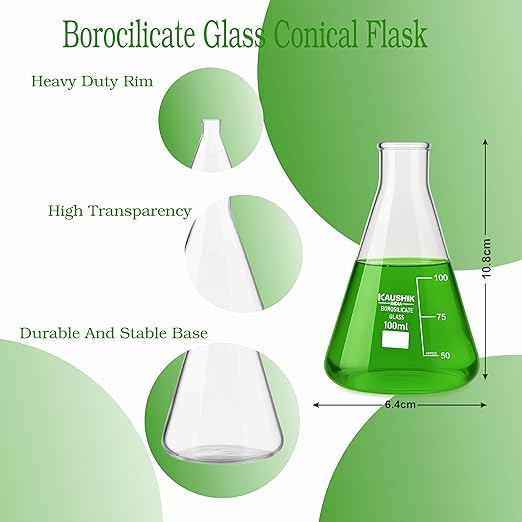
This 100ml measuring conical flask, made from high-quality borosilicate glass 3.3, is durable, heat-resistant, and ideal for laboratory, school, college.
KAUSHIK INDIA Borosilicate Glass 3.3 Measuring Conical Flask 100ml For Lab Laboratory, School, College And Professional use
₹399.00 Original price was: ₹399.00.₹169.00Current price is: ₹169.00.
Categories: laboratary glassware, Scientific Instruments
Description
The Essential Guide to the Measuring Conical Flask: Precision and Versatility in the Laboratory
Introduction to the Measuring Conical Flask
A Measuring Conical Flask is a fundamental piece of laboratory glassware. It combines the classic conical shape of an Erlenmeyer flask with graduated volume markings. This laboratory flask is designed for tasks requiring both mixing and approximate volume measurement. The Measuring Conical Flask is a versatile tool found in virtually every lab.
The primary advantage of this flask is its dual functionality. It allows for the swirling and mixing of liquids without significant spillage. Simultaneously, its graduated markings provide a reference for estimating liquid volume. This makes the Measuring Conical Flask an indispensable tool for general lab work.
It is distinct from a volumetric flask, which is used for precise volume preparation. The Measuring Conical Flask is intended for approximate measurements where high precision is not critical. Its conical shape, with a narrow neck and a broad base, is ideal for a variety of applications. The flask is typically made from borosilicate glass or plastic.
Understanding the proper use of a Measuring Conical Flask is essential for students and professionals. It represents a balance between convenience and functionality. This flask is a workhorse for preparation, titration, and culture work.
What is a Measuring Conical Flask? A Detailed Definition
A Measuring Conical Flask is a type of conical flask that features graduated volume markings. These markings are often printed or etched on the side of the flask. They indicate approximate volume levels, typically in milliliters (ml). The flask is also commonly known as a graduated Erlenmeyer flask.
The standard design includes a conical body, a flat bottom, and a cylindrical neck. The measuring aspect comes from the scale that runs vertically along the side. This scale allows the user to make quick volume assessments during procedures. It is a conical flask designed for both containment and estimation.
The accuracy of a Measuring Conical Flask is less than that of a graduated cylinder or volumetric flask. It is designed for situations where an approximate volume is sufficient. For example, making a dilution where the exact concentration is not paramount. The flask excels in convenience and utility.
It is a staple in chemical, biological, and educational laboratories. The Measuring Conical Flask bridges the gap between simple beakers and precise volumetric ware. It is a symbol of practical, efficient laboratory design.
The Anatomy of a Measuring Conical Flask: A Component Breakdown
The Conical Body: The Mixing and Measurement Chamber
The conical body is the main feature of the Measuring Conical Flask. Its wide base narrows upwards to a cylindrical neck. This shape is exceptionally stable, preventing the flask from tipping over easily. The broad base provides a large surface area for heating or cooling contents.
The sides of the body are where the measuring graduations are located. The conical shape means that the volume markings are not uniformly spaced. They are calibrated to account for the changing diameter of the flask. The body is designed to be swirled vigorously without splashing the contents.
This design makes the Measuring Conical Flask perfect for titrations and dissolving solids. The flask can be made from borosilicate glass for heat resistance or plastic for durability. The body’s design is optimized for both function and safety.
The Graduated Scale: The Measuring Feature
The graduated scale is what defines the Measuring Conical Flask. This scale is typically printed in a durable, chemical-resistant enamel. Alternatively, it can be etched into the glass for permanent marking. The scale allows for approximate measuring of liquid volumes.
The graduations are not as precise as those on a graduated cylinder. They provide an estimate, usually with a tolerance of ±5% or more. The scale is essential for quick checks and non-critical volume preparations. The measuring function adds significant utility to the standard conical form.
When reading the volume, the user must align their eyes with the bottom of the meniscus. This is the curved surface of the liquid. The measuring mark closest to this point is the estimated volume. This process is fundamental to using the flask correctly.
The Narrow Neck: For Containment and Pouring
The narrow neck of the Measuring Conical Flask serves several important purposes. It reduces the surface area exposed to the air, minimizing evaporation. It also allows the flask to be sealed easily with a stopper or cotton plug. This is crucial for cell culture work or when storing solutions.
The neck provides a convenient handle for swirling the flask. It also facilitates controlled pouring, directing the liquid flow and reducing spills. The neck is often reinforced to provide additional strength. On a glass conical flask, the rim may be fire-polished for safety.
The neck is typically where the capacity of the flask is indicated. For example, “250ml” might be marked near the top. This indicates the total volume the Measuring Conical Flask can hold when filled to the brim.
The Flat Bottom: For Stability and Heating
The flat bottom is a critical design element. It ensures the Measuring Conical Flask stands upright on a bench without support. This stability is essential when adding reagents or when the flask is placed on a stir plate. The flat base also makes it suitable for heating on a hot plate.
A flat bottom provides even contact with a heating surface. This promotes uniform heating of the contents. The stability of the flask prevents accidents during heating or mixing operations. The base is often slightly thickened for added durability.
The Critical Role of Material: Glass vs. Plastic
Borosilicate Glass Measuring Conical Flasks
Borosilicate glass is the premium material for a Measuring Conical Flask. It offers excellent chemical resistance to acids, bases, and organic solvents. This ensures the flask does not contaminate the contents. A glass conical flask is ideal for chemical applications.
The heat resistant property of borosilicate glass is a major advantage. A glass Measuring Conical Flask can be heated directly on a hot plate or over a flame. It can also be autoclaved for sterilization. This makes it reusable and suitable for microbiological work.
The transparency of glass provides perfect clarity for observing reactions. The measuring graduations are easy to read against the clear background. A glass conical flask is durable and provides long-term service if handled with care.
Plastic (PP, PMP) Measuring Conical Flasks
Plastic Measuring Conical Flasks are made from materials like polypropylene (PP) or polymethylpentene (PMP). Their primary advantage is being shatterproof and lightweight. This makes them safer for student labs or fieldwork. A plastic flask is highly durable against impacts.
Some plastics, like PMP, are transparent and can withstand autoclaving. This allows them to be used in sterile procedures. Plastic flasks are generally less chemical resistant than borosilicate glass. They may not be suitable for strong organic solvents.
Plastic Measuring Conical Flasks are often disposable or for single-use applications. They are cost-effective for high-throughput labs. The measuring scales on plastic flasks are typically molded or printed on.
Key Specifications for Selecting a Measuring Conical Flask
Capacity and Graduation Range
Measuring Conical Flasks come in a wide range of capacities. Common sizes include 50ml, 100ml, 250ml, 500ml, 1000ml (1L), and 2000ml (2L). The capacity indicates the total volume the flask can hold.
The graduation range refers to the scale printed on the flask. A 250ml Measuring Conical Flask might have graduations from 50ml to 250ml. Choosing the right capacity is crucial for accuracy and convenience.
Graduation Interval and Accuracy
The graduation interval is the volume between two consecutive marks. For example, a flask may have marks every 10ml or every 25ml. Smaller intervals allow for finer measuring, but the inherent accuracy of the flask is still limited.
The accuracy of a Measuring Conical Flask is typically ±5% of the stated volume. This is much less precise than a Class A volumetric flask. It is important to understand this tolerance when selecting this flask for a task.
Material and Chemical Compatibility
The choice between glass and plastic depends on the application. For heating and chemical resistance, a borosilicate glass Measuring Conical Flask is best. For durability and safety, a plastic conical flask may be preferable.
Always check the chemical compatibility of the material with the substances being used. The flask must not react with or leach chemicals into the solution.
Neck Type and Closure Options
Some Measuring Conical Flasks have a standard neck for general use. Others may have a wide mouth for easier filling and cleaning. The type of closure needed should also be considered.
A flask may need to accommodate a stopper, a screw cap, or a foam plug. The neck design must be compatible with the intended closure method.
Primary Applications and Uses of the Measuring Conical Flask
Titration and Quantitative Analysis
The Measuring Conical Flask is the traditional vessel for titration. Its conical shape allows for vigorous swirling of the solution without splashing. This ensures thorough mixing of the titrant and analyte. The measuring graduations provide a rough check on the initial volume.
While the burette provides the precise volume measurement, the flask is essential for the process. Its stability on the bench is a key safety feature during careful drop-by-drop addition.
Preparation of Solutions and Dilutions
For many applications, a solution does not need to be prepared with extreme precision. A Measuring Conical Flask is perfect for making approximate solutions and dilutions. The graduations allow for quick and easy mixing to a specific volume.
For example, making a 1% weight/volume solution can be done conveniently in this flask. The solute is weighed and added to the flask, and solvent is added up to the required measuring mark.
Mixing and Heating Solutions
The flask is ideal for dissolving solids or mixing multiple liquids. The shape promotes efficient mixing with minimal risk of spillage. When heating is required, the flat bottom and heat resistant glass make it safe for use on a hot plate.
The narrow neck reduces evaporation losses during heating. This makes the Measuring Conical Flask superior to a beaker for many heating and mixing tasks.
Microbiological and Cell Culture Work
In biology labs, the Measuring Conical Flask is used to prepare and sterilize culture media. The flask can be sealed with a cotton plug or vented cap to allow gas exchange while preventing contamination. The measuring marks help in preparing media to the correct volume.
The flasks are often placed on shaking incubators to aerate cell cultures. The conical shape promotes good oxygen transfer for growing microorganisms.
Proper Usage and Handling Techniques
Reading the Meniscus Correctly
Accurate measuring requires correctly reading the meniscus. The meniscus is the curved surface of a liquid caused by surface tension. For most liquids, like water, the meniscus is concave.
To read the volume, place the flask on a level surface. Bring your eyes to the same level as the meniscus. Read the value at the bottom of the curve. This ensures the most accurate reading possible from the flask’s graduations.
Mixing and Swirling Safely
To mix contents, hold the Measuring Conical Flask by the neck. Gently swirl the solution in a circular motion. The conical shape will cause the liquid to vortex, ensuring thorough mixing. Do not shake the flask vigorously, as this may cause the liquid to splash out of the neck.
For solutions that generate gas or heat, mix carefully to avoid rapid pressure buildup. The flask should not be more than half-full when mixing volatile solutions.
Heating and Cooling Procedures
When heating a glass Measuring Conical Flask, use a hot plate or a heating mantle. Avoid direct flame, which can create hot spots and thermal stress. Always use heat-resistant gloves when handling a hot flask.
Allow the flask to cool gradually on a heat-resistant surface. Sudden cooling can cause the glass to crack, even if it is heat resistant.
Cleaning and Maintenance Best Practices
Routine Cleaning Methods
Clean the Measuring Conical Flask immediately after use. Rinse with tap water to remove most residues. For stubborn stains, use a mild detergent and a flask brush. A final rinse with distilled water is recommended to prevent water spots.
For plastic flasks, avoid abrasive cleaners that can scratch the surface. Scratches can make the measuring graduations difficult to read.
Sterilization and Autoclaving
Borosilicate glass and certain plastics (e.g., PP, PMP) can be autoclaved. Autoclaving sterilizes the flask with steam at high pressure. Before autoclaving, loosen the cap or cover to allow pressure equalization.
Ensure the flask is suitable for autoclaving by checking the manufacturer’s specifications. This is essential for cell culture and microbiological applications.
Storage and Handling
Store Measuring Conical Flasks in a clean, dry cabinet. Avoid stacking them in a way that could cause chipping or cracking. If stacking is necessary, place a soft cloth or paper between each flask.
Handle glass flasks with care to avoid impacts that could cause breakage. Inspect flasks regularly for chips or cracks, especially around the rim. A damaged flask should be discarded for safety.
Troubleshooting Common Issues
Problem: Faded or Unreadable Graduations
Over time, printed graduations can wear off from repeated cleaning and handling. Etched graduations are more durable but can become filled with residue. To clean etched marks, use a soft brush and a mild cleaning solution.
If the graduations are no longer legible, the Measuring Conical Flask should be replaced. Using a flask with an unreadable scale defeats its purpose.
Problem: Stubborn Stains or Residue
For chemical residues, soak the flask in a suitable solvent. For organic residues, acetone or ethanol may be effective. For inorganic deposits, a dilute acid (e.g., HCl) or base (e.g., NaOH) soak can help.
Always wear appropriate PPE when handling cleaning solvents. The chemical resistance of the flask material should be considered when choosing a cleaner.
Problem: Cloudy Glass or Etched Surface
Prolonged exposure to strong alkalis can etch the surface of a glass conical flask. This cloudiness cannot be reversed and may weaken the glass. An etched flask should be retired from critical use.
It can still be used for non-critical tasks, such as holding waste or storing dry materials. For accurate measuring, a clear flask is essential.
The Future of the Measuring Conical Flask
Innovations in Material Science
Future developments may include new glass formulations with even greater chemical resistance and strength. Smart plastics with enhanced temperature and chemical tolerance may become more common. These advances will improve the durability and versatility of the Measuring Conical Flask.
Enhanced Graduation Markings
Laser-etching technology can create more permanent and precise graduation marks. Innovations in printing could lead to markings that are more resistant to fading and chemicals. This would extend the useful life of the flask and improve measuring reliability.
Integration with Digital Systems
While primarily an analog tool, the Measuring Conical Flask could see digital integration. Flasks with RFID tags for tracking or QR codes linking to calibration data are possibilities. However, the simple, functional design is likely to remain largely unchanged.
Conclusion: The Indispensable Laboratory Workhorse
The Measuring Conical Flask is a testament to practical and effective design. It successfully combines the mixing efficiency of a conical flask with the utility of volume graduations. While not a precision instrument, its role in the laboratory is vital.
It serves as a versatile tool for preparation, mixing, heating, and culturing. Its presence is ubiquitous in educational, research, and industrial labs. The Measuring Conical Flask exemplifies how a simple design can solve multiple problems effectively.
Mastering its use is a fundamental skill for any scientist or student. It represents a perfect balance of convenience, safety, and functionality. The Measuring Conical Flask will undoubtedly remain a cornerstone of laboratory practice for generations to come.
Be the first to review “KAUSHIK INDIA Borosilicate Glass 3.3 Measuring Conical Flask 100ml For Lab Laboratory, School, College And Professional use” Cancel reply
Related products
-
Sale!

Borosilicate Glass Separating Funnel Pear Shape with Teflon Stopcock and Inter Changeable Stopper One Unit (125 ml)
₹999.00Original price was: ₹999.00.₹449.00Current price is: ₹449.00. -
Sale!
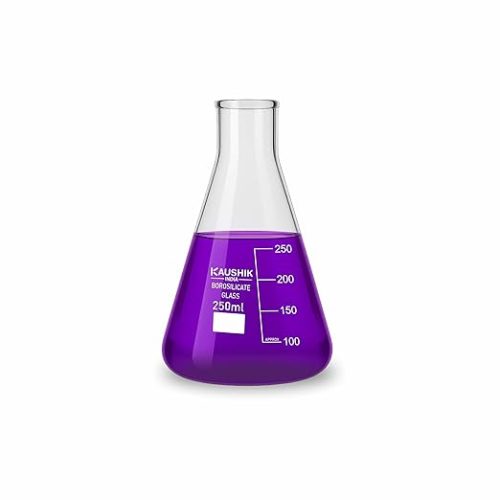
KAUSHIK INDIA Borosilicate Glass Conical Flask,250ml Capacity narrow mouth for storage liquid Chemical school, college, chemistry lab, Laboratories
₹199.00 – ₹569.00Price range: ₹199.00 through ₹569.00Select options This product has multiple variants. The options may be chosen on the product page Details -
Sale!

KAUSHIK INDIA 5ML 30Pcs Borosilicate Glass AMBER Colour Vial With Screw Cap, Leak Proof For Essential Oil,Perfume,Meds,Reagent,Anointing Oil Bottle And Lab Use Anti UV Rays Culture Tube
₹999.00Original price was: ₹999.00.₹839.00Current price is: ₹839.00.
Reviews
There are no reviews yet.