
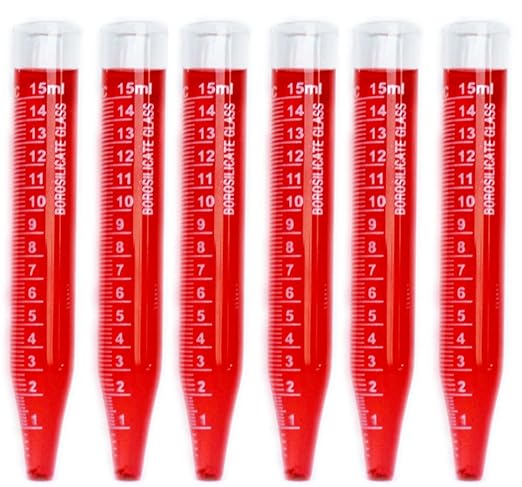
Set of 6 machine-made borosilicate glassware tubes (18mm × 120mm, 15ml) with rim and graduation. Durable, clear, and ideal for laboratory exp.
Borosilicate Glass Test tube 6 pcs 18mmx120mm 15ml graduated scientific tube with rim automatic machine made glassware for scientific laboratory use
Original price was: ₹490.00.₹270.00Current price is: ₹270.00.
Description
-
The Definitive Guide to Machine Made Glassware: Precision, Efficiency, and Modern Manufacturing
Introduction to Machine Made Glassware
The term machine made glassware defines a vast category of products.
It refers to any glass object formed primarily by automated machinery.
This contrasts with hand-blown or artisan-crafted glass.
The rise of machine made glassware revolutionized entire industries.
It brought consistency, speed, and affordability to glass production.
This glassware is ubiquitous in our daily lives.
It is found in laboratories, kitchens, hospitals, and industries worldwide.
The manufacturing process is a marvel of modern engineering.
It combines high heat, precision mechanics, and automated control.
Understanding machine made glassware is key to appreciating modern manufacturing.
It represents the perfect blend of traditional material and innovative technology.What is Machine Made Glassware?
Machine made glassware is exactly what the name implies.
It is glassware produced using automated manufacturing machines.
These machines handle the entire forming process.
They control the temperature, shape, and cooling of the glass.
The result is a product of remarkable uniformity.
Every piece from a production run is nearly identical.
This consistency is impossible to achieve with hand-blown methods.
The manufacturing process is highly efficient.
It produces thousands of units per day with minimal variation.
Machine made glassware includes simple items like bottles and jars.
It also includes complex laboratory equipment like beakers and flasks.
The common thread is the use of automated machinery in its creation.The Manufacturing Process: From Sand to Finished Product
The journey of machine made glassware is a fascinating one.
It transforms raw materials into precise, functional objects.1. Batch Preparation: The Raw Materials
The process begins with gathering raw materials.
The primary ingredient is silica sand of high purity.
Soda ash (sodium carbonate) is added to lower the melting point.
Limestone (calcium carbonate) provides stability and durability.
These materials are known as the batch.
They are precisely weighed and mixed in large batches.
This ensures a consistent chemical composition for the entire melt.
Consistency here is critical for the quality of the final glassware.2. Melting: The Furnace
The mixed batch is fed into a massive furnace.
These furnaces operate at temperatures around 1700°C (3092°F).
At this heat, the raw materials fuse into a homogenous liquid.
This liquid is known as molten glass.
The furnace runs continuously, 24 hours a day, 7 days a week.
Maintaining a constant temperature is vital for quality control.
Any fluctuation can affect the properties of the molten glass.3. Forming: The Heart of Machine Made Glassware
This is where the molten glass becomes a defined shape.
Different forming methods are used for different products.
The IS (Individual Section) machine is common for containers.
It uses a set of molds to form parisons and then final bottles.
The ribbon machine is used for producing lightbulbs and Christmas ornaments.
Press-and-blow methods are used for wide-mouth jars.
Blow-and-blow methods are for narrow-neck containers.
In each case, machines perform these actions with high precision.
They control the amount of glass, air pressure, and timing perfectly.4. Annealing: Relieving Internal Stress
Newly formed glassware is extremely hot and fragile.
It contains internal stresses from the rapid cooling of its surface.
To relieve this stress, the glassware undergoes annealing.
It passes through a controlled temperature tunnel called an annealing lehr.
The lehr gradually cools the glassware according to a precise schedule.
This process stabilizes the glass and increases its strength.
Without annealing, machine made glassware would be highly fragile.
It would be prone to shattering from minor thermal or physical shock.5. Inspection, Packaging, and Distribution
Finally, the cooled glassware is inspected.
Automated optical scanners check for defects like bubbles or cracks.
Some facilities also employ human inspectors for quality assurance.
Accepted products are then packaged automatically.
They are boxed, palletized, and prepared for shipment worldwide.
This entire manufacturing process is a symphony of automation.
It ensures a steady supply of high-quality, affordable glassware.Key Features and Advantages of Machine Made Glassware
Machine made glassware offers distinct benefits over hand-made alternatives.
These advantages make it the dominant choice for most applications.Unmatched Consistency and Uniformity
This is the single greatest advantage.
Every beaker, flask, or bottle from a production run is identical.
They have the same dimensions, volume, and wall thickness.
This consistency is critical for scientific experiments.
It ensures that a 250ml beaker holds exactly 250ml every time.
It is also vital for industrial processes and packaging.
This level of uniformity is unattainable with hand-blown techniques.High Production Efficiency and Volume
Machine manufacturing is incredibly fast.
A single production line can produce tens of thousands of units per day.
This high volume meets the massive global demand for glassware.
It drives down the cost per unit significantly.
This makes glass containers and lab equipment affordable for all.
The efficiency of the process also conserves energy per unit produced.Superior Affordability and Accessibility
The efficiency of machine production lowers costs dramatically.
Machine made glassware is far less expensive than hand-blown equivalents.
This affordability democratizes access to quality glassware.
It allows schools, startups, and hospitals to equip themselves properly.
It makes glass packaging a viable option for a huge range of products.
From medicine to food, consumers benefit from this low cost.Enhanced Durability and Structural Integrity
The annealing process is meticulously controlled in machines.
This results in glassware with minimal internal stress.
It is inherently stronger and more thermally resistant than poorly annealed hand-blown glass.
The precise control over wall thickness also enhances durability.
Machine made borosilicate glassware is famously resistant to thermal shock.
This makes it ideal for laboratory heating applications.Design Precision and Reproducibility
Machines can produce designs with a high degree of complexity.
They can create precise graduation marks on graduated cylinders.
They can form intricate sealing surfaces on bottles and vials.
Once a design is perfected, it can be reproduced exactly millions of times.
This allows for perfect compatibility with caps, clamps, and other lab equipment.Common Types of Machine Made Glassware
The range of machine made glassware is enormous.
It caters to dozens of industries and applications.Laboratory Glassware
This is a major category of machine made products.
It includes beakers of all sizes, from 50ml to 2000ml.
Erlenmeyer flasks are produced by the millions for labs worldwide.
Graduated cylinders, both class A and class B, are machine formed.
Test tubes and culture tubes are classic examples of machine made glassware.
Pipettes and Petri dishes are also mass-produced using automated processes.
The precision required for this glassware makes machine manufacturing essential.Packaging and Container Glassware
This is the most visible form of machine made glassware.
Glass bottles for beverages, medicines, and cosmetics are all machine made.
Mason jars for canning and food storage are produced on a massive scale.
Vials for pharmaceuticals and perfumes are formed by high-speed machines.
This glassware is designed for clarity, strength, and perfect sealing.Tableware and Kitchen Glassware
Many common kitchen items are machine made.
Drinking glasses are formed, shaped, and polished by machines.
Bakeware like pie plates and casserole dishes are pressed from glass.
Glass coffee carafes and measuring cups are also products of automation.
This glassware prioritizes durability, dishwasher safety, and clarity.Technical and Industrial Glassware
This includes specialized machine made products.
Light bulb envelopes and glass tubing are made on ribbon machines.
Insulators for electrical lines are formed using automated presses.
Automotive glass components are also created through machine processes.
This glassware often has very specific optical or electrical properties.The Role of Borosilicate Glass
A discussion of machine made glassware is incomplete without borosilicate.
Borosilicate glass is a type of glass with boron trioxide as a main ingredient.
This composition gives it a very low coefficient of thermal expansion.
It is famously resistant to thermal shock.
This makes it the material of choice for high-quality laboratory glassware.
Machine made borosilicate glassware is a staple in chemistry labs.
Brands like Pyrex® and Kimax® became famous for their borosilicate products.
The manufacturing process for borosilicate is similar to soda-lime glass.
It requires even tighter control over temperature and annealing.
The result is exceptionally durable and reliable scientific glassware.Quality Control in Machine Manufacturing
Maintaining quality is paramount in machine made glassware production.
A multi-layered approach ensures only the best products are shipped.Automated Optical Inspection (AOI)
High-speed cameras scan every piece of glassware.
They are programmed to detect defects invisible to the human eye.
They look for checks (cracks), stones (solid inclusions), and seeds (tiny bubbles).
Any piece with a defect is automatically rejected from the line.
This technology ensures a consistently high-quality output.Dimensional Accuracy Checks
Laser scanners and gauges constantly measure sample products.
They verify that dimensions like height, diameter, and volume are within tolerance.
This ensures that a 100ml beaker meets its precise specification.
It guarantees that a bottle will fit its cap correctly every time.Thermal and Mechanical Stress Testing
Samples are regularly taken from the production line for destructive testing.
They may be subjected to thermal shock tests to verify annealing.
They are tested for internal pressure resistance for bottles.
This proactive testing ensures the manufacturing process remains in control.Machine Made vs. Hand-Blown Glassware
Understanding the differences highlights the advantages of each.
Machine Made Glassware excels in consistency, volume, and affordability.
It is the practical choice for scientific and commercial applications.
It is designed for function, uniformity, and mass utility.Hand-Blown Glassware offers artistry, uniqueness, and customization.
Each piece is slightly different, showcasing the artisan’s skill.
It is chosen for aesthetic appeal, art, and specialized custom designs.
It is generally more expensive and less uniform.For most everyday purposes, machine made glassware is the superior choice.
It provides reliable performance at a accessible price point.The Future of Machine Made Glassware
The future of machine manufacturing is bright and evolving.
Several key trends are shaping its direction.Increased Automation and Smart Manufacturing
Factories are becoming smarter and more connected.
IoT sensors monitor every aspect of the manufacturing process.
AI algorithms optimize furnace temperature and machine settings in real-time.
Predictive maintenance alerts engineers to issues before they cause downtime.
This leads to even higher quality and greater efficiency.Enhanced Sustainability
The glass industry is deeply focused on sustainability.
Glass is 100% and infinitely recyclable.
Modern furnaces use increasingly high levels of cullet (recycled glass).
This reduces the energy required for melting and raw material consumption.
Machines are also being designed for greater energy efficiency.
The goal is a closed-loop, circular economy for glass packaging.Advanced Materials and Coatings
The field of glassware manufacturing continues to evolve with innovations in both material science and surface engineering. These advancements are designed to make glassware stronger, more versatile, and better suited for specialized applications in laboratories, kitchens, and industry.
-
Stronger Borosilicate Compositions – Traditional borosilicate glass is already valued for its heat and chemical resistance. New formulations are being developed with enhanced durability, allowing glassware to withstand higher temperatures, sudden thermal shocks, and exposure to more aggressive chemicals. This ensures a longer service life and greater reliability in demanding environments.
-
Enhanced Machine-Made Glassware
The evolution of automation in glassware manufacturing has revolutionized the way laboratory and household glass products are produced. Today’s machine-made glassware is no longer just about mass production—it embodies a new standard of precision, consistency, and reliability that rivals traditional handcrafted methods.
-
Precision and Consistency
-
Automated production lines ensure tighter dimensional tolerances, delivering glassware with uniform wall thickness, capacity, and graduations.
-
Consistency across large production batches guarantees reproducible results in laboratories, where accuracy is critical.
-
-
Improved Durability
-
Modern techniques allow for better stress distribution during manufacturing, reducing the likelihood of micro-fractures or weaknesses.
-
Heat treatment processes such as annealing are precisely controlled, enhancing thermal shock resistance.
-
-
Foundation for Advanced Coatings
-
Smooth, flawless machine-made surfaces are ideal substrates for applying anti-glare, non-stick, or protective coatings.
-
This compatibility allows manufacturers to produce hybrid glassware that combines the strength of borosilicate glass with modern performance-enhancing technologies.
-
-
Cost-Effectiveness
-
Automation reduces waste and human error, making high-quality glassware more affordable.
-
Educational institutions, research labs, and industries benefit from access to reliable glassware at scale without compromising on performance.
-
-
Broader Applications
-
Beyond laboratories, precision-made glassware is now widely used in medical diagnostics, food and beverage industries, home brewing, and creative crafts.
-
With added coatings, these products become more versatile, extending their utility across professional, industrial, and household environments.
-
-
-
Specialized Coatings
While the base material of glassware provides durability and resistance, the addition of specialized coatings further enhances performance, usability, and safety. These coatings are tailored to meet the needs of different environments—ranging from high-precision laboratories to everyday kitchens.
-
Anti-Glare Coatings
-
Purpose: Minimize reflection and glare from overhead lighting or direct light sources.
-
Application: Commonly used in laboratory cylinders, beakers, and flasks where visibility of graduations is critical.
-
Advantages:
-
Improves readability of measurement marks, ensuring greater accuracy.
-
Reduces eye strain during extended use.
-
Enhances precision in academic, industrial, and clinical laboratory settings.
-
-
-
Non-Stick Coatings
-
Purpose: Prevent substances from adhering to the glass surface.
-
Application: Found in both scientific labware (to reduce residue from sticky or viscous chemicals) and kitchen bakeware.
-
Advantages:
-
Minimizes residue buildup, ensuring faster cleaning.
-
Allows for easy release of contents such as food, syrups, oils, or gels.
-
Extends the usability of the glass by reducing wear caused by scrubbing.
-
-
-
Protective Coatings
-
Purpose: Enhance the strength and resilience of glassware.
-
Types:
-
Scratch-Resistant Coatings – Preserve clarity and extend lifespan by protecting surfaces from abrasion.
-
Shatter-Resistant Coatings – Reduce the risk of dangerous fragments if the glass breaks, providing an added layer of safety in both labs and homes.
-
-
Advantages of Protective Coatings on Glassware
-
Improves Handling Safety
-
In laboratories, classrooms, and industrial settings, glassware is frequently handled under pressure and time constraints.
-
Protective coatings such as shatter-resistant films or anti-slip textures greatly reduce the risks of accidents caused by breakage.
-
In the event of impact, coated glass is less likely to scatter into dangerous shards, ensuring a safer environment for students, technicians, and professionals alike.
-
-
Reduces Replacement Costs
-
Uncoated glassware is prone to scratches, chips, or sudden breakage, which leads to frequent replacements.
-
Coatings extend the functional lifespan of the glass by providing a barrier against physical wear, chemical etching, and thermal stress.
-
This durability makes coated glassware a more cost-effective investment, particularly for schools, research facilities, and industries that rely on large volumes of glassware.
-
-
Provides Peace of Mind
-
When working with hazardous chemicals, biological samples, or fragile substances, reliability is non-negotiable.
-
Protective coatings provide reassurance that the glassware will maintain its integrity under demanding conditions.
-
Whether in a high-temperature reaction, a chemical storage scenario, or a student experiment, coated glassware minimizes the risk of dangerous failures.
-
-
-
-
-
Added Value to Glassware – By integrating these innovations into mass-produced glassware, manufacturers deliver products that combine affordability with advanced performance, bridging the gap between high-end specialty glass and everyday laboratory or kitchen tools.
In short, advanced materials and coatings are transforming glassware into smarter, safer, and more efficient tools, whether used for scientific research, culinary work, or industrial applications.
Conclusion: The Pillar of Modern Industry
Machine made glassware is a cornerstone of the modern world.
It is a testament to human ingenuity in manufacturing.
It took a ancient craft and transformed it with machine made glassware precision engineering.
The results are products of incredible consistency, affordability, and utility.From the laboratory beaker that enables scientific discovery.
To the medicine bottle that safely stores life-saving drugs.
To the food jar that preserves nutrition without preservatives.
Machine made glassware plays a vital role in every one.It represents the perfect marriage machine made glassware of material science and automated production.
It is a field that continues to innovate, driven by demands for quality and sustainability.
The humble machine made glassware item is a true icon of industrial progress.
It is an indispensable, reliable, and elegant solution that serves humanity every day. -

Reviews
There are no reviews yet.