
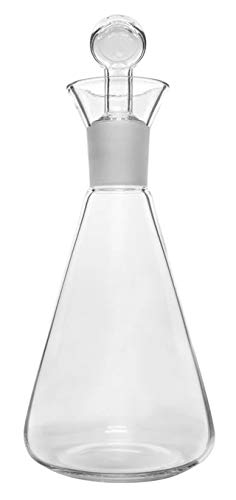
This 500ml iodine flask laboratory with glass stopper is made from durable glass, ensuring chemical resistance, leak-proof storage, and reliable.
Iodine Flask With Glass Stopper 500ml. Iodine Flask for Lab
Original price was: ₹899.00.₹499.00Current price is: ₹499.00.
Description
-
The Essential Guide to the Iodine Flask Laboratory: Precision in Iodometric Titrations
Introduction to the Iodine Flask Laboratory
An Iodine Flask Laboratory setup is specialized for iodometric and iodimetric titrations. The central component is the unique iodine flask. This laboratory flask is designed to prevent the loss of volatile iodine. Iodine is a crucial reagent in many redox titrations.
The iodine flask laboratory is a standard in analytical chemistry. It ensures accuracy in quantitative chemical analysis. The defining feature of the iodine flask is its ground glass stopper with a drip-catching rim. This design is critical for its function.
The iodine flask laboratory technique is used to determine oxidizing and reducing agents. It is a highly precise and reliable method. The iodine flask itself is typically made from high-quality borosilicate glass. This provides excellent chemical resistance.
Understanding the iodine flask laboratory is essential for analytical chemists. It is used in environmental testing, pharmaceutical QC, and food analysis. The iodine flask is a simple but brilliantly designed piece of laboratory glassware.
What is an Iodine Flask Laboratory? A Detailed Definition
An Iodine Flask Laboratory refers to the specialized apparatus and techniques used in titrations involving iodine. The iodine flask is a specific type of conical flask with a special stopper. Its full name is often the Erlenmeyer flask with stopper for iodine titrations.
The iodine flask is designed with a tapered, conical body. It has a ground glass neck that accepts a matching ground glass stopper. The stopper has a flared, lipped design. This lip acts as a reservoir for the sealing liquid, typically potassium iodide solution.
The primary purpose of the iodine flask laboratory is to create a sealed environment. This prevents iodine vapor from escaping during the titration process. Even minor losses of iodine can lead to significant analytical errors. The iodine flask eliminates this problem.
This laboratory flask is a masterpiece of functional design. It addresses a specific chemical challenge with an elegant solution. The iodine flask laboratory is a testament to the precision required in analytical chemistry.
The Anatomy of an Iodine Flask: A Component Breakdown
The Conical Body: The Reaction Vessel
The body of an iodine flask is similar to a standard Erlenmeyer flask. It features a flat bottom for stability on a lab bench. The conical shape with a narrow neck is ideal for swirling contents without splashing. This is essential for mixing the titration mixture thoroughly.
The conical body provides ample space for the reaction to occur. It is typically made from clear borosilicate glass. This allows for easy observation of the color changes during the titration. The chemical resistance of the glass is vital for handling iodine and other reagents.
The iodine flask capacity is usually between 250ml and 500ml. This size is suitable for most standard titration volumes. The clear glass allows the analyst to see the famous starch-iodine endpoint. The blue color must be clearly visible for an accurate reading.
The Ground Glass Neck: The Sealing Surface
The neck of the iodine flask is precision-ground on the inside. This creates a frosted glass surface that mates perfectly with the stopper. The quality of this ground glass joint is paramount. It must form a perfect, vapor-tight seal.
The neck is slightly longer than on a standard Erlenmeyer flask. This provides a greater surface area for the seal. The iodine flask neck is designed to hold the stopper securely. Even when the flask is swirled, the stopper should remain in place.
This ground glass joint is the heart of the iodine flask design. It is what differentiates it from a regular conical flask. The integrity of this joint is critical for the success of the iodine flask laboratory technique.
The Specialized Stopper: The Key to Containment
The stopper is the most distinctive part of the iodine flask. It is not a simple plug. It is a ground glass stopper with a unique flared top. This flared section forms a shallow well or reservoir around the stopper’s handle.
This reservoir is designed to hold a small amount of sealing liquid. The liquid, often a potassium iodide (KI) solution, creates a liquid seal. Any iodine vapor that condenses on the stopper is dissolved in this KI solution. It is then washed back into the flask when the stopper is rinsed.
The stopper’s ground glass surface must be flawless. It must fit the iodine flask neck without any gaps. A high-quality iodine flask will have a stopper that fits snugly. This ensures no volatile iodine can escape during the critical reaction period.
The Critical Role of Material: Why Borosilicate Glass is Essential
Superior Chemical Resistance
Borosilicate glass is the standard material for a high-quality iodine flask. Iodine and the reagents used in iodometric titrations can be corrosive. The chemical resistance of borosilicate glass ensures the flask does not react with the contents.
This inertness is crucial for analytical accuracy. The iodine flask must not introduce any contaminants. It must not adsorb iodine onto its surface. The chemical resistant nature of borosilicate glass guarantees the purity of the analysis.
Clarity for Endpoint Detection
The transparency of borosilicate glass is vital. The endpoint of an iodine titration is often signaled by a color change. The classic starch endpoint produces an intense blue color. The analyst must be able to see this color change clearly.
A glass iodine flask provides perfect optical clarity. There is no distortion or color that could interfere with the observation. The iodine flask laboratory relies on this visual detection for accurate results.
Durability and Thermal Stability
While heating is not always part of the iodine flask laboratory process, thermal shock resistance is still valuable. It allows for easy cleaning with hot water. The durability of borosilicate glass means the iodine flask can withstand daily use.
The ground glass joint is subject to wear. A durable glass ensures the joint maintains its seal over time. A well-made iodine flask is a long-term investment for any analytical laboratory.
The Science of Iodometric Titrations in the Iodine Flask Laboratory
The Principle of Iodine-Stoichiometry
Iodine flask laboratory titrations are based on the redox chemistry of iodine. Iodine (I₂) is a weak oxidizing agent. It can be reduced to iodide ions (I⁻). Conversely, iodide ions can be oxidized to iodine.
The fundamental reaction is: I₂ + 2e⁻ ⇌ 2I⁻
The iodine flask is used to contain reactions where iodine is produced or consumed. The quantitative measurement of iodine allows for the calculation of the analyte’s concentration. The iodine flask laboratory technique is renowned for its precision.
Preventing Iodine Volatilization: The Core Challenge
Iodine is a volatile solid at room temperature. It sublimes easily, meaning it transitions from a solid directly to a vapor. In an open container, iodine vapor will escape into the atmosphere.
This loss leads to a systematic error in the titration. The calculated concentration of the analyte will be too low. The sealed environment of the iodine flask completely prevents this volatilization. This is the sole reason for the iodine flask’s unique design.
The Role of the Liquid Seal
The liquid seal in the stopper’s reservoir is a secondary defense. The potassium iodide solution in the well dissolves iodine vapor. This forms the triiodide ion (I₃⁻): I₂ + I⁻ ⇌ I₃⁻.
This reaction traps any vapor that might approach the stopper. When the analyst is ready to titrate, the stopper is carefully rinsed. The rinsings are added back to the flask, ensuring no iodine is lost. The iodine flask laboratory technique is a closed system.
Step-by-Step Procedure for an Iodine Flask Laboratory Titration
Step 1: Preparation of the Iodine Flask
Begin by ensuring the iodine flask is clean and dry. Any contaminants could interfere with the reaction. Place the measured sample into the iodine flask. This sample could be a solid or a liquid.
Add the necessary reagents to liberate or consume iodine. This often involves adding an acidic solution and a source of iodide ions. Swirl the flask gently to mix the contents. The reaction mixture is now ready for the crucial next step.
Step 2: Sealing the Flask
Place the ground glass stopper firmly into the neck of the iodine flask. Ensure it is seated correctly to form a tight seal. Now, carefully add a small amount of potassium iodide (KI) solution into the well of the stopper.
This creates the liquid seal. The iodine flask is now a closed system. Place the sealed iodine flask in a dark cupboard or wrap it in aluminum foil. Iodine reactions can be light-sensitive. Allow the reaction to proceed to completion.
Step 3: The Titration Process
After the reaction is complete, carefully remove the iodine flask from storage. Unstopper the flask, but do it carefully. Rinse the underside of the stopper and the neck of the flask with distilled water. Ensure all rinsings go back into the flask.
This step is critical to recover any condensed iodine. Now, titrate the contents of the iodine flask with a standard solution. This is typically sodium thiosulfate (Na₂S₂O₃). Swirl the flask continuously during the titration.
Step 4: Endpoint Detection
As the titration nears its end, the brown color of iodine will fade to a pale yellow. At this point, add a few drops of a starch indicator solution. A deep blue color will appear. Continue adding the titrant drop by drop.
The endpoint is reached when the blue color disappears completely. The solution becomes colorless. Record the volume of titrant used. The iodine flask laboratory procedure is now complete.
Applications of the Iodine Flask Laboratory
Determination of Dissolved Oxygen (Winkler Method)
The iodine flask laboratory is crucial for the Winkler method. This is a standard procedure for measuring dissolved oxygen in water. The water sample is fixed with reagents in an iodine flask. The resulting iodine is then titrated with thiosulfate.
The sealed iodine flask is essential to prevent oxygen from the air from interfering. This application is vital in environmental monitoring and aquaculture.
Analysis of Oxidizing Agents
The iodine flask laboratory is used to assay strong oxidizing agents. Examples include chlorine, bromine, hydrogen peroxide, and permanganate. These oxidize iodide to iodine. The iodine produced is then titrated in the sealed iodine flask.
This is a common quality control test in the water treatment and chemical industries.
Analysis of Reducing Agents
Certain reducing agents can be determined indirectly. They are reacted with an excess of iodine. The unreacted iodine is then back-titrated with thiosulfate. The iodine flask ensures that the initial reaction with iodine is quantitative.
This method is used for analytes like vitamin C (ascorbic acid) and sulfites.
Pharmaceutical Analysis
Many pharmaceutical compounds can be analyzed using iodine flask laboratory methods. The precision of iodometric titrations makes them suitable for drug assay. The iodine flask provides the required accuracy for pharmaceutical quality control.
Advantages of Using an Iodine Flask Over a Standard Conical Flask
Prevention of Analytical Error
The primary advantage is the prevention of iodine loss. This leads to highly accurate and reproducible results. Using a standard Erlenmeyer flask would introduce a significant systematic error. The iodine flask is purpose-built for accuracy.
Enhanced Safety
Iodine vapor can be irritating to the eyes and respiratory system. By containing the vapor, the iodine flask laboratory setup provides a safer working environment. It minimizes analyst exposure to volatile iodine.
Superior for Gaseous Reactions
Some iodometric methods involve reactions that produce or consume gases. The sealed nature of the iodine flask is ideal for these procedures. It prevents the exchange of gases with the atmosphere, which could skew results.
Comparison with Other Laboratory Flasks
Iodine Flask vs. Erlenmeyer Flask
A standard Erlenmeyer flask lacks a ground glass stopper. It is unsuitable for reactions involving volatile substances like iodine. The iodine flask is a specialized version of the Erlenmeyer designed for a specific, critical purpose.
Iodine Flask vs. Volumetric Flask
A volumetric flask is for precise solution preparation. It is not designed for reactions or titrations. Its narrow neck makes mixing difficult. The iodine flask is designed for active use during a analytical procedure.
Iodine Flask vs. Round Bottom Flask
A round bottom flask is for heating and distillation. It is not stable on a bench and requires a clamp. The iodine flask has a flat bottom for stability during titrations. Its shape is optimized for swirling, not for heating.
Care and Maintenance of an Iodine Flask
Cleaning the Ground Glass Joint
After use, clean the iodine flask and stopper immediately. Iodine can stain glass. Rinse with a small amount of sodium thiosulfate solution to reduce any residual iodine to colorless iodide. Then, wash with soap and water.
It is crucial to keep the ground glass joint clean and free of debris. Any particles can prevent a proper seal.
Storing the Flask
When storing, do not leave the stopper tightly seated in the flask. Ground glass joints can fuse together over time. Store the stopper separately or place a piece of paper between the joint. This prevents the joints from sticking.
Handling and Inspection
Always handle the iodine flask with care. Inspect the ground glass joint for chips or cracks before each use. A damaged joint will not seal properly, rendering the flask useless for accurate work.
The Future of the Iodine Flask Laboratory
Ongoing Relevance in Analytical Chemistry
Despite advances in instrumentation, wet chemical methods remain vital. The iodine flask laboratory technique is a classic, robust, and cost-effective method. It will continue to be a standard in labs worldwide for the foreseeable future.
Potential for Automation
While the iodine flask laboratory method has traditionally been carried out manually, there is significant potential for automation. The core principles—precise containment of reagents, controlled addition, and secure sealing—can be directly translated into modern automated titration systems. By adapting the classic iodine flask design into a sealed reaction vessel compatible with robotic handling, laboratories could achieve greater precision and reproducibility.
In an automated setup, reagents could be dispensed through computer-controlled burettes or micro-pumps directly into iodine flasks, eliminating operator variability. The sealed design would also reduce exposure to volatile or hazardous chemicals, improving safety standards in high-throughput environments. Integrated sensors for pH, redox potential, or temperature could further enhance the accuracy of titration endpoints.
Such systems would be particularly valuable in quality control, pharmaceutical testing, and environmental analysis, where a high volume of samples must be processed quickly and consistently. By combining the robustness of the iodine flask method with automation, laboratories could benefit from faster workflows, reduced human error, and scalable operations.
Future developments may even see iodine flasks incorporated into digital lab ecosystems, where data is automatically recorded, analyzed, and shared, ensuring complete traceability and compliance with regulatory standards.
Conclusion: The Indispensable Tool for Precision
The Iodine Flask Laboratory represents a perfect solution to a specific analytical problem. The iodine flask, with its unique stopper design, is a masterpiece of functional glassware. It enables highly accurate determinations of a wide range of analytes.
Its design, leveraging the chemical resistance and clarity of borosilicate glass, is timeless. For any laboratory engaged in redox titrations involving iodine, the iodine flask is not just useful—it is essential. It is a testament to the fact that sometimes, the most elegant solutions are also the simplest. The iodine flask laboratory will remain a cornerstone of analytical chemistry for years to come.


Reviews
There are no reviews yet.