
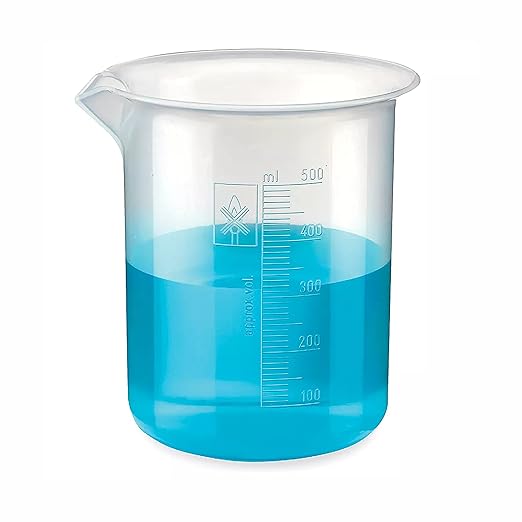
Durable 500ml laboratory beaker with clear graduation marks. Perfect for schools, colleges, and professional chemistry labs for accurate measuring.
Polypropylene Plastic Beaker 500ml with Graduation Marks for school collage chemistry lab laboratory
₹299.00 Original price was: ₹299.00.₹199.00Current price is: ₹199.00.
Categories: laboratary glassware, Scientific Instruments
Description
The Definitive Guide to the 500ml Laboratory Beaker: A Cornerstone of Scientific Research
Introduction to the 500ml Laboratory Beaker
In the vast and intricate world of scientific experimentation, where complex instruments and advanced technologies often steal the spotlight, there exists a humble, yet utterly indispensable, piece of equipment: the 500ml Laboratory Beaker. This iconic vessel, with its simple cylindrical form and characteristic spout, is far more than just a container; it is a fundamental tool that facilitates a vast majority of chemical and biological processes conducted in labs worldwide.
The 500ml Laboratory Beaker represents a perfect equilibrium of capacity and manageability, making it a versatile workhorse for tasks ranging from simple mixing and heating to precise chemical reactions and temporary storage.
Its design, which has remained largely unchanged for over a century, is a testament to perfect functional form. This guide will delve deep into every aspect of the 500ml Laboratory Beaker and its various counterparts, exploring its history, materials, types, applications, proper usage, and the critical role it plays in modern laboratory equipment setups.
Historical Evolution of the Laboratory Beaker
The story of the laboratory beaker is intertwined with the history of chemistry itself. While simple containers have been used by alchemists and early scientists for millennia, the standardized glass beaker we recognize today began to take shape in the 19th century. The renowned German chemist Carl Friedrich Christian Mohr is often credited with contributing significantly to the design of modern volumetric glassware, including beakers with pour spouts.
The invention of borosilicate glass by Otto Schott in the late 19th century was a revolutionary moment. This new type of glass, resistant to thermal shock and chemical corrosion, made the 500ml beaker a much safer and more reliable tool for heating and reacting volatile substances, cementing its place as an essential item on any lab supply list.
Design and Key Features of a Standard 500ml Laboratory Beaker
A standard 500ml Laboratory Beaker is meticulously designed for functionality, safety, and ease of use. Its features are not arbitrary; each serves a specific purpose in the scientific research environment.
-
Capacity and Graduations: The “500ml” designation indicates its total volume capacity. Most 500ml Laboratory Beaker feature graduated markings, often in 50ml or 100ml increments. It is crucial to note that these graduations are approximate and are intended for crude measurements only. For precise volumetric work, a graduated cylinder or volumetric flask is required.
-
Spout: The beak-like spout is a defining characteristic. It enables a smooth, drip-free pouring experience, which is essential for transferring liquids without waste or contamination during chemistry experiments.
-
Lip: The reinforced lip around the top provides structural rigidity and offers a convenient place to rest a 500ml Laboratory Beaker cover or watch glass to prevent contamination or splashing while allowing gas to escape.
-
Flat Bottom: The flat base ensures stability on lab benches, hot plates, and other surfaces. This design is critical for safe heating and prevents the beaker from easily tipping over.
-
Material: Traditionally made from clear borosilicate glass (e.g., Pyrex or Kimax), modern 500ml beakers are also widely available in durable plastics like polypropylene (PP) or 500ml Laboratory Beaker (PMP), and occasionally in stainless steel for specific applications.
Materials and Composition: Choosing the Right 500ml Beaker
The material of a 500ml beaker is its most critical property, directly determining its application, chemical resistance, and thermal stability.
Borosilicate Glass Beakers: The Gold Standard
The 500ml glass beaker, specifically made from borosilicate glass, is the most common and versatile type. Its primary advantage is its low coefficient of thermal expansion, making it highly resistant to thermal shock.
This means a cold 500ml borosilicate glass beaker can typically be placed directly on a hot plate without shattering. It is also highly resistant to chemical corrosion from acids and solvents, transparent for easy observation of contents, and easy to clean and sterilize. It is the default choice for heating, mixing, and reacting in a chemistry lab.
Plastic Beakers: The Durable and Disposable Alternative
Plastic beakers, particularly those made from 500ml Laboratory Beaker or PMP, offer distinct advantages. They are unbreakable, making them ideal for student labs, field work, or environments where glass is a safety hazard.
They are lightweight and often cheaper than their glass counterparts. 500ml Laboratory Beaker is chemically resistant to a wide range of acids and bases but should not be used with strong oxidizing agents or organic solvents.
PMP beakers offer greater clarity, similar to glass, and higher temperature resistance than PP. Plastic 500ml Laboratory Beaker are essential lab supplies for biological work, media preparation, and non-heated applications.
Stainless Steel and Other Specialty Beakers
For extreme durability and resistance to physical impact, stainless steel beakers are used. They are indispensable in industrial settings or for processes involving high-shear mixing. However, they are opaque and not suitable for reactions with strong corrosives that can attack the metal. Other specialized materials include quartz for very high-temperature work or PTFE (Teflon) for highly corrosive reactions where even glass would be attacked.
Types and Varieties of 500ml Laboratory Beaker
Beyond material, 500ml Laboratory Beaker come in different styles tailored for specific tasks.
-
Low Form Beaker (Griffin Beaker): This is the standard, most common type. Its height is approximately 1.4 times its diameter. It is the general-purpose beaker for lab used for mixing, heating, and decanting.
-
Tall Form Beaker (Berzelius Beaker): This beaker is taller and narrower, with a height about twice its diameter. This design is better for titration and other processes where reduced surface area and less splashing are desirable, though it is less common in the 500ml size.
-
Plastic Beaker with Handle: Some larger plastic beakers feature an integrated handle for easier and safer handling, especially when containing hot liquids.
-
PPCO Copolymer Beaker: A specific type of plastic beaker known for exceptional clarity and autoclave stability, making it a staple in biology laboratories.
Primary Applications and Uses in the Laboratory
The 500ml Laboratory Beaker is the quintessential multi-tool of the lab. Its applications are nearly limitless.
Mixing and Preparing Solutions
The primary use of a 500ml beaker is for preparing and mixing solutions. Its wide mouth allows for easy addition of solutes and solvents, and its generous size is perfect for stirring with a glass rod or magnetic stir bar. Whether creating a laboratory reagent like a buffer solution or simply dissolving a solid into a solvent, the 500ml Laboratory Beaker is the first vessel reached for.
Heating and Boiling Liquids
Thanks to its borosilicate glass construction, the 500ml Laboratory Beaker is perfectly suited for direct heating over a Bunsen burner or on a hot plate. Its flat base ensures efficient heat transfer, and its spout allows vapors to escape safely. It is commonly used for boiling solvents, evaporating solutions to concentration, and conducting reactions that require thermal energy.
Containing Reactions and Performing Experiments
From simple acid-base neutralizations to more complex synthesis reactions, the 500ml Laboratory Beaker provides a stable and observable environment. Its chemical inertness ensures that the beaker itself does not interfere with the chemistry experiment taking place within it.
Temporary Storage and Decanting
Between steps in a complex procedure, the 500ml Laboratory Beaker acts as a perfect temporary holding vessel. Its spout makes it ideal for decanting—pouring off a liquid while leaving a solid precipitate behind at the bottom.
Precautions and Best Practices for Using a 500ml Beaker
While simple to use, observing proper techniques ensures safety and accuracy.
-
Heating Safety: Always use a borosilicate glass beaker for heating. Never heat a 500ml Laboratory Beaker on a hot plate. Use a wire gauze with a ceramic center when heating with a Bunsen burner to distribute heat evenly and prevent thermal stress. Never heat a beaker that is completely sealed or covered, as pressure can build up and cause an explosion.
-
Volume Measurements: Remember that the graduations on a 500ml Laboratory Beaker are approximate. Never use it for quantitative analysis where precise volume measurement is required.
-
Chemical Compatibility: Always ensure the beaker material is compatible with the chemicals inside. Do not use 500ml Laboratory Beaker with hydrofluoric acid, which etches glass. Do not use 500ml Laboratory Beaker with strong organic solvents that may dissolve or deform the plastic.
-
Handling: Use a beaker tongs to handle hot beakers. Even the rim of a hot 500ml Laboratory Beaker can cause severe burns.
-
Cleaning and Maintenance: Clean beakers thoroughly immediately after use to prevent chemical residue from hardening or causing contamination. For 500ml Laboratory Beaker, a brush and lab detergent are usually sufficient. Many plastic beakers are also autoclavable for sterilization.
The 500ml Beaker in the Broader Context of Lab Glassware
It is important to understand how the 500ml Laboratory Beaker fits into the larger ecosystem of laboratory glassware.
-
Beaker vs. Flask: A Detailed Analysis of Form and Function
While both beakers and flasks are fundamental pieces of laboratory glassware designed to hold liquids, their structural differences make them uniquely suited for specific tasks. Choosing the right vessel is not a matter of convenience but a critical decision that impacts the safety, efficiency, and success of a scientific experiment. The design of each—the beaker’s cylindrical simplicity versus the flask’s tapered complexity—is a perfect example of form following function in the world of lab equipment.
The Beaker: The Master of Access and Macro-Manipulation
The standard 500ml low-form beaker is the workhorse of the lab, and its design prioritizes straightforward utility.
-
Wide Mouth: This is the beaker’s most defining feature. It offers completely unrestricted access to the interior. This is indispensable when you need to:
-
Add large or irregularly shaped solid reagents.
-
Stir mixtures vigorously with a glass rod without splashing.
-
Scrape out contents efficiently after an experiment.
-
Place a large object inside, like a weight or a sensor.
-
-
Straight, Vertical Sides: The cylindrical shape provides several advantages:
-
Easy Volume Estimation: The uniform diameter from top to bottom means that the graduated markings, while approximate, are evenly spaced and easier to read for crude measurements.
-
Superior Stability: The broad, flat base and low center of gravity make a beaker far less likely to tip over compared to a round-bottomed flask, especially when placed on a magnetic stirrer or a lab bench.
-
Simple Cleaning: The lack of complex curves or narrow necks makes a beaker exceptionally easy to clean with a standard brush.
-
-
Spout: The integrated pour spout allows for precise, drip-free decanting of liquids, making it ideal for separating a supernatant from a settled precipitate.
In summary: The beaker is the ideal vessel for tasks that involve active manipulation—stirring, heating, mixing, pouring, and easy addition of materials. It is the open workshop of the lab.
The Erlenmeyer Flask: The Master of Containment and Mixing
The Erlenmeyer flask, with its conical body and narrow neck, is designed for processes where containment and controlled mixing are paramount.
-
Conical Body and Narrow Neck: This design is revolutionary for several key applications:
-
Superior Swirling: The tapered walls guide liquids into a vigorous, vortex-like motion when the flask is swirled by hand. This is essential for titration procedures, as it promotes rapid and uniform mixing of the titrant and analyte without the risk of splashing out. This efficient mixing is far more effective than what can be achieved by stirring in a straight-sided beaker.
-
Reduced Evaporation and Splash Protection: The narrow neck significantly reduces the surface area exposed to the air, minimizing solvent loss through evaporation. It also acts as a barrier, preventing contents from splashing out during mixing or boiling, which is crucial when working with hazardous materials.
-
Safe Containment: This design makes the Erlenmeyer flask the preferred choice for culturing microorganisms. The neck allows for gas exchange (e.g., with a cotton plug or filter cap) while dramatically reducing the risk of airborne contamination entering or leaving the flask.
-
-
Flat Base: Modern Erlenmeyer flasks have a flat base, allowing them to stand on a benchtop or hot plate. However, their higher center of gravity can make them slightly less stable than a beaker.
In summary: The Erlenmeyer flask is the ideal vessel for processes that require containment—swirling, titrating, culturing, and storing solutions where evaporation or contamination is a concern. It is the secure incubation chamber of the lab.
The Florence Flask: The Master of Uniform Heating
The less common Florence (or boiling) flask features a round body with a long neck. Its design is a specialized evolution for one primary purpose.
-
Round Bottom: The spherical body is designed to be used with a heating mantle, which provides enveloping, uniform heat distribution. This prevents the formation of hot spots that can occur when heating the flat bottom of a beaker on a hot plate. Hot spots can lead to localized boiling, bumping, and thermal degradation of sensitive compounds.
-
Important Note: A round-bottom flask cannot stand upright on its own and must be held by a clamp attached to a stand. This makes it less convenient for benchtop work but superior for reflux and distillation setups.
-
-
Long Neck: The neck provides a opening for adding reagents or attaching to condensation equipment (e.g., in a reflux setup) while keeping the surface area relatively small to minimize evaporation.
In summary: The Florence flask is a specialized tool for uniform heating and boiling, primarily in advanced organic chemistry setups like distillation and reflux.
Comparative Table: Beaker vs. Erlenmeyer Flask
Feature 500ml Laboratory Beaker 500ml Erlenmeyer Flask Primary Advantage Mouth Opening Wide, open Narrow Beaker for easy access and addition Mixing Method Stirring (rod or bar) Swirling Flask for efficient, splash-free mixing Stability High (low center of gravity) Moderate Beaker for stable placement on surfaces Evaporation Higher (large surface area) Lower (small surface area) Flask for storage and long reactions Heating Excellent on hot plates Good on hot plates Beaker (for direct hot plate use) Pouring/Decanting Excellent (dedicated spout) Good (requires care) Beaker for precise pouring Primary Use Case Mixing, heating, decanting, rough measurements Titrations, swirling, culturing, storage Context-Dependent Conclusion: There is no “better” vessel; only the more appropriate one for a given procedure. A scientist will reach for a beaker to dissolve a solid in a solvent and heat it on a stirrer hot plate. That same scientist will immediately transfer the solution to an Erlenmeyer flask if they need to perform a titration, culture a cell line, or simply store it without significant evaporation. Understanding this distinction is a fundamental aspect of proficient and safe laboratory practice.
Beaker vs. Graduated Cylinder: A graduated cylinder is designed for accurate measurement of liquid volume, a task for which a beaker’s graduations are too imprecise. -
-
Beaker vs. Volumetric Flask: A volumetric flask is calibrated to contain a very precise volume at a specific temperature and is used for preparing standard solutions.
The 500ml beaker is not a replacement for these specialized tools but rather a complementary piece of lab equipment that excels in general-purpose tasks.
Selecting the Right 500ml Beaker for Your Lab
Choosing the correct 500ml beaker depends on your specific application:
-
For general chemistry, heating, and reactions: Choose a 500ml borosilicate glass beaker, low form.
-
For student labs or environments with breakage concerns: Choose a 500ml polypropylene plastic beaker.
-
For biological work, media prep, and autoclaving: Choose a 500ml PP or PMP plastic beaker (ensure it is autoclave-safe).
-
For high clarity without the risk of glass breakage: Choose a 500ml PMP plastic beaker.
Always source your lab supplies from reputable manufacturers to ensure quality, consistency, and safety standards.
Conclusion: The Unwavering Relevance of a Classic Tool
In an age of rapid technological advancement, the 500ml Laboratory Beaker remains a constant, irreplaceable icon of scientific inquiry.
Its elegant simplicity, unparalleled versatility, and robust functionality have ensured its continued presence on lab benches for generations. From the high school chemistry lab to cutting-edge pharmaceutical research facilities, the 500ml beaker continues to play a critical role in discovery and innovation.
It is a fundamental piece of laboratory equipment that embodies the very spirit of hands-on experimentation. Understanding its properties, applications, and proper handling is a fundamental skill for any scientist, researcher, or student, making it a true cornerstone of the scientific research world.
Be the first to review “Polypropylene Plastic Beaker 500ml with Graduation Marks for school collage chemistry lab laboratory” Cancel reply
Related products
-
Sale!
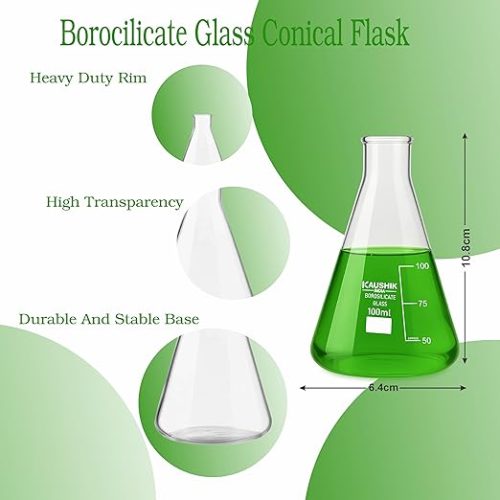
KAUSHIK INDIA Borosilicate Glass 3.3 Measuring Conical Flask 100ml For Lab Laboratory, School, College And Professional use
₹399.00Original price was: ₹399.00.₹169.00Current price is: ₹169.00. -
Sale!

Borosilicate Glass Round Bottom Boiling Flask with Inter Changeable Joint. 50 ML Capacity. Distillation Flask
₹299.00Original price was: ₹299.00.₹199.00Current price is: ₹199.00. -
Sale!
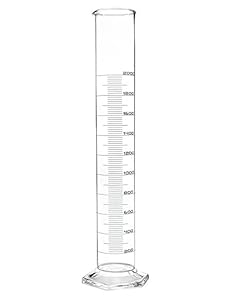
Borosilicate 3.3 Glass Measuring Cylinder with Graduation Marks for Measuring of Liquids 2000 ML
₹2,599.00Original price was: ₹2,599.00.₹1,499.00Current price is: ₹1,499.00.
Reviews
There are no reviews yet.