
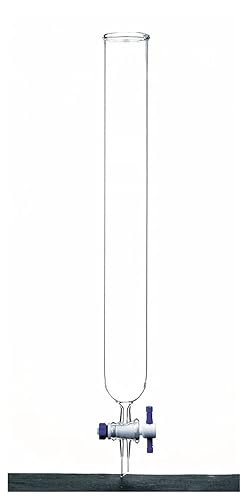
“High-quality 32mm glass column with PTFE stopcock, durable design for accurate laboratory applications.”
Borosilicate Glass Chromatography Column with Ptfe stopcock (1 pc.) (OD 32MM X LENGTH 60CM)
₹2,999.00 Original price was: ₹2,999.00.₹1,529.00Current price is: ₹1,529.00.
Categories: laboratary glassware, Scientific Instruments
Description
The Definitive Guide to the 32mm Glass Column: Precision, Versatility, and Application
Introduction to the 32mm Glass Column
The 32mm glass column is a fundamental apparatus in scientific and industrial laboratories. It is a pillar of precision and reliability. This cylindrical tube, with its specific internal diameter of 32 millimeters, serves as a critical vessel for a multitude of separation and purification processes. Its design is both simple and profoundly effective.
The standardization of the 32mm dimension makes it a versatile component. It fits seamlessly into various laboratory setups. From chemical synthesis to pharmaceutical development, the 32mm glass column is indispensable. Its transparency allows for real-time observation of processes within. This is a key advantage over opaque alternatives.
This guide will explore every facet of the 32mm glass column. We will delve into its construction, its myriad applications, and its operational principles. Understanding this essential tool is crucial for any professional working in a laboratory environment. The 32mm size offers an ideal balance between sample capacity and resolution.
Whether you are performing chromatography, filtration, or extraction, the 32mm glass column is often the tool of choice. Its use spans academic research, quality control labs, and large-scale production facilities. The following sections will provide a deep dive into this essential piece of laboratory glassware. The 32mm glass column is more than just a tube; it is a gateway to purification.
Understanding the 32mm Dimension: Why Size Matters
The 32mm specification refers to the internal diameter (ID) of the glass column. This measurement is not arbitrary. It is a carefully chosen standard that optimizes performance for a wide range of applications. The internal diameter directly influences the scale and efficiency of the separations performed within the column.
A larger diameter, such as 32mm, allows for a greater cross-sectional area. This means it can handle larger sample volumes compared to narrower columns. It also permits the use of more stationary phase material. This is crucial for preparative and process-scale work. The glass column is perfectly suited for isolating substantial quantities of material.
However, the 32mm size is not so large that it becomes unwieldy or inefficient. It maintains a good balance between sample loading and operational pressure. It is a common size for flash chromatography systems. The diameter is a sweet spot for many laboratory purification needs. It bridges the gap between analytical and truly industrial scales.
The wall thickness of a glass column is also engineered for this diameter. It provides sufficient structural integrity to withstand the pressures of packed beds and fluid flow. The standardization of the 32mm size ensures compatibility with a wide range of accessories. End fittings, frits, and packing reservoirs are readily available for the glass column.
Material Composition and Manufacturing of 32mm Glass Columns
The primary material for a 32mm glass column is borosilicate glass. This type of glass is renowned for its exceptional properties. It offers high thermal resistance, allowing it to withstand significant temperature shocks. This is vital for processes that involve heating or cooling the column during operation.
Borosilicate glass is also highly resistant to chemical corrosion. It can handle a wide pH range, from strong acids to strong bases. This chemical inertness ensures that the 32mm glass column does not interact with the solvents or compounds being processed. The purity of the sample is thus maintained throughout the procedure.
The manufacturing process of a 32mm glass column involves precision glassblowing and annealing. The glass is carefully shaped and heated to remove internal stresses. This annealing process is critical. It ensures the 32mm glass column has the mechanical strength to handle operational pressures. A properly annealed column is less likely to crack or fail.
The ends of the 32mm glass column are often ground to a smooth, flat finish. This allows for perfect sealing with end caps and fittings. Some columns may feature standardized joints, such as GL 45 or B29/32. These threads facilitate secure connections to pumps, detectors, and other system components. The precision in manufacturing the 32mm glass column is what makes it a reliable scientific tool.
Key Features and Design Specifications of a 32mm Glass Column
A standard 32mm glass column comes with several key features. Understanding these specifications is essential for selecting the right column for your application. The internal diameter is, of course, a defining 32mm characteristic. The length of the column can vary significantly, from short, stout columns to long, slender ones.
The overall length impacts the residence time of the mobile phase and the theoretical plate count in chromatography. A longer 32mm glass column generally provides better separation for complex mixtures. The column volume is a function of both the internal diameter and the length. The 32mm diameter provides a substantial volume for processing multi-gram quantities of material.
Most 32mm glass columns include porous frits or discs at one or both ends. These frits are typically made of sintered glass or PTFE. They serve to retain the stationary phase packing material within the column. The porosity of the frit is selected to prevent the smallest particles of the packing from escaping the 32mm glass column.
Pressure ratings are another critical specification. While standard borosilicate 32mm glass columns are not designed for very high pressures, they are robust enough for low to medium-pressure liquid chromatography. The typical pressure limit for a 32mm glass column might be in the range of 5 to 10 bar. Always consult the manufacturer’s specifications for the safe operating pressure of your specific 32mm glass column.
Primary Applications of the 32mm Glass Column in the Laboratory
The 32mm glass column is a workhorse in countless laboratory procedures. Its most prominent application is in the field of chromatography. Specifically, it is the core component of flash chromatography systems. Flash chromatography is a rapid, preparative technique used to purify organic compounds.
In this setup, the 32mm glass column is packed with a solid stationary phase, like silica gel. A mixture is applied to the top, and solvent is pumped through under moderate pressure. The different components of the mixture separate as they travel down the 32mm glass column. The transparent walls allow the chemist to visualize the separated bands.
Beyond flash chromatography, the 32mm glass column is used for gravity column chromatography. This is a slower, low-pressure technique that is excellent for teaching and for separating highly sensitive compounds. The 32mm diameter is ideal for this scale of operation. It is also commonly used for ion exchange chromatography.
In this application, the 32mm glass column is packed with an ion exchange resin. It is used to remove specific ions from a solution or to separate ionic compounds. Water softening and protein purification are classic examples of ion exchange using a 32mm glass column. The versatility of the 32mm glass column is one of its greatest strengths.
The 32mm Glass Column in Chromatography: A Deep Dive
Chromatography is the art of separation, and the 32mm glass column is one of its most popular canvases. The principle relies on the differential partitioning of compounds between a stationary phase and a mobile phase. The 32mm glass column houses the stationary phase. The mobile phase, a solvent, is forced through it.
The large internal diameter of the 32mm glass column makes it perfect for preparative chromatography. The goal is to isolate pure compounds in usable quantities, often for further analysis or reaction. The 32mm size allows for sample loads from hundreds of milligrams to several grams. This is the typical scale for synthetic organic chemistry.
The efficiency of a chromatographic separation in a 32mm glass column is influenced by several factors. The particle size of the stationary phase is crucial. Smaller particles provide higher efficiency but also create higher backpressure. The 32mm glass column must be packed uniformly to avoid channels that cause band broadening.
The length of the 32mm glass column also plays a role. A longer column provides more theoretical plates, enhancing separation. However, it also increases run time and solvent consumption. Optimizing the length and packing of your 32mm glass column is key to a successful purification. The transparency of the 32mm glass column is an invaluable diagnostic tool during this process.
Utilizing the 32mm Glass Column for Filtration and Extraction
While chromatography is a primary use, the 32mm glass column is also excellent for specialized filtration and extraction processes. It can be used as a simple filtration column when packed with materials like celite or filter aid. This setup is useful for clarifying viscous or particulate-laden solutions.
The 32mm diameter provides a large surface area for filtration, preventing rapid clogging. The solution is simply poured through the packed 32mm glass column, and the filtrate is collected at the bottom. This is a simple yet effective application of this versatile apparatus. The 32mm glass column acts as a robust and chemical-resistant filter housing.
Solid-phase extraction (SPE) is another key application. While often done in smaller cartridges, the process can be scaled up using a 32mm glass column. The column is packed with a specialized sorbent. A sample is passed through, and interfering compounds are retained while the analyte of interest is eluted, or vice versa.
The 32mm glass column format for SPE allows for the processing of larger sample volumes. It is particularly useful in environmental testing or food analysis. The use of a 32mm glass column for extraction provides a clean-up and concentration step for complex matrices. The rigidity of the 32mm glass column allows for the application of slight pressure or vacuum to speed up the flow.
Packing a 32mm Glass Column: Techniques and Best Practices
The performance of any column-based process is entirely dependent on the quality of the packed bed. Properly packing a 32mm glass column is both an art and a science. The goal is to create a uniform, stable, and channel-free bed of stationary phase. There are several common methods for packing a 32mm glass column.
The slurry packing method is often used for chromatographic applications. The stationary phase, such as silica gel, is suspended in a solvent. This slurry is poured into the 32mm glass column in a continuous stream. As the solid settles, the solvent is drained from the bottom to encourage tight packing.
Tapping the side of the 32mm glass column during this process helps to settle the particles and eliminate air bubbles. For a more consistent pack, a gentle flow of solvent can be maintained from the top. The key is to avoid disturbing the bed once it is formed. A well-packed 32mm glass column will have a flat, even surface at the top of the stationary phase.
The dry packing method is simpler but can lead to less uniform beds. The dry powder is added slowly to the 32mm glass column while tapping it. This method is more suitable for larger particle sizes. Regardless of the method, the final step is to equilibrate the packed 32mm glass column with the starting mobile phase before introducing the sample.
Selecting the Right Stationary Phase for Your 32mm Glass Column
The stationary phase is the heart of the separation process inside the 32mm glass column. The choice of packing material dictates the mechanism of separation and the application’s success. The most common stationary phase for a 32mm glass column used in flash chromatography is silica gel.
Silica gel is a polar, acidic material that separates compounds based on adsorption. Normal-phase chromatography uses non-polar solvents with a polar silica gel stationary phase in the 32mm glass column. For reverse-phase chromatography, the 32mm glass column is packed with a modified silica, such as C18, which is non-polar.
Ion exchange resins are another major category. These are used to pack a 32mm glass column for separating ionic species. Cation exchangers attract positively charged ions, while anion exchangers attract negatively charged ions. The 32mm glass column provides a robust housing for these often-dense resins.
Other specialty packings include alumina, which is more basic than silica, and florisil. The particle size of the packing is also critical. For a 32mm glass column, a 40-63 micron particle size is standard for flash chromatography. Smaller particles provide higher resolution but require higher pressure. The choice of stationary phase transforms the generic 32mm glass column into a specific separation tool.
Operating Procedures and Protocols for the 32mm Glass Column
Operating a 32mm glass column requires a systematic approach to ensure safety and achieve optimal results. The first step is always to secure the column vertically in a sturdy stand. A lab jack is incredibly useful for supporting the column and allowing for easy height adjustment. Ensure all connections are tight before introducing any solvents.
Once the 32mm glass column is packed and equilibrated, the sample must be loaded. The sample can be introduced as a concentrated solution or, less commonly, adsorbed onto a small amount of stationary phase. It is crucial to disturb the bed surface as little as possible. The goal is to apply the sample as a narrow band at the top of the 32mm glass column.
Elution is the process of passing the mobile phase through the 32mm glass column to separate the components. This can be done isocratically, with a constant solvent composition, or with a gradient, where the solvent strength is increased over time. For a 32mm glass column used in flash chromatography, a gradient is common.
Fractions are collected as the eluent leaves the 32mm glass column. These are typically collected in a rack of test tubes using an automated fraction collector. The transparent nature of the 32mm glass column allows the operator to follow the progress of colored bands and make collection decisions in real-time.
Maintenance, Cleaning, and Storage of Your 32mm Glass Column
Proper maintenance extends the life of your 32mm glass column and ensures consistent performance. After use, the column should be cleaned immediately to prevent the stationary phase from hardening or reacting inside. The first step is to elute any remaining sample with a strong solvent.
The used packing material should be emptied from the 32mm glass column responsibly, following laboratory waste disposal protocols. Once empty, the column can be rinsed with appropriate solvents. A sequence of rinses might include acetone or ethanol to remove organic residues, followed by a final rinse with water.
If stubborn contaminants remain, a mild detergent solution can be used. For a more thorough clean, the glass column can be soaked in a base bath or an acid solution, but one must consult material compatibility charts for borosilicate glass. After cleaning, the glass column should be rinsed thoroughly with deionized water and dried.
Drying can be accomplished by passing a stream of air or inert gas through the glass column. Alternatively, it can be placed in an oven at a moderate temperature. For storage, the glass column should be completely dry. Store it in a dedicated cabinet or rack, preferably with the end caps removed to allow air circulation and prevent moisture buildup.
Troubleshooting Common Issues with 32mm Glass Columns
Even with careful operation, issues can arise when using a glass column. One common problem is the formation of channels or cracks in the packed bed. This manifests as uneven, skewed bands traveling down the column. This usually results from improper packing or the introduction of air bubbles.
The solution is often to repack the glass column more carefully. Another frequent issue is clogging, especially at the bottom frit. This leads to a very slow flow rate or no flow at all. Back-flushing the glass column can sometimes clear the clog, but often the column must be emptied and the frit cleaned or replaced.
Poor separation or resolution is another common complaint. This can have many causes: the sample may be overloaded, the stationary phase may be inappropriate, the solvent gradient may be too steep, or the glass column may be poorly packed. Systematic investigation of each variable is required.
If the glass itself becomes scratched or chipped, the structural integrity of the glass column may be compromised. A chipped end can also prevent a proper seal with the end fittings. A damaged glass column should be taken out of service to prevent failure during operation, which could lead to spills and lost product.
Safety Considerations When Working with a 32mm Glass Column
Safety is paramount when handling any laboratory equipment, and the glass column is no exception. The primary hazard is the potential for breakage. glass column,
especially when packed and full of solvent, can be heavy. Dropping it can cause it to shatter, creating sharp fragments and spilling chemical hazards.
Always use two hands when handling a column. Ensure it is securely clamped at all times during operation. Wear appropriate Personal Protective Equipment (PPE), including a lab coat, safety glasses, and gloves. The gloves protect not only from chemicals but also from sharp edges in case of breakage.
The solvents used with a column are often flammable and may be toxic. Work in a well-ventilated area, preferably a fume hood, especially when using volatile organic solvents. Be aware of the pressure limits of your column. Exceeding these limits can cause a catastrophic failure.
Have a spill kit nearby and know the proper procedures for disposing of the solvents and stationary phase waste generated by your column experiments. A methodical and cautious approach ensures that the column remains a safe and effective tool in the laboratory.
Comparing the 32mm Glass Column to Other Column Sizes
The glass column occupies an important niche in the spectrum of available column sizes. It is significantly larger than analytical-scale columns, which are often 4.6mm or 10mm in diameter. These smaller columns are used for analysis, not preparation, and are typically made of stainless steel for high pressure.
Compared to a 15mm or 25mm glass column, the column offers a substantial increase in sample loading capacity. It is a clear step up from bench-scale purification to process-scale isolation. The 32mm diameter is a common entry point for multi-gram purifications.
On the larger end, columns of 50mm, 100mm, and beyond are used for pilot-scale and industrial production. These are often made of glass-lined steel or other durable materials. The column serves as a perfect scaling model for these larger systems. A process developed on a column can often be directly scaled up.
The choice of a column is therefore a strategic one. It provides a high level of performance and throughput without the cost and complexity of very large-scale systems. For the synthetic chemistry or biotechnology lab, the 32mm glass column is an ideal workhorse size.
Accessories and Compatible Equipment for the 32mm Glass Column
To function effectively, a column requires a suite of compatible accessories. End fittings are crucial. These are typically made of PTFE or other chemically resistant plastics. They screw onto the threaded ends of the column and provide ports for inlet and outlet tubing.
The frits or filter discs that retain the packing are often integrated into these end fittings. It is wise to have spare frits on hand. A reservoir that attaches to the top of the column is another common accessory. This reservoir holds a larger volume of eluent, allowing for longer, unattended chromatography runs.
For flash chromatography, the 32mm glass column is part of an integrated system. This includes a solvent pump capable of delivering consistent flow rates, a UV-Vis detector to monitor the eluent, and an automated fraction collector. The is the central separation module within this system.
Other useful accessories include column heaters or jackets to control temperature, and pressure gauges to monitor system pressure. Lab jacks, clamp holders, and sturdy stands are essential for safely supporting the column. Investing in the right accessories maximizes the utility and lifespan of your glass column.
The Future of the 32mm Glass Column in Modern Science
In an era of increasing automation and miniaturization, the column remains remarkably relevant. Its role in preparative chemistry is secure. While high-throughput screening may use microtiter plates, the subsequent isolation of a lead compound will almost certainly involve a column or its larger cousins.
Innovations in stationary phase technology directly benefit the column. The development of new spherical silica, monolithic phases, and specialized resins continues to improve the separation power of this classic apparatus. The basic design of the 32mm glass column is a platform that can leverage these advanced materials.
We may see more integration of sensors directly onto or into the column for real-time monitoring of pH, conductivity, or specific ions. However, the fundamental virtues of the glass column—its transparency, chemical resistance, and robust design—will ensure its place in laboratories for decades to come.
It is a testament to good design that the column has changed little in its essential form. It is a simple, effective, and indispensable tool for separation science. From university teaching labs to cutting-edge pharmaceutical research, the 32mm glass column will continue to be a foundational piece of laboratory equipment.
Conclusion: The Indispensable Role of the 32mm Glass Column
The 32mm glass column is far more than a simple tube of glass. It is a precision-engineered vessel that enables some of the most critical operations in science and industry. Its standardized 32mm internal diameter makes it a versatile and scalable tool for purification, separation, and extraction.
From its construction in chemically inert borosilicate glass to its application in flash chromatography and ion exchange, the 32mm glass column proves its worth daily in countless labs. Its transparency provides a window into the separation process, a feature that modern steel columns cannot replicate.
By understanding its features, applications, and proper operating procedures, scientists and technicians can fully leverage the power of the 32mm glass column. It is a tool that demands skill but rewards the user with pure compounds and reliable results. The 32mm glass column is a classic, and its value to the scientific community is immeasurable. It is, and will remain, an indispensable pillar of the laboratory.
Be the first to review “Borosilicate Glass Chromatography Column with Ptfe stopcock (1 pc.) (OD 32MM X LENGTH 60CM)” Cancel reply
Related products
-
Sale!

2 Neck Round 250 ML Bottom Boiling Flask with 24/40 Center & Side Joints Angled Receiving Reflux Flask Multi Neck Apparatus Organic Chemistry Lab Glassware
₹499.00 – ₹999.00Price range: ₹499.00 through ₹999.00Select options This product has multiple variants. The options may be chosen on the product page Details -
Sale!
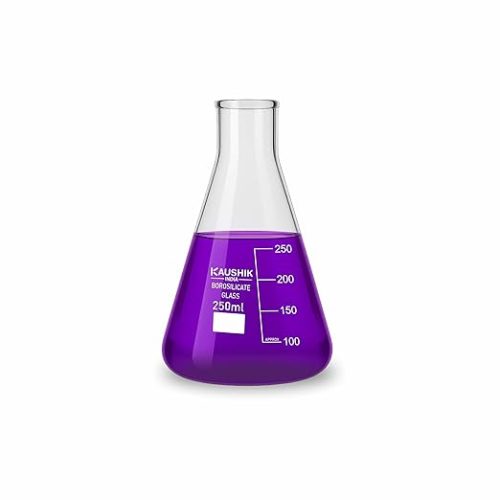
KAUSHIK INDIA Borosilicate Glass Conical Flask,250ml Capacity narrow mouth for storage liquid Chemical school, college, chemistry lab, Laboratories
₹199.00 – ₹569.00Price range: ₹199.00 through ₹569.00Select options This product has multiple variants. The options may be chosen on the product page Details -
Sale!

Borosilicate Glass Narrow Mouth Reagent Bottle with Screw Cap 1000ml- Durable, thermal shock resistant, and leak-proof. Ideal for secure storage laboratory chemicals
₹199.00 – ₹499.00Price range: ₹199.00 through ₹499.00Select options This product has multiple variants. The options may be chosen on the product page Details
Reviews
There are no reviews yet.