
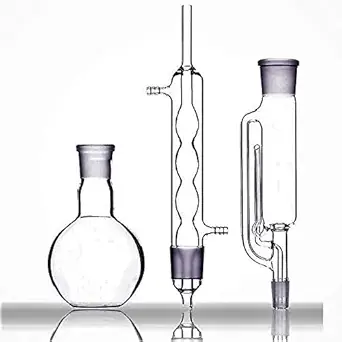
- “100ml Soxhlet extraction unit made of durable borosilicate glass, ideal for precise and reliable laboratory solvent extraction.”
SOXHLET EXTRACTION UNIT CAP. 100 ML (SET OF 1)
₹1,899.00 Original price was: ₹1,899.00.₹831.00Current price is: ₹831.00.
Categories: laboratary glassware, Scientific Instruments
Description
The Comprehensive Guide to the 100ml Soxhlet Unit: Principles and Applications
Introduction to the 100ml Soxhlet Unit
The 100ml Soxhlet Unit is a classic and indispensable apparatus in analytical and organic chemistry laboratories. This specialized Soxhlet extraction device is designed for the continuous, gentle extraction of lipids, oils, and other soluble compounds from solid matrices. The standardized 100ml capacity makes it ideal for laboratory-scale sample preparation.
The principle behind the 100ml Soxhlet extractor is elegant and efficient. It allows a small volume of solvent to repeatedly extract a solid sample over many cycles. This process is far more effective than a single-batch extraction. The 100ml Soxhlet apparatus automates this recycling process, requiring minimal intervention once set up.
This specific size, the 100ml Soxhlet Unit, is one of the most common and versatile sizes found in labs. It is large enough to handle meaningful sample sizes. It is also small enough to be manageable and economical with solvent use. The 100ml Soxhlet extraction process is a benchmark for many standard methods.
This guide will explore every component and application of the 100ml Soxhlet Unit. We will delve into its operation, advantages, and critical role in quantifying fat content and other analytes. Understanding this apparatus is fundamental for work in food science, environmental analysis, and pharmaceuticals.
The History and Principle of Soxhlet Extraction
The Soxhlet extractor was invented in 1879 by the German chemist Franz von Soxhlet. His goal was to determine the fat content in milk powder. The design of the Soxhlet extraction apparatus was revolutionary. It provided a standardized, reliable method for a previously difficult analytical task.
The core principle of Soxhlet extraction is continuous solvent reflux and siphoning. A solvent is boiled in a flask. Its vapors travel up to a condenser, where they liquefy. The hot solvent then drips onto a solid sample contained in a thimble. The soluble compounds dissolve in the solvent.
Once the solvent in the sample chamber reaches a certain level, the Soxhlet siphoning action is triggered. The entire volume of solvent, now enriched with the analyte, is siphoned back into the boiling flask. This cycle repeats automatically for hours or days. The 100ml Soxhlet Unit performs this process perfectly.
This cyclic process in the 100ml Soxhlet extractor ensures the sample is always contacted with fresh, clean solvent. It also concentrates the analyte in the boiling flask over time. The Soxhlet extraction principle remains one of the most effective for exhaustive solid-liquid extraction.
Anatomy of a 100ml Soxhlet Unit: Component Breakdown
A standard 100ml Soxhlet Unit consists of three primary components. These parts work in concert to perform the extraction. They are typically made from borosilicate glass for thermal and chemical resistance. Understanding each part is key to proper assembly of the Soxhlet extraction apparatus.
The first component is the Soxhlet extractor itself. This is the central piece that gives the apparatus its name. The 100ml Soxhlet extractor body features a lower boiling solvent reservoir, a middle chamber for the sample thimble, and a vapor tube. It also has the sophisticated Soxhlet siphon arm.
The siphon is the heart of the 100ml Soxhlet Unit. It is a side arm that connects the sample chamber to the vapor tube. When solvent fills the chamber to the top of this arm, the Soxhlet siphoning action occurs. This ingenious design is what makes the apparatus automatic.
The second component is the Soxhlet condenser. This is mounted on top of the extractor body. It is usually a Graham condenser or a coil condenser. The Soxhlet condenser cools the solvent vapors, converting them back to liquid. This liquid then drips down onto the sample in the 100ml Soxhlet extractor.
The third component is the Soxhlet flask. This is a round-bottom flask, typically of 250ml or 500ml capacity, that sits below the extractor. It serves as the boiler for the solvent and the final repository for the extracted compounds. The 100ml Soxhlet Unit is incomplete without this flask.
The Central Component: The 100ml Soxhlet Extractor Body
The 100ml Soxhlet extractor body is a marvel of functional glassware design. Its capacity refers to the volume of its sample chamber. This 100ml volume determines the maximum size of the solid sample that can be used. It is the standard size for many analytical protocols.
The body of the 100ml Soxhlet extractor has a lower tubular section. This section connects to the boiling flask via a ground glass joint. The most common joint size for a 100ml Soxhlet Unit is 29/32. This provides a secure, leak-proof connection that can withstand repeated heating cycles.
The middle section of the 100ml Soxhlet extractor is wider. This is where the extraction thimble is placed. A side arm extends from this chamber upwards. This is the vapor tube, which allows solvent vapors to bypass the sample chamber and travel directly to the condenser of the Soxhlet extraction apparatus.
The most critical feature is the Soxhlet siphon arm. This is a small U-shaped tube connected to the bottom of the sample chamber. Its top is level with the top of the vapor tube. This precise height is what triggers the siphoning action in the 100ml Soxhlet Unit. Its calibration is essential for function.
The Soxhlet Condenser: Cooling and Recycling Solvent
The Soxhlet condenser is attached to the top of the extractor body. Its purpose is to condense hot solvent vapors back into a liquid. This is achieved by circulating cold water through an outer jacket. The condenser is a vital part of the Soxhlet extraction apparatus closed-loop system.
For a 100ml Soxhlet Unit, a Graham condenser is often used. This type has a straight inner tube surrounded by a water jacket. The large surface area efficiently cools the vapors. The condensed solvent drips uniformly down into the thimble inside the 100ml Soxhlet extractor.
The efficiency of the Soxhlet condenser directly impacts the extraction rate. A well-cooled condenser ensures minimal solvent loss to evaporation. It also maintains a steady drip rate onto the sample. This consistency is key for reproducible results with the 100ml Soxhlet Unit.
The condenser is connected to the extractor with a ground glass joint. It is crucial that all joints in the Soxhlet extraction apparatus are secure. This ensures the solvent vapor is forced through the system and does not escape into the laboratory fume hood.
The Boiling Flask: Solvent Heating and Analyte Collection
The Soxhlet flask is the foundation of the entire assembly. This round-bottom flask sits on a heating mantle. It contains the initial charge of extraction solvent. The size of this flask is typically larger than the extractor, often 250ml or 500ml for a 100ml Soxhlet Unit.
The flask serves two primary functions. First, it acts as the boiler for the solvent. As it is heated, the solvent vaporizes and rises through the vapor tube of the 100ml Soxhlet extractor. Second, it is the collection vessel for the extracted compounds. Each siphoning cycle returns analyte-rich solvent to the flask.
Over many cycles, the analyte concentration in the Soxhlet flask increases. Because the solvent is continuously boiled, the pure solvent is re-vaporized, leaving the non-volatile analyte behind. This concentrates the extract in the flask of the 100ml Soxhlet Unit.
After the extraction is complete, the solvent in the flask can be evaporated. This leaves behind a crude extract of the target compounds. This extract from the Soxhlet extraction apparatus can then be weighed, analyzed, or processed further.
Essential Accessories: Thimbles and Heating Mantles
The Soxhlet thimble is a critical disposable component. It is a cylindrical, cup-shaped filter made from thick filter paper or cellulose. The solid sample is placed inside this Soxhlet thimble. The thimble is then seated in the sample chamber of the 100ml Soxhlet extractor.
The Soxhlet thimble must be porous enough to allow solvent to freely flow through it. However, it must also retain the fine solid particles of the sample. Using a high-quality Soxhlet thimble is essential to prevent channeling or sample loss in the Soxhlet extraction apparatus.
A heating mantle is the preferred and safest method for heating the Soxhlet flask. It provides uniform, controllable heating to the round-bottom flask. This prevents hot spots and ensures a steady production of solvent vapor for the 100ml Soxhlet Unit.
The temperature of the heating mantle must be carefully controlled. It should be high enough to maintain a gentle but consistent boil of the solvent. It should not be so high as to cause violent boiling, which can disrupt the Soxhlet extraction process.
The Step-by-Step Soxhlet Extraction Process
Assembling the 100ml Soxhlet Unit requires care. First, the solid sample is prepared. It is often dried and ground to a fine powder to increase surface area. A known weight of this sample is then carefully loaded into a Soxhlet thimble.
The thimble is placed into the central chamber of the 100ml Soxhlet extractor. The extractor is then connected to the boiling flask, which contains a boiling chip and the solvent. The condenser is attached to the top. All joints should be secure.
The heating mantle is turned on, and water flow is started through the Soxhlet condenser. The solvent in the flask begins to heat up. Its vapors rise through the vapor tube, are condensed, and drip onto the sample in the thimble. The 100ml Soxhlet Unit is now in operation.
The solvent slowly fills the sample chamber in the 100ml Soxhlet extractor. When the liquid level reaches the crest of the siphon arm, the Soxhlet siphoning action is initiated. The chamber empties completely into the flask below. This cycle repeats automatically for the set duration.
Key Applications of the 100ml Soxhlet Unit
The most classic application of the 100ml Soxhlet Unit is fat content determination. This is the original purpose for which Franz von Soxhlet designed it. It remains a standard method for measuring crude fat in food products like milk powder, chips, and meat.
In environmental science, the Soxhlet extraction apparatus is used to extract organic pollutants from soil, sediment, and sludge. Pollutants like PCBs, pesticides, and petroleum hydrocarbons can be efficiently removed from solid matrices using a 100ml Soxhlet extractor.
The 100ml Soxhlet Unit is also vital in natural product chemistry. It is used to extract bioactive compounds, essential oils, and waxes from plant materials. Herbs, seeds, and leaves are commonly processed using this Soxhlet extraction technique.
In pharmaceutical analysis, the Soxhlet extraction apparatus can be used to determine extractable content from drug formulations or excipients. It is a robust and reliable technique for any application requiring exhaustive extraction from a solid.
Advantages of Using a 100ml Soxhlet Extractor
The 100ml Soxhlet Unit offers the advantage of continuous, unattended operation. Once set up, the apparatus can run for hours or days without supervision. This frees up the technician for other tasks, making the Soxhlet extraction process highly efficient.
It provides exhaustive extraction. The repeated fresh solvent contact ensures that nearly all of the soluble material is removed from the solid sample. The 100ml Soxhlet extractor is known for its high extraction efficiency and completeness.
The process is gentle. Because the sample is extracted with warm solvent, not boiling solvent, thermal degradation of sensitive compounds is minimized. The Soxhlet extraction apparatus is suitable for a wide range of heat-labile analytes.
The 100ml Soxhlet Unit is a relatively simple and low-cost technique. It does not require expensive high-pressure pumps or complex instrumentation. Its simplicity and reliability have cemented its place in the laboratory for over a century.
Limitations and Considerations for Soxhlet Extraction
The primary limitation of the 100ml Soxhlet Unit is its long extraction time. A typical run can take from 6 to 24 hours. This is much slower than modern techniques like pressurized solvent extraction. The Soxhlet extraction process is not fast.
It also requires a relatively large volume of solvent. Although the 100ml Soxhlet extractor recycles the solvent, a significant volume is still needed to fill the apparatus. This has environmental and cost implications. Proper solvent disposal is a must.
The high temperatures involved, while gentle, can still degrade very thermally labile compounds. For extremely sensitive molecules, the Soxhlet extraction apparatus may not be the best choice. Cooler extraction methods might be preferable.
The setup of the 100ml Soxhlet Unit is somewhat fragile. It consists of multiple glass components that can break if mishandled. It also requires a fume hood due to the solvent vapors involved in the Soxhlet extraction process.
Modern Alternatives and Comparative Techniques
Accelerated Solvent Extraction (ASE) is a major modern alternative. ASE uses high temperature and pressure to achieve rapid extraction in minutes. However, the equipment for ASE is far more expensive than a simple 100ml Soxhlet Unit.
Microwave-Assisted Extraction (MAE) is another advanced technique. It uses microwave energy to heat the solvent and sample rapidly. MAE is much faster than Soxhlet extraction but also requires specialized and costly equipment.
Ultrasonic Extraction is a simpler and faster alternative. It uses ultrasonic waves to disrupt cells and enhance extraction. While fast, it may not be as exhaustive as the 100ml Soxhlet extractor for some tough matrices.
Despite these modern methods, the 100ml Soxhlet Unit remains widely used. Its results are considered a benchmark. Its low cost, simplicity, and exhaustive nature ensure its continued relevance in standard methods and quality control labs.
Safety Protocols for Operating a Soxhlet Apparatus
Safety is paramount when operating a 100ml Soxhlet Unit. The entire apparatus must be set up in a fume hood. This is non-negotiable. Solvent vapors are hazardous, and the fume hood provides essential ventilation for the Soxhlet extraction apparatus.
Always check for glassware defects before assembly. Look for stars, cracks, or chips, especially on the ground glass joints. A cracked Soxhlet flask under heat can fail catastrophically. Never use damaged glassware in a 100ml Soxhlet extractor setup.
Use heat-resistant gloves when handling the hot components of the 100ml Soxhlet Unit. The flask, extractor, and condenser will become very hot during operation. Allow the entire Soxhlet extraction apparatus to cool completely before disassembling.
Be aware of the flammability of the solvents used. Diethyl ether, a common Soxhlet extraction solvent, is highly flammable and can form explosive peroxides. Ensure there are no ignition sources near the fume hood when the 100ml Soxhlet Unit is in operation.
Troubleshooting Common Soxhlet Extraction Issues
A common problem is a failure to siphon. If the Soxhlet siphoning action does not occur, check for a clogged thimble or siphon arm. The sample may be too fine and have packed down. The Soxhlet thimble must allow for free solvent movement.
If solvent is leaking from the joints, the ground glass connections may be dirty, dry, or damaged. Ensure joints are clean and lightly greased with high-vacuum grease. This ensures a perfect seal for the 100ml Soxhlet extractor.
If the extraction rate seems slow, the condenser may not be efficient enough. Check that the water flow through the Soxhlet condenser is sufficient and that the water is cold. Inefficient condensation reduces the drip rate onto the sample in the Soxhlet extraction apparatus.
If the solvent in the flask is boiling too violently, turn down the heating mantle. A gentle reflux is all that is required. Violent boiling can cause the solution to “bump” and may force material up into the 100ml Soxhlet extractor, contaminating the sample.
The Enduring Legacy of the 100ml Soxhlet Unit
The 100ml Soxhlet Unit is a testament to brilliant, timeless design. For over 140 years, its core principle has remained unchanged. It is a foundational tool in analytical chemistry. The Soxhlet extraction technique is documented in countless official methods.
Its simplicity, effectiveness, and reliability are its greatest strengths. While newer techniques offer speed, the 100ml Soxhlet extractor offers a proven, exhaustive extraction that is often used to validate those newer methods. It is the gold standard.
The 100ml Soxhlet Unit will continue to be a vital piece of equipment in teaching laboratories. It beautifully demonstrates principles of extraction, reflux, and siphoning. It is an icon of chemical engineering and laboratory practice.
In conclusion, the 100ml Soxhlet Unit is far more than just old-fashioned glassware. It is a highly effective, robust, and indispensable apparatus. Its role in fat determination, environmental analysis, and natural product isolation remains secure. The 100ml Soxhlet extractor is a true classic that continues to deliver precise and reliable results.
Be the first to review “SOXHLET EXTRACTION UNIT CAP. 100 ML (SET OF 1)” Cancel reply
Related products
-
Sale!
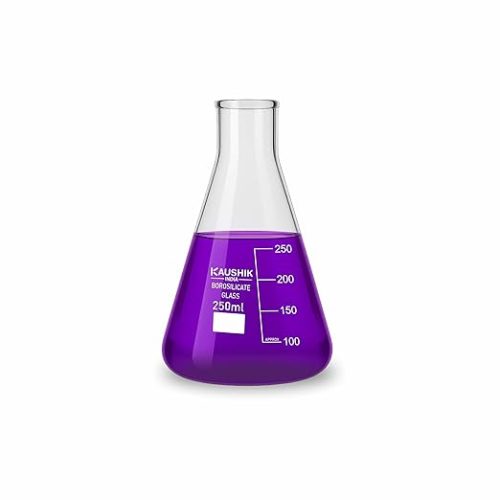
KAUSHIK INDIA Borosilicate Glass Conical Flask,250ml Capacity narrow mouth for storage liquid Chemical school, college, chemistry lab, Laboratories
₹199.00 – ₹569.00Price range: ₹199.00 through ₹569.00Select options This product has multiple variants. The options may be chosen on the product page Details -
Sale!

2 Neck Round 250 ML Bottom Boiling Flask with 24/40 Center & Side Joints Angled Receiving Reflux Flask Multi Neck Apparatus Organic Chemistry Lab Glassware
₹499.00 – ₹999.00Price range: ₹499.00 through ₹999.00Select options This product has multiple variants. The options may be chosen on the product page Details -
Sale!
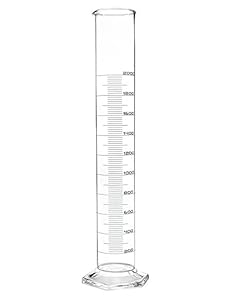
Borosilicate 3.3 Glass Measuring Cylinder with Graduation Marks for Measuring of Liquids 2000 ML
₹2,599.00Original price was: ₹2,599.00.₹1,499.00Current price is: ₹1,499.00.
Reviews
There are no reviews yet.