
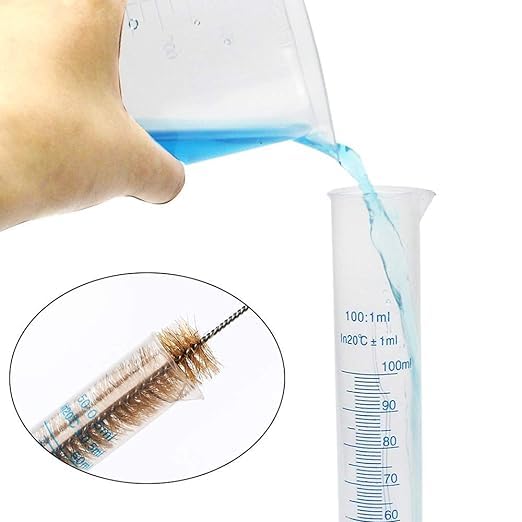
Durable 100ml plastic measuring cylinder made from high-quality polypropylene with a stable hexagonal base and clear blue graduations.
Scientific Plastic Measuring Cylinder 100ml Pack of 1 Polypropylene Material Hexagonal Base, Blue Printed Graduation School College lab Laboratory Chemistry and Professional use
₹399.00 Original price was: ₹399.00.₹199.00Current price is: ₹199.00.
Categories: Measuring Cylinder, Scientific Instruments
Description
The Definitive Guide to the 100ml Measuring Cylinder: Precision for the Perfect Measure
Introduction to the 100ml Measuring Cylinder
The 100ml measuring cylinder is an icon of precision.
It is a fundamental tool found in virtually every laboratory worldwide.
This instrument is engineered for accurate liquid measurement.
Its primary function is to determine the volume of liquids with high reliability.
The 100ml capacity represents a perfect balance for a vast array of tasks.
It is the go-to instrument for measurements beyond the range of a 10ml cylinder.
Yet it remains precise enough for most analytical work.
No lab bench is complete without a trusted 100ml measuring cylinder.
Its design is a testament to simplicity and functionality.
Mastering this tool is the first step toward scientific accuracy.
The journey to exact measurement begins with the 100ml graduated cylinder.
What is a 100ml Measuring Cylinder?
A 100ml measuring cylinder is a slender, cylindrical piece of laboratory glassware or plasticware.
It features a broad, stable base to prevent accidental tipping.
The cylinder is meticulously marked with a graduated scale.
These graduations are the heart of its precision.
They allow a user to determine volume with a high degree of accuracy.
The 100ml capacity denotes the maximum volume it can safely contain.
It is constructed from either borosilicate glass or high-quality plastic.
A glass 100ml measuring cylinder offers superior clarity and chemical resistance.
A plastic 100ml measuring cylinder provides enhanced durability and safety.
The pouring spout is designed for clean, drip-free transfer of liquids.
Key Features and Specifications of a 100ml Graduated Cylinder
Understanding its specifications is key to selecting the right model.
The capacity is explicitly 100 milliliters.
This is the absolute upper limit for safe operation.
The graduated scale is a series of fine, permanent lines.
These lines indicate specific volume increments.
A high-quality 100ml measuring cylinder features clear, legible markings.
The material of construction is a primary deciding factor.
Borosilicate glass is the premium choice for its inert properties.
Polypropylene or PMP plastic is the choice for safety and resilience.
The base is engineered for maximum stability on a level surface.
The Critical Difference: Class A vs. Class B Accuracy
Accuracy is paramount in measurement.
100ml graduated cylinders are certified to different tolerance levels.
Class A volumetric glassware meets the highest standard of precision.
It has the smallest possible margin of error.
A Class A 100ml measuring cylinder is essential for analytical chemistry.
It is used where results cannot be compromised.
Class B glassware has a larger, but still acceptable, tolerance.
It is the workhorse for teaching labs and general purposes.
A Class B 100ml measuring cylinder is cost-effective and reliable.
Your application dictates the required class of accuracy.
Understanding the Graduation Marks
The graduations define the instrument’s precision.
They are etched or printed along the length of the cylinder.
A standard 100ml measuring cylinder has major graduations every 10ml.
Minor graduations typically occur every 1ml or 0.5ml.
Some models offer even finer divisions for heightened precision.
The permanence of these markings is crucial.
High-quality cylinders use enamel-fused or laser-etched markings.
A frosted white background often enhances readability.
This allows for the precise observation of the liquid’s meniscus.
Material Selection: Glass vs. Plastic 100ml Cylinders
The choice between materials is a critical decision.
Each offers distinct advantages for specific scenarios.
Borosilicate Glass 100ml Measuring Cylinder
The glass 100ml measuring cylinder is the professional standard.
It is typically made from borosilicate glass 3.3.
This material is renowned for its exceptional thermal shock resistance.
It can withstand rapid temperature changes without cracking.
Its superb chemical resistance makes it ideal for corrosive acids and solvents.
The brilliant clarity of glass allows for an unobstructed view.
It is easy to clean and does not retain stains or odors.
However, the inherent fragility of glass is its main drawback.
It requires careful handling to avoid breakage.
Plastic 100ml Measuring Cylinder
The plastic 100ml measuring cylinder is widely regarded as the champion of practicality in both educational and professional settings. Its design and material make it a reliable choice for schools, colleges, laboratories, and even hobbyist projects where safety, durability, and cost-effectiveness are key.
-
Material Composition – Most plastic cylinders are manufactured from polypropylene (PP) or polymethylpentene (PMP). Both are lightweight polymers known for their strength, versatility, and excellent resistance to impact damage. PMP offers superior transparency, while PP is highly cost-effective and chemically resistant.
-
Key Advantages –
-
Shatterproof Safety – Unlike glass, plastic cylinders will not break easily, making them exceptionally safe for students, beginners, and high-traffic labs.
-
Lightweight Design – Easy to handle, transport, and store, reducing the risk of accidents during use.
-
Chemical Resistance – Polypropylene can withstand a wide range of acids, bases, and aqueous solutions, ensuring reliability for various experiments.
-
Autoclavable – Many plastic cylinders can be sterilized in an autoclave, extending their usability in professional laboratories.
-
Cost-Effective – More economical to purchase and replace compared to glass alternatives, making them ideal for bulk use in academic institutions.
-
-
Potential Limitations –
-
Reduced Optical Clarity – Plastic cylinders may not be as transparent as glass, which can slightly affect the visibility of the meniscus during precise measurements.
-
Solvent Sensitivity – Certain aggressive organic solvents (e.g., strong hydrocarbons or chlorinated solvents) can damage or degrade some plastic materials.
-
Despite these minor drawbacks, the plastic 100ml measuring cylinder remains a highly practical, safe, and economical solution for everyday laboratory needs, especially in chemistry labs, educational settings, and fieldwork applications.
The Art and Science of Using a 100ml Measuring Cylinder
Proper technique is non-negotiable for achieving accurate results.
Follow this detailed guide for perfect measurement every time.
1. Choosing and Inspecting the Cylinder
First, select the appropriately sized instrument.
The 100ml measuring cylinder is ideal for volumes between 10ml and 100ml.
For smaller volumes, a 10ml or 25ml cylinder is more appropriate.
Before use, conduct a thorough visual inspection.
Check for any cracks, chips, or scratches, especially on glass models.
Ensure the graduations are fully intact and legible.
A damaged cylinder must be taken out of service immediately.
Verify that the cylinder is perfectly clean and dry inside.
2. Ensuring a Stable Foundation
Always place the 100ml graduated cylinder on a flat, level surface.
A stable lab bench is the ideal platform.
Never attempt to take a reading while holding the cylinder.
An uneven surface will tilt the liquid, creating a parallax error.
This error leads to a significant mistake in the volume reading.
The wide base is specifically designed for this purpose.
3. The Technique of Filling
Pour the liquid into the cylinder slowly and deliberately.
Aim the stream towards the center of the vessel.
Using a funnel or a glass stirring rod can guide the liquid.
This minimizes splashing and the formation of air bubbles.
Exercise extreme caution when pouring volatile, hot, or hazardous liquids.
Fill the cylinder to a point just below your target graduation line.
This allows for final fine-tuning with a dropper.
4. Reading the Meniscus: The Core Skill
This is the most critical step in the entire process.
Most liquids, particularly water-based solutions, form a concave meniscus.
This is the curved surface at the top of the liquid column.
The true volume is measured at the very bottom of this curve.
You must position your eyes at the exact same level as this lowest point.
Any deviation above or below will introduce a parallax error.
Align the graduation mark with your direct line of sight.
The frosted stripe on quality cylinders aids immensely in this task.
5. Dispensing the Measured Liquid
Once measured, the liquid can be poured out.
Use the integrated spout for a smooth, controlled pour.
For maximum precision, use a pipette pump or rubber bulb for aspiration.
Never return unused chemicals to their original storage container.
This prevents cross-contamination and preserves stock purity.
Extensive Applications of the 100ml Measuring Cylinder
The utility of the 100ml measuring cylinder is virtually limitless.
Its applications span numerous disciplines and industries.
In Research and Development Laboratories
The 100ml graduated cylinder is indispensable in R&D.
It is used to prepare analytical standard solutions with exact concentrations.
It measures reagents and solvents for complex synthesis reactions.
In biological research, it prepares buffers, media, and sampling solutions.
Its 100ml capacity is perfect for pilot-scale experiments.
Analytical labs rely on Class A models for regulatory compliance.
It is a cornerstone of reproducible scientific method.
In Educational Institutions and Training Labs
The 100ml measuring cylinder is a quintessential teaching tool.
It is central to the curriculum in school and university chemistry labs.
Students learn foundational skills like meniscus reading and density calculations.
The plastic 100ml measuring cylinder is the safe choice for beginners.
It allows for hands-on learning without the risks associated with glass.
It is a fixture in science fair projects and practical examinations.
Across Industrial and Manufacturing Sectors
Industry depends on precision for quality and consistency.
The 100ml measuring cylinder is a key tool in quality assurance labs.
It measures precise amounts of additives, dyes, and catalysts.
The food and beverage industry uses it for flavoring and recipe formulation.
In pharmaceutical manufacturing, it aids in creating syrups and suspensions.
The cosmetics industry uses it for fragrances, oils, and emulsions.
Within Healthcare and Medical Fields
While not for direct patient care, it has vital supporting roles.
It is used for preparing disinfectant and cleaning solutions in clinics.
Pharmacies may use it for compounding certain preparations.
Veterinary practices use it for measuring treatments and fluids.
Its role in maintaining hygiene and preparation is critical.
For Hobbyists, Artists, and Home Use
The 100ml graduated cylinder is incredibly useful beyond professional settings.
Home brewers and winemakers use it to measure additives and samples.
Artists use it for precisely mixing resins, epoxies, and pigments.
It is perfect for any DIY project requiring exact liquid ratios.
Gardening enthusiasts use it for measuring fertilizers and nutrients.
Jewelers and hobby chemists find it an indispensable tool.
Proper Cleaning, Maintenance, and Storage
Correct care prolongs the life of your equipment and guarantees accuracy.
Effective Cleaning Protocols
Rinse the 100ml measuring cylinder immediately after each use.
Use a solvent compatible with the measured substance for the initial rinse.
Then, wash with warm water and a mild, non-abrasive laboratory detergent.
Use a dedicated cylinder brush to clean the entire interior surface.
Rinse thoroughly with tap water followed by a final rinse with distilled or deionized water.
Invert the cylinder on a clean rack and allow it to air-dry completely.
Avoid using cloths to dry the inside, as they can introduce lint and contaminants.
Best Practices for Storage and Handling
Store your 100ml graduated cylinders upright in a secure rack.
Dedicated cylinder racks prevent rolling and protect the graduations.
Keep them in a cabinet or away from the edge of the bench to avoid knocks.
Never store items inside a cylinder, as this can scratch the interior.
Always handle glass cylinders with two hands, one near the base.
This minimizes the risk of dropping and breaking the valuable tool.
Periodic Calibration Checks
For high-precision work, regular verification is essential.
The calibration of a 100ml measuring cylinder can be checked gravimetrically.
Weigh the empty, dry cylinder on an analytical balance.
Fill to a specific graduation mark with distilled water.
Weigh the filled cylinder and calculate the mass of the water.
At a known temperature, the mass in grams should equal the volume in milliliters.
Consistent discrepancies indicate the need for re-calibration or replacement.
Troubleshooting Common Measurement Errors
Awareness of potential errors is the first step to avoiding them.
Parallax Error: The Most Common Mistake
This error occurs when the eye is not level with the meniscus.
It results in a reading that is either too high or too low.
Always double-check your eye level before recording a volume.
The frosted stripe on the cylinder is designed to help eliminate this error.
Incorrect Meniscus Reading
Reading the top of the meniscus instead of the bottom is a frequent error.
Always remember the rule: for concave menisci, read the bottom point.
For the convex meniscus of mercury, read the top point.
This fundamental skill must be practiced until it becomes instinctive.
Using the Wrong Tool for the Volume
Using a 100ml measuring cylinder to measure 2ml is highly inaccurate.
The larger the cylinder, the larger the percentage error for small volumes.
The golden rule is to select a cylinder where your desired volume falls within the upper half of its capacity.
For 15ml, a 25ml cylinder is ideal. For 80ml, the 100ml cylinder is perfect.
Residue and Contamination Issues
A common yet often underestimated source of error when using a graduated cylinder is residue or contamination from previous use. Even the smallest trace of leftover liquid, detergent, or water droplets can compromise the accuracy of your measurements.
-
Impact on Accuracy – Residual films or droplets can cling to the cylinder walls, altering the meniscus and giving a false reading of the liquid volume. This error becomes especially significant when working with small volumes or highly concentrated solutions.
-
Risk of Cross-Contamination – Carryover from previous experiments can introduce unwanted chemicals, impurities, or biological material into your next solution. This may change reaction outcomes, affect reproducibility, or even pose safety hazards.
-
Cleaning Protocols – After each use, cylinders should be rinsed thoroughly with distilled water to remove any chemical traces. For stubborn residues, an appropriate cleaning solution or mild detergent may be required. Special care should be taken to avoid abrasive scrubbing that can scratch the surface and trap contaminants.
-
Drying Importance – Proper drying is just as crucial as cleaning. Water droplets left inside the cylinder can dilute future solutions, leading to inaccurate results. Air drying upside down on a clean rack is recommended, or lint-free wipes can be used when faster turnaround is needed.
-
Best Practices –
-
Always inspect the cylinder before use.
-
Dedicate separate cylinders for incompatible substances.
-
If absolute precision is required, pre-rinse the cylinder with a small portion of the solution to be measured.
-
By maintaining a strict cleaning and drying routine, you ensure not only measurement accuracy but also long-term cylinder durability and safe laboratory practice.
The Distinct Advantages of the 100ml Capacity
The 100ml capacity is uniquely positioned for widespread use.
It is the optimal size for a tremendous number of applications.
The 100ml measuring cylinder handles a critical volume range with superb precision.
It is large enough to be practical for preparing useful batch sizes.
It remains small enough to allow for excellent measurement resolution.
This balance is its greatest strength and the reason for its ubiquity.
It is a standard size referenced in countless official methods and procedures.
The 100ml graduated cylinder is the perfect partner to other standard labware.
It seamlessly integrates with 100ml volumetric flasks and beakers.
This synergy creates an efficient and streamlined workflow on the lab bench.
Conclusion: The Unwavering Pillar of Precision Measurement
The 100ml measuring cylinder is a timeless instrument.
Its elegant, purpose-driven design has remained largely unchanged for generations.
It is a universal symbol of scientific accuracy and empirical inquiry.
This tool facilitates the transition from theoretical calculation to tangible result.
Its presence is felt in the most advanced research labs and the most humble home workshops.
The 100ml graduated cylinder is a fundamental enabler of discovery and quality.
A deep understanding of its features—from its graduated scale to its 100ml capacity—is essential.
Mastering the technique of its use, especially the art of reading the meniscus, is a foundational scientific skill.
The conscious choice between a resilient plastic model and a high-precision Class A glass one directly dictates success.
This knowledge empowers the user, instilling confidence in the data they generate.
Whether you are a chemist developing a new compound, a student learning lab basics, a brewer refining a craft, or an artist creating a masterpiece, this tool is indispensable.
It provides the certainty that comes from exact, reproducible measurement.
The 100ml measuring cylinder transforms estimation into fact.
It is the humble yet mighty instrument that turns “approximately” into “exactly.”
This transformation is the very foundation of the scientific method and quality craftsmanship.
Its role in progress is both profound and irreplaceable.
Therefore, the 100ml measuring cylinder rightfully earns its status as an unwavering pillar of precision measurement.
It is a testament to the enduring power of simple, brilliant design.
It will continue to be an indispensable tool for all who value accuracy, for generations to come.
Be the first to review “Scientific Plastic Measuring Cylinder 100ml Pack of 1 Polypropylene Material Hexagonal Base, Blue Printed Graduation School College lab Laboratory Chemistry and Professional use” Cancel reply
Related products
-
Sale!
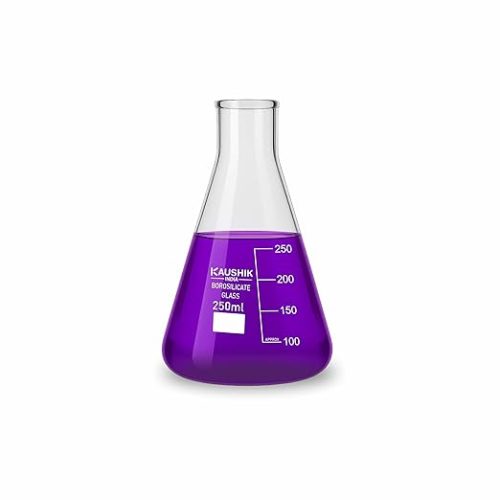
KAUSHIK INDIA Borosilicate Glass Conical Flask,250ml Capacity narrow mouth for storage liquid Chemical school, college, chemistry lab, Laboratories
₹199.00 – ₹569.00Price range: ₹199.00 through ₹569.00Select options This product has multiple variants. The options may be chosen on the product page Details -
Sale!
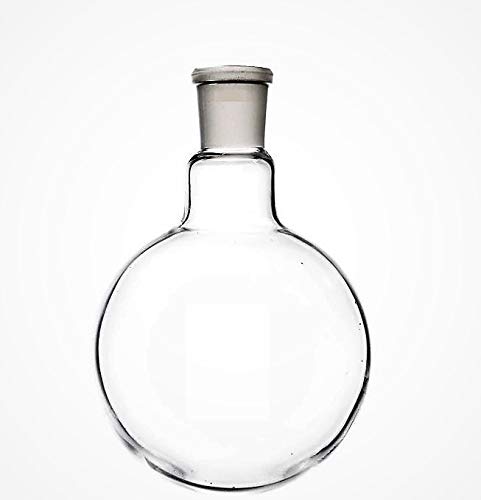
Round Bottom Flask 2000 ML With joint b-24
₹1,159.00Original price was: ₹1,159.00.₹659.00Current price is: ₹659.00. -
Sale!

2 Neck Round 250 ML Bottom Boiling Flask with 24/40 Center & Side Joints Angled Receiving Reflux Flask Multi Neck Apparatus Organic Chemistry Lab Glassware
₹499.00 – ₹999.00Price range: ₹499.00 through ₹999.00Select options This product has multiple variants. The options may be chosen on the product page Details
Reviews
There are no reviews yet.