

This 250ml iodine determination flask with glass stopper is made from high-quality borosilicate glass, ensuring durability & chemical resistance.
KAUSHIK INDIA BOROSILICATE GLASS Iodine Determination Flask 250ML WITH GLASS STOPPER
₹499.00 Original price was: ₹499.00.₹249.00Current price is: ₹249.00.
Categories: Iodine flask, laboratary glassware, Scientific Instruments
Description
The Definitive Guide to the Iodine Determination Flask: Precision Instrument for Redox Titrations
Introduction to the Iodine Determination Flask
An Iodine Determination Flask is a specialized piece of laboratory glassware. It is designed exclusively for accurate iodometric and iodimetric titration methods. The primary function of this determination flask is to prevent the loss of volatile iodine. Iodine loss would cause significant error in quantitative chemical analysis.
The Iodine Determination Flask is a cornerstone of analytical chemistry. It is essential for procedures outlined in standard methods like ASTM and USP. This laboratory flask features a unique ground glass stopper with a built-in drip rim. This design is critical for achieving precise analytical results.
Using an Iodine Determination Flask is mandatory for many official testing protocols. It ensures the integrity of the reaction mixture throughout the analysis. The flask is typically manufactured from high-quality borosilicate glass. This provides superior chemical resistance against iodine and other reagents.
Understanding the Iodine Determination Flask is crucial for analytical chemists. It is used in water treatment, pharmaceutical, food, and environmental laboratories. This specialized determination flask guarantees the accuracy of iodine-based measurements.
What is an Iodine Determination Flask? A Detailed Definition
An Iodine Determination Flask is a specific type of conical flask with a sealing stopper. Its sole purpose is to facilitate the determination of substances through iodine chemistry. The flask is also known as an iodine value flask or iodometric flask.
The key differentiator is its precision-ground glass stopper. This stopper has a flared, lipped top that forms a shallow well. This well holds a sealing liquid, such as potassium iodide solution. The entire assembly creates a vapor-tight environment.
The Iodine Determination Flask is used in the determination of oxidizing agents, reducing agents, and unsaturated compounds. Its design prevents the sublimation of iodine during the reaction period. Even minute losses of iodine can invalidate an analytical determination.
This flask is a required tool for any laboratory performing official iodine determination methods. It transforms a volatile reaction into a closed, quantitative system. The Iodine Determination Flask is a symbol of analytical precision.
The Anatomy of an Iodine Determination Flask: A Component Breakdown
The Conical Body: The Analytical Vessel
The body of the Iodine Determination Flask is conical with a flat base. This shape provides stability on a laboratory bench. The conical design is ideal for efficient swirling and mixing during titration. The flat bottom ensures the determination flask does not tip over.
The body is constructed from clear borosilicate glass. This clarity is essential for observing color changes. The classic starch-iodine endpoint must be visible for an accurate determination. The chemical resistance of the glass protects the analysis from contamination.
Standard capacities for an Iodine Determination Flask are 250ml and 500ml. These volumes are suitable for most titration procedures. The flask’s dimensions are optimized for both manual and mechanical swirling. The determination flask body is the core reaction chamber.
The Ground Glass Neck: The Sealing Interface
The neck of the Iodine Determination Flask is longer than a standard Erlenmeyer flask. The interior surface is precision-ground to a frosted finish. This creates a perfect mating surface for the stopper. The quality of this grind is paramount for an effective seal.
The ground glass neck ensures a perfect fit with the stopper. It must be free of any chips or scratches. A flawless neck is essential for a successful iodine determination. The integrity of this joint defines the flask’s performance.
The neck’s design allows the stopper to be seated securely. It prevents the stopper from popping loose during swirling. This is a critical feature during the determination process. The neck is the gateway to a sealed system.
The Specialized Stopper: The Heart of the Design
The stopper is the most important component of the Iodine Determination Flask. It is not a simple plug. It is a complex ground glass stopper with a flared lip at the top. This lip forms a circular well or reservoir around the stopper’s handle.
This reservoir is designed to hold a few milliliters of sealing liquid. The liquid, typically a potassium iodide (KI) solution, acts as a vapor trap. Any iodine vapor that reaches the stopper is dissolved into this solution. This prevents any loss from the system.
The stopper’s ground glass surface must be impeccably smooth. It must form a hermetic seal with the flask’s neck. A high-quality Iodine Determination Flask stopper fits snugly without force. This stopper is the key to accurate iodine determination.
The Critical Role of Material: Why Borosilicate Glass is Non-Negotiable
Unmatched Chemical Resistance
Borosilicate glass is the only suitable material for an Iodine Determination Flask. Iodine, acids, and other titration reagents can be highly corrosive. The chemical resistance of borosilicate glass ensures the flask walls are completely inert.
This inertness is non-negotiable for analytical accuracy. The determination flask must not react with or adsorb iodine. Even slight adsorption could lead to a false determination result. The chemical resistant property guarantees analytical purity.
Optical Clarity for Endpoint Detection
The determination of the endpoint is a visual process. The starch endpoint produces a characteristic blue color. The analyst must see the exact moment this color disappears. The perfect clarity of borosilicate glass allows for unobstructed observation.
There must be no bubbles, streaks, or discoloration in the glass. The Iodine Determination Flask provides a crystal-clear view of the titration. This optical clarity is a fundamental requirement for a precise determination.
Durability and Thermal Stability
An Iodine Determination Flask must withstand daily use in a busy lab. Borosilicate glass offers excellent mechanical durability. It is resistant to scratching and minor impacts. The ground glass joint maintains its seal over hundreds of uses.
While heating is not always required, thermal shock resistance is beneficial. It allows for safe cleaning with hot water and solvents. The durability of the determination flask ensures a long service life and a good return on investment.
The Science of Iodine Determination: Principles and Procedures
The Foundation of Iodometric Titrations
Iodine determination methods are based on redox chemistry. The core reaction involves the interconversion of iodine (I₂) and iodide (I⁻). Iodine is a weak oxidizing agent that can be reduced. Iodide is a reducing agent that can be oxidized.
The reaction is: I₂ + 2e⁻ ⇌ 2I⁻
The Iodine Determination Flask contains the reaction where iodine is produced or consumed. The quantity of iodine involved is measured by titration. This measurement allows for the determination of the original analyte’s concentration.
The Problem of Iodine Volatilization
Iodine is a volatile solid. It sublimes at room temperature, converting directly from a solid to a purple vapor. In an open container, this vapor escapes into the laboratory air.
This loss represents a direct loss of the analyte being measured. It introduces a systematic error into the determination. The use of a standard beaker or flask would make the determination invalid. The sealed Iodine Determination Flask solves this fundamental problem.
Creating a Closed System for Accuracy
The Iodine Determination Flask creates a hermetic, closed system. The ground glass stopper seals the flask completely. The liquid seal in the stopper’s well acts as a secondary barrier.
Any vapor that escapes the solution is trapped by the liquid seal. This ensures that 100% of the iodine involved in the reaction is accounted for. This closed system is the reason for the determination flask’s existence. It makes precise iodine determination possible.
Step-by-Step Guide to Using an Iodine Determination Flask
Step 1: Flask Preparation and Sample Introduction
Begin with a clean, dry Iodine Determination Flask. Any residue could contaminate the sample and skew the determination. Accurately measure the sample and transfer it into the flask. The sample can be a solid, liquid, or gas absorbed into a solution.
Add the necessary reagents to initiate the iodine-related reaction. This often includes an acid and a source of iodide ions. Gently swirl the determination flask to mix the initial reagents. Ensure the mixture is homogeneous before sealing.
Step 2: Sealing the Iodine Determination Flask
Firmly seat the ground glass stopper into the neck of the flask. A proper seal should feel snug but not forced. Next, carefully fill the well of the stopper with a potassium iodide (KI) solution. This creates the essential liquid seal.
The Iodine Determination Flask is now a closed system. Place the sealed flask in a dark location or cover it with foil. Many iodine reactions are photosensitive. Allow the reaction to proceed to completion without disturbance.
Step 3: Titration and Endpoint Detection
After the reaction time has elapsed, carefully unstopper the flask. Rinse the underside of the stopper and the flask’s neck with distilled water. Direct all rinsings back into the flask to recover any condensed iodine.
Titrate the contents with a standard solution, usually sodium thiosulfate. Swirl the Iodine Determination Flask continuously to ensure thorough mixing. As the titration progresses, the brown iodine color will fade to a pale yellow.
Step 4: The Starch Endpoint
When the solution is a faint yellow, add a few milliliters of starch indicator. A sharp, deep blue color will appear. This is the starch-iodine complex. Continue the titration drop by drop, swirling vigorously after each addition.
The endpoint of the determination is reached when the blue color disappears completely. The solution becomes colorless. Record the exact volume of titrant used. This volume is used to calculate the concentration of the analyte.
Key Applications of the Iodine Determination Flask
Dissolved Oxygen Determination (Winkler Method)
The Iodine Determination Flask is critical for the Winkler method. This is the standard procedure for measuring dissolved oxygen in water. The water sample is fixed with manganese sulfate and alkaline iodide in the determination flask.
The resulting reaction produces iodine proportional to the oxygen content. The sealed determination flask prevents atmospheric oxygen from interfering. This application is vital for environmental science and wastewater treatment.
Iodine Value Determination of Oils and Fats
The Iodine Determination Flask is used to determine the iodine value of fats and oils. The iodine value measures the degree of unsaturation. It is a key quality parameter in the food and fuel industries.
The fat sample is reacted with an excess of iodine solution in the sealed flask. The unreacted iodine is then titrated. The determination flask is essential to prevent iodine loss during the long reaction time.
Determination of Oxidizing Agents
The flask is used to assay strong oxidizing agents like chlorine, bromine, and peroxides. These analytes oxidize iodide to iodine. The iodine produced is then titrated within the sealed determination flask.
This is a common test in water treatment plants for residual disinfectant levels. The accuracy of the determination relies entirely on the flask’s seal.
Determination of Reducing Agents
Reducing agents like vitamin C (ascorbic acid) and sulfites can be determined. They are reacted with an excess of iodine. The unreacted iodine is back-titrated with thiosulfate. The Iodine Determination Flask ensures the reaction is quantitative.
Advantages of Using an Iodine Determination Flask
Unparalleled Analytical Accuracy
The primary advantage is the elimination of systematic error from iodine loss. This leads to highly accurate and reproducible determination results. Data generated using an Iodine Determination Flask is considered highly reliable.
Compliance with Standard Methods
Official methods from ASTM, APHA, and USP require the use of an Iodine Determination Flask. Using any other type of container invalidates the test results. Compliance with these standards is essential for regulatory and quality control purposes.
Enhanced Laboratory Safety
Iodine vapor is a respiratory irritant. By containing the vapor, the Iodine Determination Flask provides a safer working environment. It minimizes analyst exposure to volatile halogen vapors.
Proper Care and Maintenance of the Flask
Cleaning and Decontamination
Proper cleaning and decontamination of the Iodine Determination Flask are essential for maintaining accuracy and preventing cross-contamination between experiments. The cleaning process should begin immediately after each use, before iodine residues have a chance to dry and stain the glass surface.
Start by rinsing the flask with a small amount of sodium thiosulfate solution, which effectively reduces and neutralizes any residual iodine. This step not only removes the distinct brown coloration of iodine but also ensures that reactive traces do not interfere with subsequent analyses.
After neutralization, wash the flask thoroughly with a suitable laboratory detergent and a soft brush. Avoid using abrasive materials, as they can scratch the glass surface or damage the precision-ground joint. A gentle but thorough scrubbing will help dislodge any deposits that may cling to the walls or neck of the flask.
Finally, perform a triple rinse with distilled water to eliminate any detergent residues. This final rinse is crucial, as even small amounts of contaminants can compromise the reliability of future determinations.
Special care must be given to the ground glass joint and stopper. Residues left on the joint surface may harden over time, leading to poor sealing, joint fusion, or leaks during titration. It is advisable to dry the joint thoroughly before storage, either by gentle air-drying or with lint-free wipes.
For long-term care, periodic inspection of the flask for scratches, chips, or etching is recommended, as these can weaken the glass or affect volumetric accuracy. Stubborn stains may be removed by soaking in a mild acid cleaning solution (e.g., dilute hydrochloric acid), followed by thorough rinsing.
By following these cleaning and decontamination protocols, laboratories can ensure that the Iodine Determination Flask remains in optimal condition, delivering consistent, accurate, and reproducible results.
Storage and Handling
Proper storage and careful handling of the Iodine Determination Flask are essential to maintain its accuracy and extend its service life. One critical precaution is to avoid storing the flask with the stopper tightly inserted. Over time, ground glass joints can fuse together due to slight moisture, chemical residues, or prolonged pressure, making the stopper extremely difficult to remove. To prevent this, always store the stopper separately or place it loosely on the neck of the flask when not in use.
When handling, exercise care to prevent chipping of the ground glass rim. Even a minor chip can compromise the seal, allowing leaks during titration and reducing the accuracy of iodine determinations. A damaged rim also increases the risk of breakage under thermal or mechanical stress.
It is recommended to:
-
Inspect the flask and stopper before each use to ensure both surfaces are clean and undamaged.
-
Apply a thin layer of stopcock grease (if appropriate) to the ground glass joint for smoother insertion and removal.
-
Store the flask in a padded or compartmentalized cabinet to prevent accidental knocks or scratches.
-
Avoid sudden temperature changes that could stress the glass.
By following these practices, laboratories can ensure the Iodine Determination Flask remains reliable, safe, and accurate for long-term analytical use.
Conclusion: The Foundation of Precise Iodine Chemistry
The Iodine Determination Flask is an exemplary piece of specialized laboratory equipment. Its design is a perfect response to the specific challenges of iodine chemistry. By providing a sealed, inert environment, it enables some of the most reliable methods in analytical chemistry.
Its role in environmental monitoring, food safety, and pharmaceutical quality control is indispensable. For any laboratory committed to accurate iodine determination, this flask is not an option—it is a necessity. It stands as a timeless tool of precision in the chemical sciences.
Be the first to review “KAUSHIK INDIA BOROSILICATE GLASS Iodine Determination Flask 250ML WITH GLASS STOPPER” Cancel reply
Related products
-
Sale!

2 Neck Round 250 ML Bottom Boiling Flask with 24/40 Center & Side Joints Angled Receiving Reflux Flask Multi Neck Apparatus Organic Chemistry Lab Glassware
₹499.00 – ₹999.00Price range: ₹499.00 through ₹999.00Select options This product has multiple variants. The options may be chosen on the product page Details -
Sale!
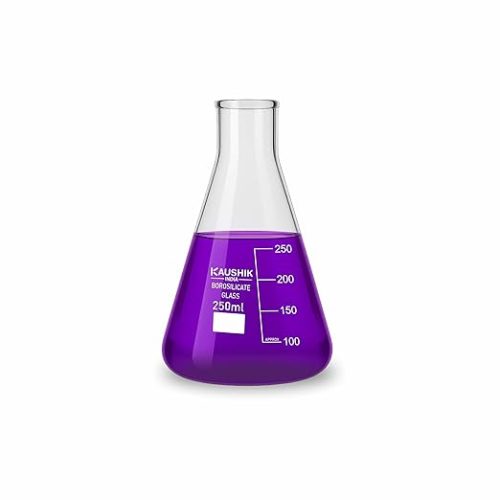
KAUSHIK INDIA Borosilicate Glass Conical Flask,250ml Capacity narrow mouth for storage liquid Chemical school, college, chemistry lab, Laboratories
₹199.00 – ₹569.00Price range: ₹199.00 through ₹569.00Select options This product has multiple variants. The options may be chosen on the product page Details -
Sale!
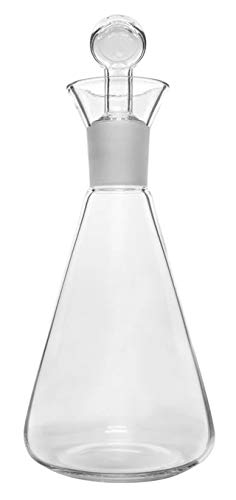
Iodine Flask With Glass Stopper 500ml. Iodine Flask for Lab
₹899.00Original price was: ₹899.00.₹499.00Current price is: ₹499.00.
Reviews
There are no reviews yet.