
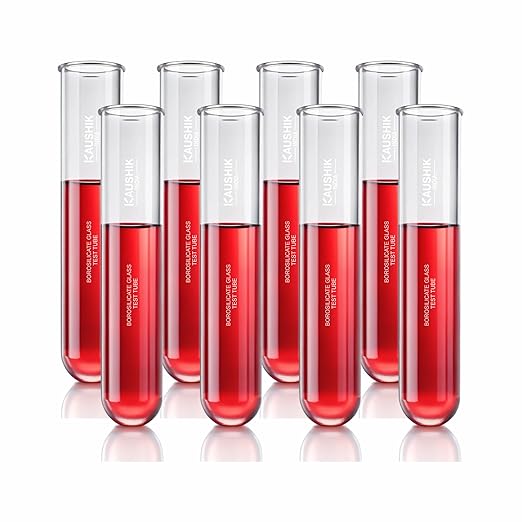
Set of 8 borosilicate Chemical Resistant tube (15mm × 125mm, 13ml) with rim. Heatproof, durable, and ideal for school, college labs, experiments, and sample collection.
KAUSHIK INDIA Borosilicate Glass Test Tube With Rim 15mmX125mm(13ml) Capacity- Pack of 8pcs|Heat & Chemical Durability|Perfect For Any School,Colledge Labs Experiment & For Sample collection
₹399.00 Original price was: ₹399.00.₹199.00Current price is: ₹199.00.
Categories: laboratary glassware, Scientific Instruments, Test Tube
Description
The Ultimate Guide to Chemical Resistant Tube: Ensuring Safety and Integrity in Corrosive Environments
Introduction to Chemical Resistant Tube
The chemical resistant tube is a critical component in modern industry.
It is engineered for one primary purpose: to safely convey aggressive substances.
These substances can be liquids, gases, or even semi-solids.A standard tube would quickly fail under such corrosive conditions.
Failure can lead to leaks, spills, system downtime, and significant hazards.
The chemical resistant tube is designed to prevent these catastrophic events.
It is a product of advanced material science and precision engineering.
This tubing is indispensable across a vast spectrum of applications.
From pharmaceutical manufacturing to chemical processing plants, its role is vital.
Selecting the correct chemical resistant tubing is not just a matter of efficiency.
It is a fundamental requirement for safety, environmental protection, and operational integrity.
Understanding its properties is essential for engineers, technicians, and procurement specialists.
What is a Chemical Resistant Tube?
A chemical resistant tube is a hollow, cylindrical conduit.
It is specifically manufactured from materials that can withstand degradation.
Degradation comes from exposure to aggressive chemicals, solvents, acids, and bases.
This tubing maintains its structural and functional integrity over prolonged periods.
It does not swell, crack, soften, or become brittle upon contact.
The definition of a chemical resistant tube is relative to the medium it carries.
A tube resistant to one chemical may be incompatible with another.
Therefore, chemical compatibility is the most crucial selection criteria.
This tubing comes in various diameters, wall thicknesses, and lengths.
It can be flexible or rigid, transparent or opaque.
Its construction is a barrier, protecting both the fluid inside and the environment outside.
Key Features and Specifications of Chemical Resistant Tubing
The performance of a chemical resistant tube is defined by its specifications.
These parameters must be carefully matched to the application.
Chemical Compatibility: The Paramount Consideration
Chemical compatibility is the non-negotiable starting point.
It refers to the ability of the tube material to resist attack from a specific substance.
Compatibility charts are essential tools for selection.
These charts detail the resistance of materials like PTFE, Viton, or PVC to hundreds of chemicals.
They rate resistance as Excellent, Good, Fair, or Poor.
An Excellent rating indicates no measurable effect from the chemical.
A Poor rating indicates severe degradation, making the material unsuitable.
The chemical resistance of a tube is its most critical property.
Material of Construction
The material defines the very essence of the chemical resistant tube.
Different polymers and elastomers offer unique resistance profiles.
PTFE (Polytetrafluoroethylene) tubing is nearly universally chemical resistant.
It can handle incredibly aggressive acids, bases, and solvents.
Viton® (FKM) fluoroelastomer tubing is excellent for hydrocarbons and oils.
Silicone tubing offers good flexibility and resistance to many biological fluids.
PVC (Polyvinyl Chloride) tubing is cost-effective for many acids and bases.
Polypropylene tubing provides excellent value and good all-around resistance.
The choice of material is a balance between chemical resistance, physical properties, and cost.
Temperature and Pressure Ratings
A chemical resistant tube must operate within its defined limits.
The temperature rating specifies the range it can safely handle.
High temperatures can accelerate chemical attack on the tube.
They can also cause softening and a loss of pressure integrity.
The pressure rating indicates the maximum internal pressure the tube can withstand.
This is closely related to the tube’s wall thickness and material strength.
Using a tube beyond its temperature or pressure ratings is a severe safety risk.
It can lead to sudden failure and the release of hazardous materials.
Inner Diameter (ID) and Wall Thickness
The inner diameter of the chemical resistant tube dictates flow rate.
A larger ID allows for a higher volume of fluid to pass through.
The wall thickness directly impacts pressure rating and flexibility.
A thicker wall generally means a higher pressure rating but less flexibility.
Standard dimensions like 1/4″ ID or 3/8″ ID are common for fluid transfer.
Precise ID is critical in peristaltic pumps to ensure accurate flow rates.
Flexibility and Durability
Flexibility is a key operational feature.
A highly flexible chemical resistant tube is easy to route through complex machinery.
It can simplify system design and installation.
Durability refers to the tube’s resistance to abrasion, kinking, and fatigue.
Some applications require tubing that can withstand constant movement or vibration.
Abrasion resistance is vital if the tube may rub against other surfaces.
The Critical Importance of Chemical Resistance
Why is chemical resistance so profoundly important?
The consequences of tubing failure are severe and multifaceted.
Preventing Catastrophic Failure and Downtime
A leaking chemical resistant tube can cause a process to halt.
In manufacturing, this downtime costs thousands of dollars per hour.
Replacing failed tubing also requires labor and parts.
Using a highly chemical resistant product maximizes operational uptime.
It ensures continuous, reliable process flow without unexpected interruptions.
Ensuring Personnel and Environmental Safety
This is the most critical reason for using chemical resistant tubing.
A leak can expose workers to toxic, corrosive, or flammable substances.
This exposure can cause chemical burns, respiratory problems, or other injuries.
A spill can also contaminate soil and groundwater, leading to environmental damage.
Regulatory agencies impose heavy fines for such incidents.
The correct chemical resistant tube is a primary safety device.
It acts as a contained barrier for hazardous materials.
Maintaining Fluid Purity
In many industries, fluid purity is paramount.
In pharmaceutical and food processing, leaching cannot occur.
An incompatible tube can contaminate the product with plasticizers or additives.
This can render an entire batch worthless and unsafe.
In analytical chemistry, sample integrity is everything.
Leached compounds from tubing can skew results and ruin experiments.
A truly inert chemical resistant tube like PTFE prevents this contamination.
It ensures the fluid that goes in is the same fluid that comes out.
Protecting Capital Equipment
Tubing failure can damage expensive machinery.
A leak from a hydraulic line can ruin sensitive electronic components.
A corrosive fluid leak can destroy pumps, sensors, and valves.
Using the appropriate chemical resistant tubing protects this valuable equipment.
It is a low-cost component that safeguards high-cost assets.
Common Materials for Chemical Resistant Tubing
Each material offers a unique profile of chemical resistance and physical properties.
PTFE (Polytetrafluoroethylene) Tubing
PTFE tubing is the gold standard for chemical resistance.
It is inert to almost all industrial chemicals and solvents.
This includes strong acids like hydrochloric acid and sulfuric acid.
It also handles potent bases like sodium hydroxide.
PTFE tubing has a very high continuous service temperature.
Its non-stick surface prevents clogging and allows for easy cleaning.
A potential drawback is its relative stiffness compared to other plastics.
It is often the choice for the most demanding applications.
Viton® (FKM) Fluoroelastomer Tubing
Viton tubing is a superstar in the petrochemical and automotive industries.
It offers exceptional resistance to high temperatures and hydrocarbons.
It is the preferred choice for fueling applications, oils, and aromatics.
Viton maintains its flexibility across a wide temperature range.
It provides an excellent seal and is often used for gaskets and seals as well.
It is not suitable for ketones or certain amines.
Silicone Tubing
Silicone tubing is extremely flexible and biocompatible.
This makes it a favorite in medical, pharmaceutical, and food applications.
It has good resistance to many biological fluids and alcohols.
It can be sterilized repeatedly using autoclave or radiation.
Silicone is not recommended for use with strong acids, bases, or solvents.
Its high gas permeability can also be a limitation for some applications.
PVC (Polyvinyl Chloride) Tubing
PVC tubing is a versatile and economical option.
It offers good resistance to a wide range of acids, bases, and alcohols.
It is available in both flexible and rigid forms.
PVC is easy to cut and install, making it a common general-purpose tube.
It is not suitable for use with many aromatic hydrocarbons, ketones, or chlorinated solvents.
Its temperature rating is lower than that of fluoropolymers.
Polypropylene Tubing
Polypropylene tubing is a cost-effective workhorse.
It provides excellent resistance to acids, bases, and many solvents.
It is semi-rigid and offers good durability.
Polypropylene is often used for chemical drainage and vent lines.
It is not as flexible as silicone and has a moderate temperature rating.
Applications and Uses of Chemical Resistant Tubing
The use of chemical resistant tubing is ubiquitous in industry.
Chemical Processing and Manufacturing
This is the primary domain for chemical resistant tube products.
It is used to transfer raw materials, intermediates, and finished products.
It connects reactors, storage tanks, and purification systems.
In these plants, tubing may carry highly concentrated acids and caustics.
PTFE and PVDF tubing are common sights here.
Pharmaceutical and Biotech Industries
Here, chemical resistance is paired with ultra-high purity.
Tubing is used in fluid transfer systems for drug manufacturing.It is critical in bioreactors for cell culture and fermentation.
Silicone tubing is often used in peristaltic pumps for sterile transfer.
The need to prevent extractables and leachables is paramount.
Laboratory and Analytical Instrumentation
Every lab relies on chemical resistant tubing.
It is used in autosamplers for HPLC and GC systems.
It carries solvents and samples through analytical equipment.
The tubing must be inert to prevent contaminating sensitive analyses.
Small diameter PTFE tubing is extensively used in this field.
Industrial and Manufacturing Applications
Chemical resistant tubing is found in countless manufacturing settings.
It is used in plating baths for transferring electrolytes.
It is used in water treatment plants for handling chlorination chemicals.
It serves as hydraulic lines in machinery that uses fire-resistant fluids.
Food and Beverage Processing
Even in food processing, chemical resistance is important.
Tubing is used to transfer cleaning-in-place (CIP) chemicals like caustic soda and acids.
It must withstand these aggressive cleaners without degrading.
Silicone and EPDM tubing are common choices for these duties.
Selection Guide: Choosing the Right Chemical Resistant Tube
Selecting the right tube involves a systematic process.
Step 1: Identify the Chemical Media
List every chemical the tube will contact.
Include concentrations and any potential mixtures.
This is the most critical step in the selection process.
Step 2: Determine Operating Conditions
Define the operating temperature range.
Define the operating pressure range.
Consider any potential for vacuum conditions.
Step 3: Consider Application Requirements
Is flexibility needed?
Is transparency important for visual flow checks?
What are the connectivity requirements? (e.g., barbed fittings, compression fittings)
Is there any need for regulatory compliance? (e.g., USP Class VI, FDA, NSF)
Step 4: Consult a Chemical Compatibility Chart
Use a chart from a reputable manufacturer.
Cross-reference your chemical list with potential tube materials.
Select a material with an “Excellent” or “Good” rating.
Step 5: Verify Physical and Performance Specifications
Ensure the temperature and pressure ratings exceed your requirements.
Select the appropriate inner diameter and wall thickness.
Choose the correct length and any required fittings.
Installation, Maintenance, and Safety Practices
Proper handling ensures the chemical resistant tube performs as expected.
Proper Installation Techniques
Cut the tubing cleanly and squarely using a sharp tube cutter.
Deburr the inside and outside edges to prevent flow turbulence.
Ensure the tube is fully seated on barbed fittings.
For compression fittings, follow the manufacturer’s torque specifications.
Avoid stretching or over-bending the tubing beyond its minimum bend radius.
Routine Inspection and Maintenance
Establish a regular inspection schedule.
Look for signs of discoloration, swelling, cracking, or blistering.
These are visual indicators of chemical incompatibility.
Check for any signs of abrasion or wear on the outer surface.
Replace tubing at the first sign of degradation or as part of a preventive maintenance program.
Safe Handling and Disposal
Always wear appropriate PPE when handling used tubing.
This includes safety glasses, gloves, and chemical-resistant apparel.
Assume that used tubing contains residual hazardous chemicals.
Dispose of used tubing according to local, state, and federal regulations.
Troubleshooting Common Issues with Chemical Resistant Tubing
Even the best tubing can experience problems.
Problem: Tubing Becoming Brittle and Cracking
Likely Cause: Chemical attack or exposure to temperatures below its rating.
Solution: Verify chemical compatibility. Select a material with a broader temperature range.
Problem: Tubing Softening and Swelling
Likely Cause: Chemical incompatibility. The fluid is permeating and breaking down the polymer.
Solution: Immediately stop use. Consult a compatibility chart and select a more resistant material like PTFE.
Problem: Leaking at Fittings
Likely Cause – Leaks around fittings often occur due to improper installation, incorrect sizing, or mismatched fitting styles. If the tubing end is cut unevenly, crushed, or not seated properly, it cannot form a reliable seal.
Additionally, using a fitting not designed for the tubing material (rigid vs. flexible, thin-wall vs. thick-wall) can lead to persistent leaks.
Impact – Even small leaks can create significant issues:
-
Loss of pressure or vacuum in the system
-
Inaccurate flow rates and measurements
-
Contamination of samples or fluids
-
Safety hazards when dealing with chemicals, gases, or high-temperature liquids
Solutions –
-
Re-cut the Tubing – Trim the tubing end squarely with a sharp blade or tubing cutter. Avoid jagged edges or angled cuts that compromise sealing.
-
Reinstall Properly – Push the tubing fully into the fitting until it bottoms out. For compression fittings, tighten to the manufacturer’s recommended torque.
-
Check Fitting Compatibility – Ensure the fitting is the correct style (barbed, compression, push-to-connect, threaded) and size for your tubing’s inner and outer diameter.
-
Use the Right Material – Match fittings with the tubing material. For example, flexible tubing pairs well with barbed fittings, while rigid tubing may require compression or threaded fittings.
-
Seal Enhancement – For demanding applications, consider using thread sealant tape, clamps, or O-rings to improve sealing and reduce leak risk.
Problem: Kinking and Flow Restriction
Likely Cause – Kinking or flattening of tubing occurs when the material is too soft or overly flexible for the application. This often happens when the tubing is bent beyond its recommended bend radius, restricting or completely blocking fluid flow.
Such issues are common in setups with sharp bends, tight spaces, or when using lightweight plastic tubing under suction or pressure.
Impact – Flow restriction can lead to inaccurate measurements, delayed transfers, or even damage to connected equipment. In laboratory experiments, this may compromise results, while in industrial or medical applications, it can cause serious performance or safety issues.
Solutions –
-
Choose the Right Tubing – Select tubing with a higher durometer (hardness) rating, which offers better resistance to collapsing under pressure or bending. Materials like reinforced PVC, silicone, or polyurethane are often more resilient.
-
Respect the Bend Radius – Always follow the manufacturer’s recommended minimum bend radius. If tighter bends are required, opt for tubing specifically designed for flexibility without collapsing.
-
Use Coil or Spring Supports – A coil spring support wrapped around the tubing helps maintain its shape, preventing collapse at bends while still allowing flexibility.
-
Reinforced Tubing – For demanding applications, consider braided or reinforced tubing that resists kinking while withstanding higher pressures.
Conclusion: The indispensable role of chemical resistant tubing
The chemical resistant tube is a masterpiece of functional design.
It is a silent guardian in systems handling the world’s most aggressive substances.
Its role extends far beyond being a simple pipe.
It is a critical safety component, an environmental protector, and a reliability enhancer.
The science behind these tubes, from inert PTFE to flexible Viton, is profound.
Selecting the correct chemical resistant tubing is a disciplined process.
It requires a meticulous evaluation of chemicals, conditions, and requirements.
This diligence pays dividends in unparalleled system integrity and safety.
From the lab bench to the factory floor, its importance cannot be overstated.
The humble chemical resistant tube is a testament to the fact that the smallest components often bear the greatest responsibility.
It is an indispensable tool for enabling progress across chemistry, industry, and medicine.
It is the reliable conduit through which innovation safely flows.
Be the first to review “KAUSHIK INDIA Borosilicate Glass Test Tube With Rim 15mmX125mm(13ml) Capacity- Pack of 8pcs|Heat & Chemical Durability|Perfect For Any School,Colledge Labs Experiment & For Sample collection” Cancel reply
Related products
-
Sale!

KAUSHIK INDIA BOROSILICATE GLASS 3.3 SEPARATING FUNNEL 250ML WITH GLASS STOPCOCK
₹1,191.00Original price was: ₹1,191.00.₹463.00Current price is: ₹463.00. -
Sale!
Borosilicate Glass Test tube 6 pcs 18mmx120mm 15ml graduated scientific tube with rim automatic machine made glassware for scientific laboratory use
₹490.00Original price was: ₹490.00.₹270.00Current price is: ₹270.00. -
Sale!
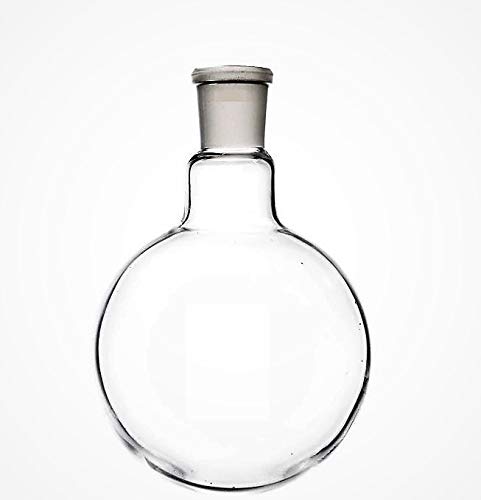
Round Bottom Flask 2000 ML With joint b-24
₹1,159.00Original price was: ₹1,159.00.₹659.00Current price is: ₹659.00.
Reviews
There are no reviews yet.